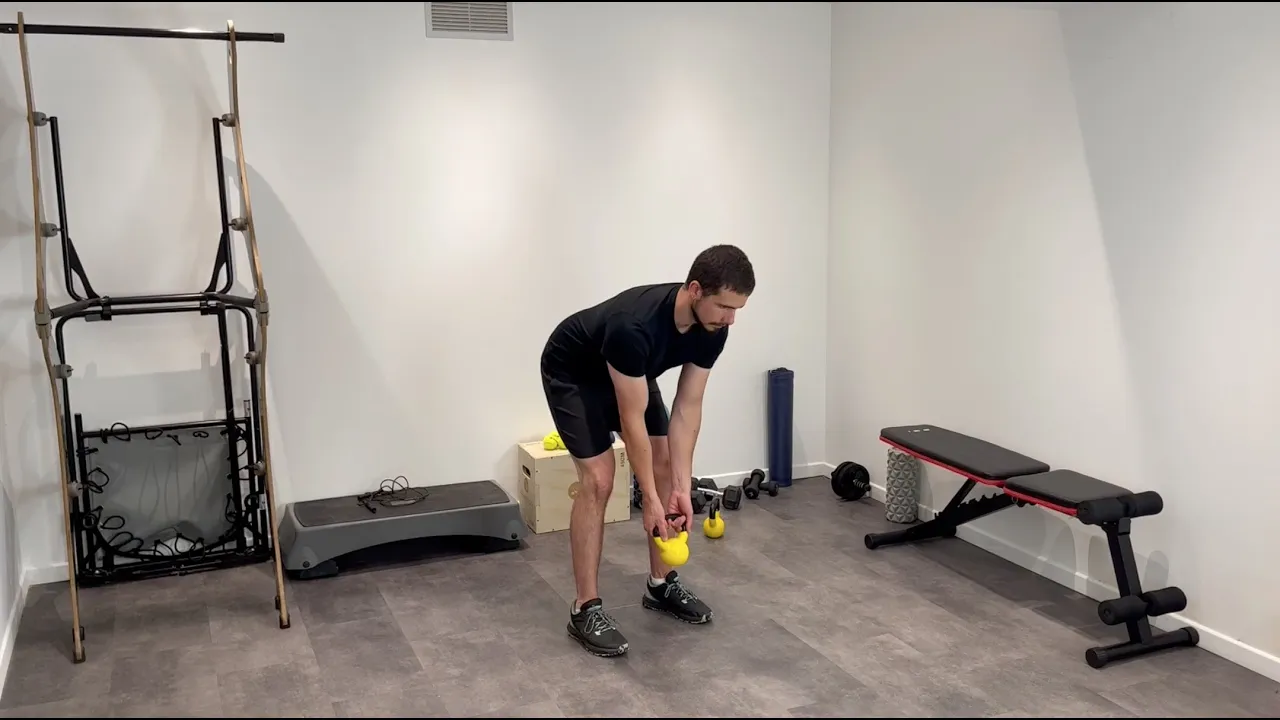
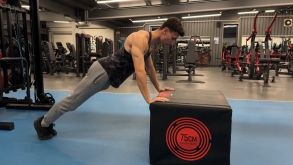
Demonstration video
Receive your personalized program
Stop training at random.
Get my programGet a program adapted to your goals, level, and available equipment. Reach your goals faster with a structured plan designed just for you.
- Program tailored to your profile
- Guided progression
- Compatible with your equipment
- Structured plan
Our coach prepares your program
Get my programHow to do Single-Arm Machine Row
Instructions
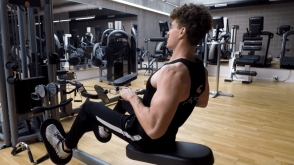
- Adjust the seat and chest pad so the handle sits around mid-torso height.
- Sit with your chest supported, feet stable, and one hand gripping the handle.
- Start with your working arm extended while keeping your torso still and posture tall.
- Pull the handle toward your ribs by driving your elbow back in a controlled path.
- Pause briefly when your elbow is beside or slightly behind your torso.
- Return the handle slowly until your arm is extended without letting the weight stack slam.
- Complete all reps on one side, then repeat with the other arm.
Technical tips
- Keep your chest in contact with the pad to reduce torso swinging.
- Pull with your elbow rather than curling the handle with your hand.
- Avoid shrugging your shoulder toward your ear during the pull.
- Keep your wrist neutral and your grip firm but not overly tense.
- Use a full, controlled range of motion without twisting your trunk.
- Match reps and load on both sides to support balanced development.
Breathing tips
- Inhale as you let the handle move forward under control.
- Exhale as you pull the handle toward your torso.
- Keep your breathing steady and avoid holding your breath on heavy reps.
Medical restrictions
- Avoid this exercise during acute shoulder pain or recent shoulder injury unless cleared by a clinician.
- Use caution with active elbow tendinitis, biceps tendon irritation, or forearm pain.
- Avoid heavy loading if you have uncontrolled spinal pain or cannot maintain a stable supported posture.
- Stop if you feel sharp pain, numbness, tingling, or joint instability.
Description
The single-arm machine row is a guided resistance exercise designed to build upper-body pulling strength with a stable, controlled movement path. Because it is performed one side at a time, it is especially useful for identifying and correcting strength differences between the left and right sides. The machine setup makes the exercise accessible for beginners while still allowing experienced lifters to train hard with progressive overload and consistent technique.
This movement is valuable for improving posture, pulling power, and overall upper-body strength. The supported position helps limit excessive body movement, making it easier to focus on smooth repetitions and controlled effort. It is also a practical choice for hypertrophy training because the guided machine allows you to maintain tension throughout the set and adjust load precisely.
The unilateral format provides a strong mind-muscle connection and encourages equal work from both sides of the body. It can be used as a main pulling exercise in a strength program or as an accessory movement after heavier compound lifts. The single-arm machine row is also effective for general fitness goals because it reinforces balanced movement, controlled resistance, and stable positioning. For best results, use a deliberate tempo, select a load you can control, and prioritize clean repetitions over maximal weight.
Read more
Read less
Description
The single-arm machine row is a guided resistance exercise designed to build upper-body pulling strength with a stable, controlled movement path. Because it is performed one side at a time, it is especially useful for identifying and correcting strength differences between the left and right sides. The machine setup makes the exercise accessible for beginners while still allowing experienced lifters to train hard with progressive overload and consistent technique. This movement is valuable for improving posture, pulling power, and overall upper-body strength. The supported position helps limit excessive body movement, making it easier to focus on smooth repetitions and controlled effort. It is also a practical choice for hypertrophy training because the guided machine allows you to maintain tension throughout the set and adjust load precisely. The unilateral format provides a strong mind-muscle connection and encourages equal work from both sides of the body. It can be used as a main pulling exercise in a strength program or as an accessory movement after heavier compound lifts. The single-arm machine row is also effective for general fitness goals because it reinforces balanced movement, controlled resistance, and stable positioning. For best results, use a deliberate tempo, select a load you can control, and prioritize clean repetitions over maximal weight.
Read more Read lessFAQ
Frequently asked questions
-
What are the benefits of doing the single-arm machine row?
The single-arm machine row helps build upper-body pulling strength, improves left-to-right balance, supports better posture, and allows controlled progressive overload with a stable machine path. -
What is the most common mistake in the single-arm machine row?
The most common mistake is twisting the torso or pulling with momentum instead of keeping the chest supported and driving the elbow back in a controlled motion. -
Is the single-arm machine row safe for my shoulders?
It is generally shoulder-friendly when performed with controlled range of motion, a neutral wrist, and no shrugging. Reduce the load or stop if you feel sharp shoulder pain or joint instability. -
How is the single-arm machine row different from the seated machine row?
The single-arm machine row trains one side at a time, which can improve symmetry and focus. The seated machine row usually works both sides together, allowing heavier total loading but less unilateral control. -
How many reps should I do for the single-arm machine row?
For strength and muscle-building goals, perform 8 to 12 controlled reps per side for 2 to 4 sets. Use a load that lets you keep strict form through the full set. -
Should I pull the handle to my chest or my ribs?
Pulling toward the lower ribs or mid-torso is usually best for a strong, natural rowing path. Avoid pulling too high if it causes shoulder shrugging or discomfort.