Carb cycling: useful for losing weight and performing better?

Alternating between high- and low-carbohydrate days often promises easier fat loss, more training energy, and less dietary frustration. In practice, this method can help some people organize their intake more effectively, but it is not magic. The key factor remains a sustainable calorie deficit, combined with adequate protein intake, regular training, and consistent recovery.
What is carb cycling?
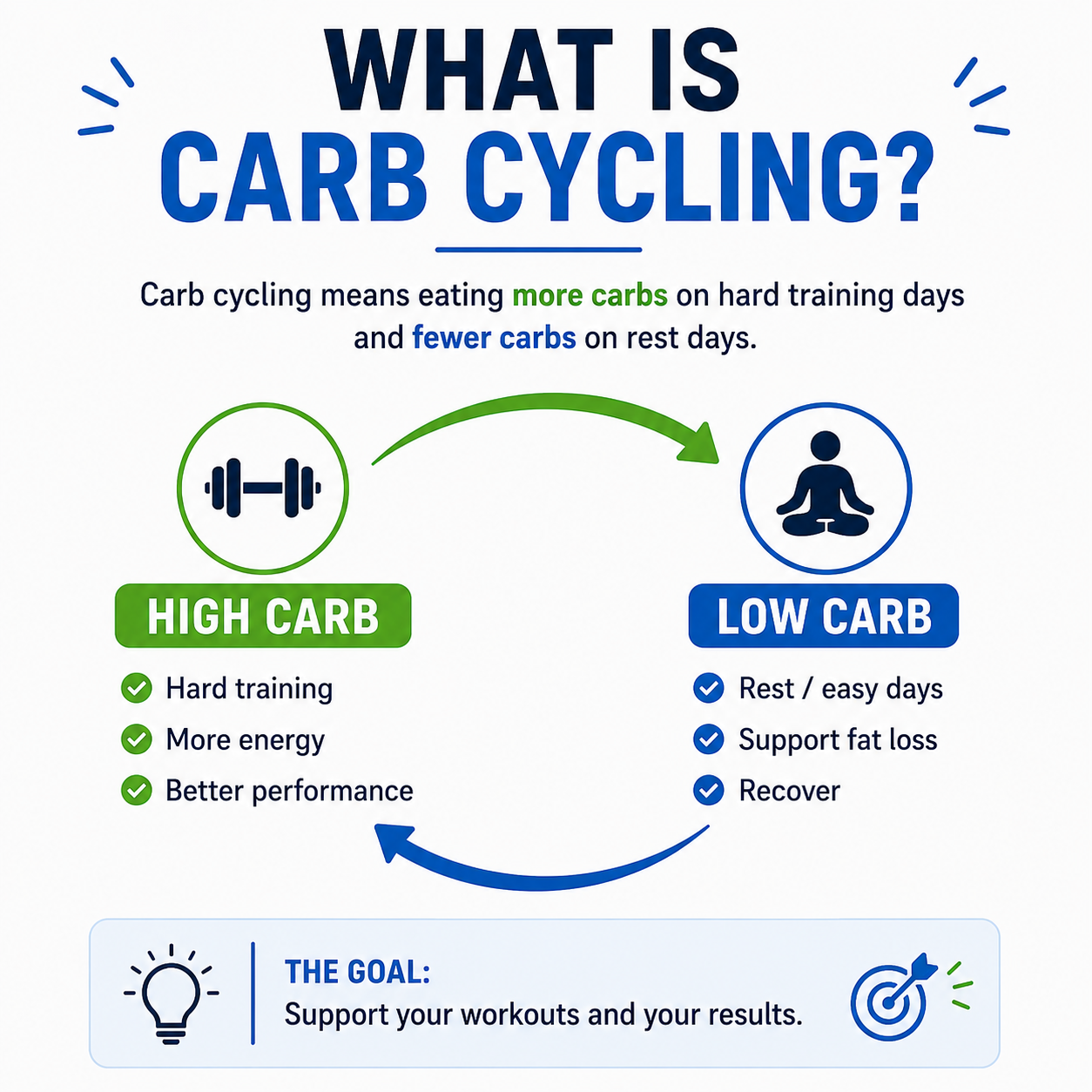
Carb cycling, or carbohydrate cycling, involves adjusting the amount of carbohydrates according to training days, rest days, or workout intensity. Demanding days include more carbohydrates to support effort, while lighter days include fewer to better control energy intake.
This approach does not change the rules of physiology. To lose weight, you need to consume less energy than you expend over time. However, a smart distribution of carbohydrates can make this deficit more comfortable and better aligned with key workouts.
Why carbohydrates matter for performance
Carbohydrates are stored as glycogen in the muscles and liver. During intense effort, a high-volume strength session, or sustained endurance training, this glycogen becomes a primary energy source. As a result, reducing carbohydrates too aggressively can increase fatigue, limit training volume, and slow recovery.
Sports nutrition recommendations emphasize that carbohydrate needs vary depending on the duration, intensity, and frequency of activity. For example, a runner preparing for a long race does not have the same needs as someone doing three strength-training sessions per week.
Receive your personalized program
Stop training at random.
Get my program- Program tailored to your profile
- Guided progression
- Compatible with your equipment
- Structured plan
Our coach prepares your program
Get my programDoes carb cycling really help with weight loss?
Carb cycling can make weight loss easier if low-carbohydrate days naturally reduce calories without causing excessive compensation. However, it does not burn more fat on its own. When calories and protein are comparable, low- or moderate-carbohydrate approaches can produce similar results for body composition.
It is also important to distinguish weight loss from fat loss. When carbohydrate intake drops, glycogen and the water stored with it decrease, which can quickly lower the number on the scale. This initial drop is not always a loss of body fat, even though it can be motivating at first.
Carb cycling works primarily as a dietary organization tool, not as a universal metabolic accelerator.
When this method becomes useful
Carb cycling can be relevant when the goal is to combine fat loss and performance maintenance. It is especially useful for people who train several times per week, experience lower energy while in a calorie deficit, or want to keep more substantial meals around difficult workouts.
- High-carbohydrate days: leg sessions, long workouts, intervals, competitions, or high-intensity efforts.
- Moderate-carbohydrate days: standard strength training, light cardio, or technical sessions.
- Low-carbohydrate days: rest, mobility, walking, or low-activity days.
With the app, you can connect this approach to your actual program. The public exercise and workout catalog is available for free, with guided instructions and demonstration videos. You can choose your sessions, then adjust your intake according to the planned intensity.
A simple example of a balanced week
An effective week does not need to be complicated. The goal is to place more carbohydrates where they truly improve energy, then reduce them slightly on less demanding days. This strategy supports adherence because it prevents every day from becoming a strict restriction.
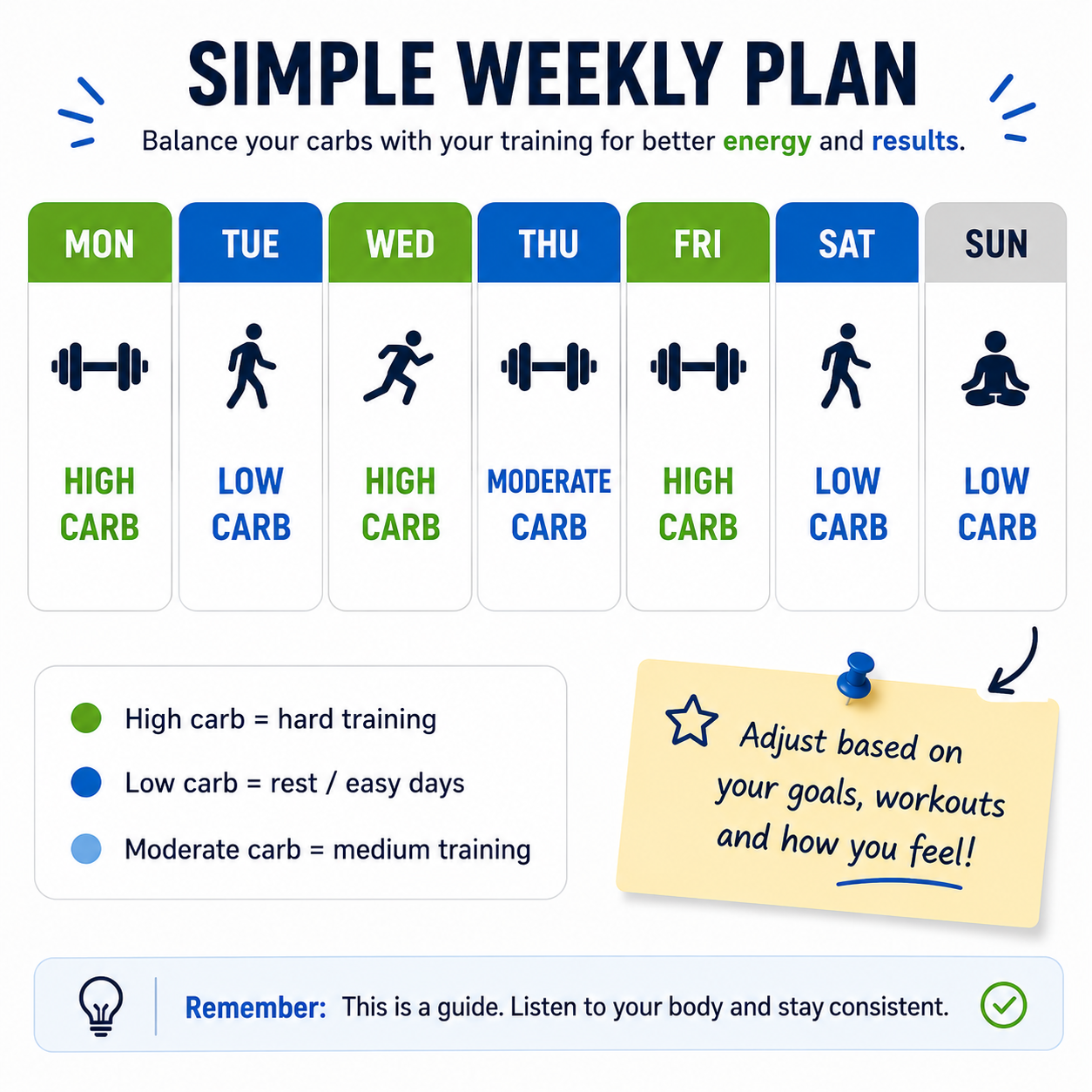
- Monday : heavy strength training with high carbohydrate intake.
- Tuesday : active rest with low to moderate carbohydrate intake.
- Wednesday : endurance or intervals with high carbohydrate intake.
- Thursday : light strengthening with moderate intake.
- Friday : full-body session with high intake.
- Weekend: adjust according to activity, hunger, recovery, and goals.
To get started faster, use ready-made workout templates. You can then create your own sessions with the custom builder, configure repetitions, duration, rest times, supersets, and targeted muscle groups. This makes the plan more precise and easier to follow.
How to distribute macronutrients without getting it wrong
The first step is to set weekly calories, not just the carbohydrates for one day. Then keep protein intake stable to preserve muscle mass, adjust fat intake to a sufficient level for hormonal health, and use carbohydrates as the main variable.
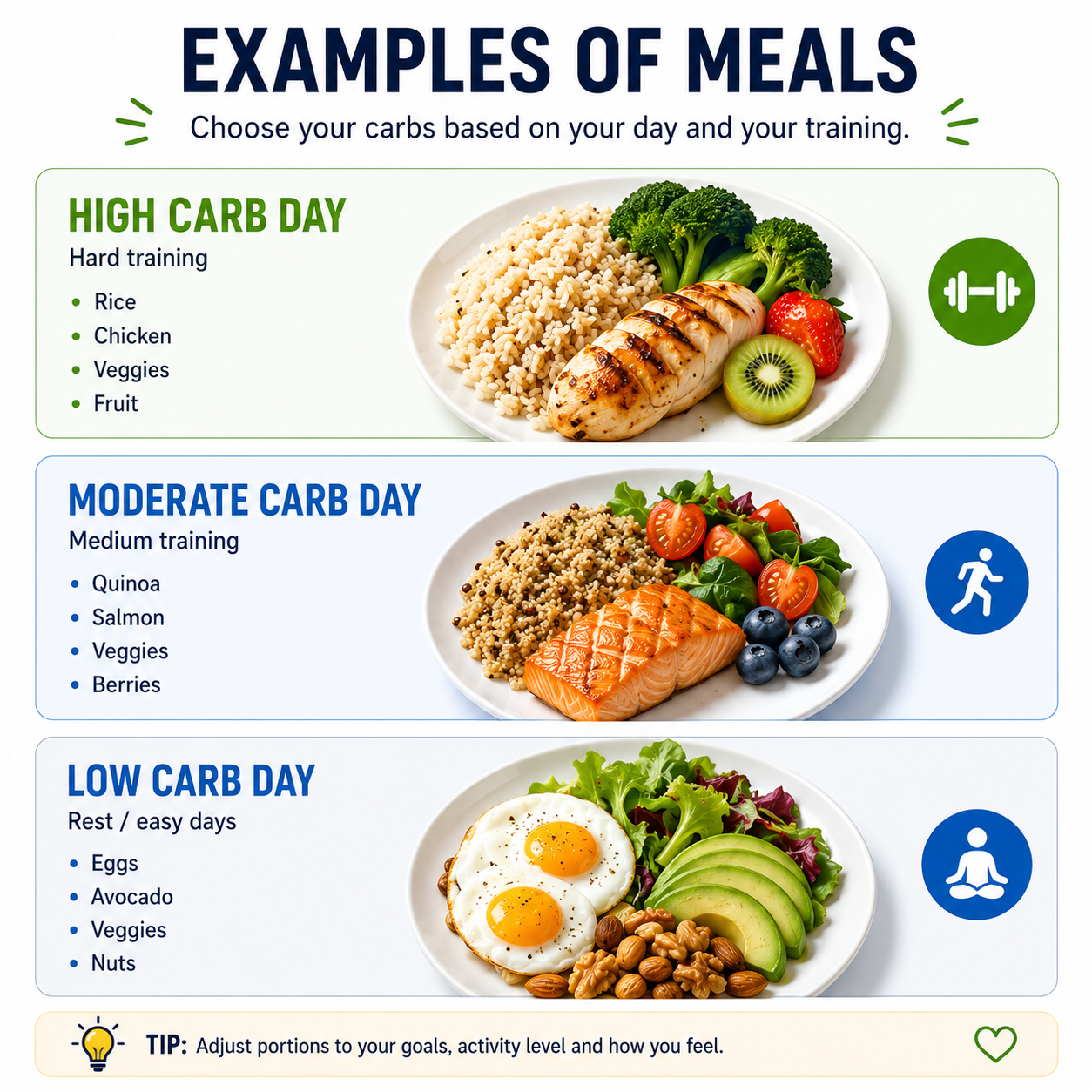
- Protein: generally stable every day to support satiety and muscle recovery.
- Carbohydrates: higher around important workouts and lower on calmer days.
- Fats: moderate and consistent, without reducing them excessively.
- Fiber: included every day through vegetables, fruit, legumes, or whole grains.
The app personalizes the experience according to your goals, level, equipment, and targeted muscles. It also lets you track your statistics, performance, and adaptive recommendations. You can therefore check whether your strategy truly improves energy, progress, and consistency.
Common mistakes to avoid
The biggest mistake is turning high-carbohydrate days into uncontrolled calorie surplus days. Another mistake is removing almost all carbohydrates on low days, then lacking energy the following day. A good plan should remain flexible, measurable, and compatible with everyday life.
- Do not confuse a high-carbohydrate day with an unlimited free day.
- Do not reduce calories too quickly if performance drops.
- Do not neglect sleep, hydration, and protein.
- Do not apply an advanced protocol if a simple diet is already enough.
Who carb cycling is not ideal for
This method is not always suitable for beginners who are still learning how to structure their meals. It can also become unnecessarily complex for people who are already progressing with a balanced diet and controlled calorie intake. In cases of diabetes, eating disorders, pregnancy, or any medical condition, professional advice is recommended.
For many exercisers, the priority remains simpler: eat enough protein, create a reasonable deficit, move regularly, and follow a progressive program. Discover how to simplify this process with guided sessions, explained exercises, and recommendations adapted to your preferences.
How to know if it works for you
Evaluate the method over at least three to four weeks. Look at weight trends, waist circumference, training energy, hunger, mood, and sleep quality. A good strategy should produce visible results without significantly impairing recovery.
- If weight drops but your lifts collapse, slightly increase carbohydrates around workouts.
- If hunger becomes too high, distribute fiber, protein, and meals more effectively.
- If performance improves but weight stalls, check weekly calories.
- If the plan is too difficult to follow, simplify the variations between days.
Tracking in the app helps identify these signals. Your personalized statistics and performance insights let you move from a subjective impression to a more reliable decision. Try it for free and start building a program aligned with your goal, equipment, and current level.
The best approach to remember
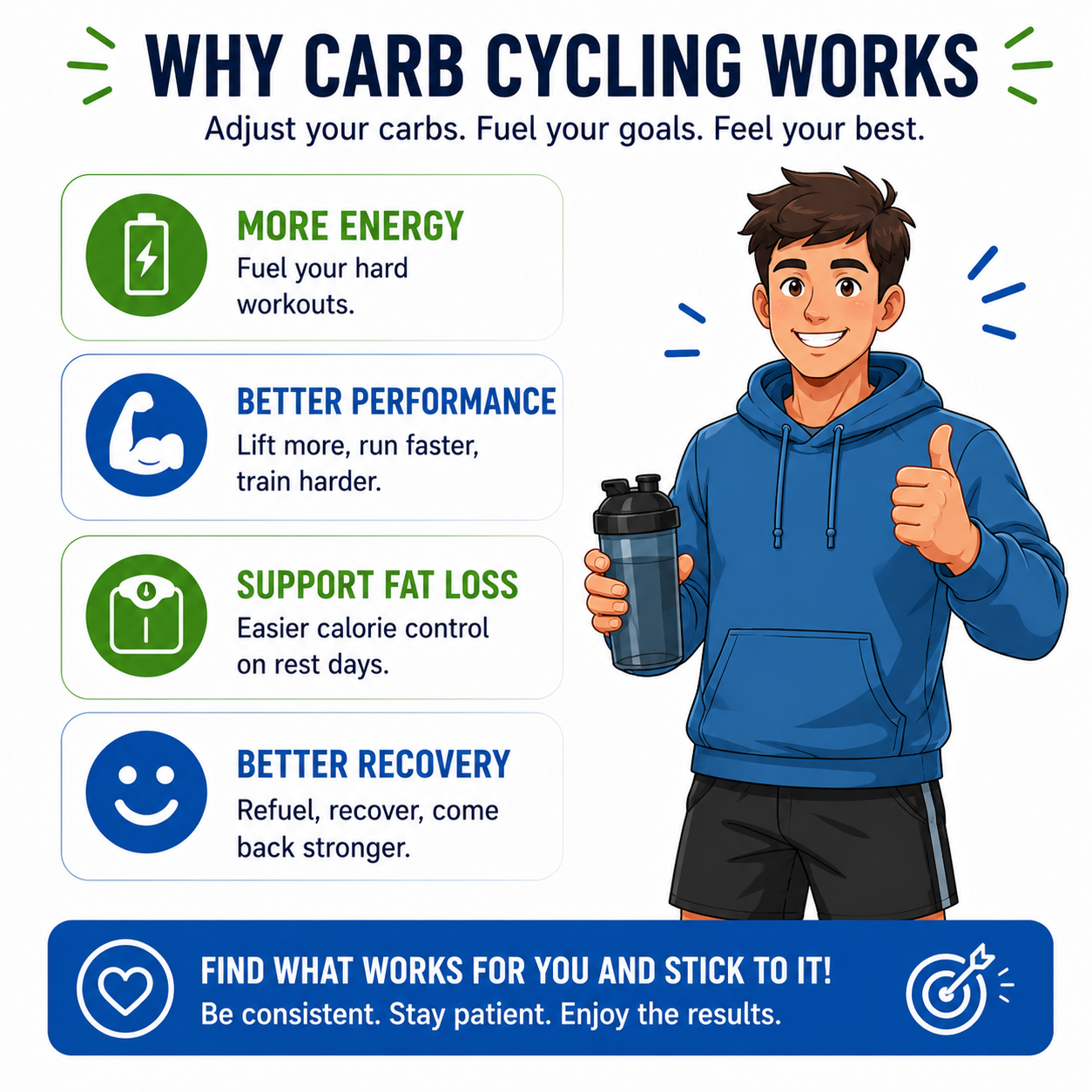
Carb cycling can be useful if you use it to better position your energy, preserve key workouts, and make your deficit more sustainable. It becomes less valuable if it adds stress, excessive calculations, or restrictions that are difficult to maintain. The best method is still the one you can apply consistently.
To optimize your results, start with a simple plan, track your data, and adjust gradually. Start building your own workout today with guided exercises, ready-made templates, and a builder that gives you full control over your sessions. This will give you a clear foundation for deciding whether carb cycling deserves a place in your routine.
Frequently asked questions
-
Is carb cycling effective for sustainable fat loss?
It can help if low-carbohydrate days reduce total calorie intake without causing compensation. Fat loss mainly depends on a consistent calorie deficit, sufficient protein intake, and progressive training. -
Should you eat more carbohydrates on intense training days?
Yes, this is often relevant for long, heavy, or very intense sessions. Carbohydrates support muscle glycogen, which can improve energy, training volume, and post-workout recovery. -
How many high-carbohydrate days should you plan each week?
Most exercisers start with two to four higher-carbohydrate days, placed around the most difficult sessions. The right number depends on training volume, calorie deficit, hunger, and progress. -
Is carb cycling better than a standard calorie-deficit diet?
Not necessarily. When calories and protein are similar, several strategies can work. Carb cycling becomes useful if it improves adherence, training energy, and the ability to maintain the plan over time. -
Can you do carb cycling for strength training?
Yes, especially if sessions are high-volume or frequent. High-carbohydrate days can be placed on leg, back, or full-body workouts, while low-carbohydrate days can align with rest or lighter sessions. -
Which foods should you choose on high-carbohydrate days?
Prioritize digestible, nutrient-rich sources such as rice, potatoes, oats, whole-grain bread, fruit, legumes, or pasta, depending on your tolerance. Keep protein stable and avoid turning these days into a calorie surplus. -
What are the signs that carb cycling is not right for me?
Persistent fatigue, high irritability, declining performance, frequent cravings, or an obsession with numbers indicate that the plan is too strict. In that case, a simpler and more stable approach may be preferable. -
Is carb cycling suitable for beginners trying to lose weight?
Beginners often benefit from starting with the basics: controlled calories, sufficient protein, vegetables, sleep, and regular training. Carb cycling can come later if a specific need arises.
Credits