Peptides in bodybuilding: effectiveness and risks
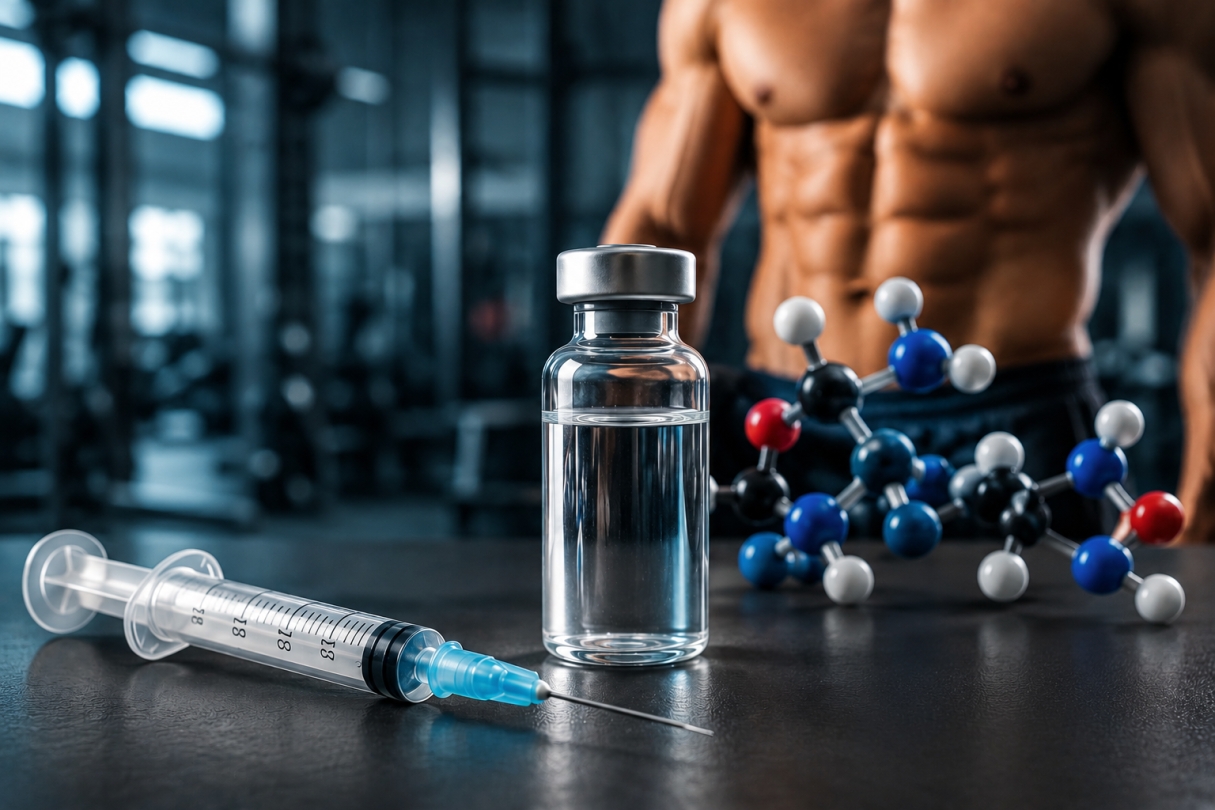
Injectable peptides now play a major role in discussions surrounding bodybuilding, fat loss, and athletic performance. On social media, they are often presented as quick solutions capable of accelerating recovery, stimulating muscle growth, or reducing appetite. However, behind the hype, the scientific reality remains far more nuanced. Understanding what peptides truly are helps distinguish documented effects from marketing promises.
What are peptides?
Peptides are short chains of amino acids used by the body as biological messengers. Their role is to transmit signals that influence certain bodily functions, such as hormonal regulation, immunity, cellular recovery, and appetite.
Unlike anabolic steroids, peptides do not directly replace a hormone. Instead, they act as biological triggers or modulators. Some peptides occur naturally in the human body, while others are synthesized in laboratories for medical or experimental purposes.
Why have peptides become popular?
The popularity of peptides exploded with the media attention surrounding treatments using GLP-1 agonists, particularly in the field of weight loss. At the same time, many fitness influencers and specialized podcasts helped spread the idea that these substances could represent a new shortcut to physical performance.
On TikTok, Instagram, and YouTube, testimonials often promise:
- accelerated fat loss
- better muscle recovery
- reduced appetite
- improved sleep
- faster muscle gain
- anti-aging effects
Receive your personalized program
Stop training at random.
Get my programGet a program adapted to your goals, level, and available equipment. Reach your goals faster with a structured plan designed just for you.
- Program tailored to your profile
- Guided progression
- Compatible with your equipment
- Structured plan
Our coach prepares your program
Get my programHowever, these claims are often based on isolated personal experiences rather than solid scientific evidence.
The most commonly used peptides in bodybuilding
GLP-1 peptides for weight loss
Peptides that mimic the action of GLP-1 are mainly used to reduce appetite and promote weight loss. Originally developed to treat type 2 diabetes and obesity, they quickly gained popularity in the fitness world.
The results for weight loss can be significant. However, some studies also show a reduction in muscle mass and sometimes bone density when nutrition and training are not properly managed.
BPC-157 and recovery
The BPC-157 peptide is often presented as a compound capable of accelerating tissue repair, particularly in tendons and ligaments. In the sports community, some individuals use it in the hope of recovering faster after an injury.
The problem is that human data remains limited. A large portion of the available research has been conducted on animals or under experimental conditions insufficient to draw reliable conclusions.
Growth hormone-stimulating peptides
Some peptides, such as ipamorelin, aim to stimulate the natural secretion of growth hormone. Their goal is generally to improve recovery, sleep, or muscle gain.
Although these effects attract many athletes, the potential risks remain poorly understood. Excessive stimulation of certain biological mechanisms could theoretically influence other cells in the body, including abnormal cells.
What science actually says
One of the main issues surrounding peptides in bodybuilding is the lack of robust research. Unlike creatine, magnesium, or other widely studied supplements, injectable peptides still have very limited long-term data.
Some molecules appear promising in specific medical contexts. However, that does not mean they are safe or effective for enhancing athletic performance in healthy individuals.
The absence of solid evidence does not necessarily mean that a peptide is ineffective. However, it does mean that it is currently impossible to claim that it is safe.
The often underestimated risks
Using peptides involves several significant risks that are often minimized on social media.
- Products purchased from unregulated laboratories
- Improper dosages or lack of medical supervision
- Poorly documented side effects
- Possible interactions with other substances
- Risks associated with repeated injections
- Lack of long-term scientific perspective
In addition, some peptides appear on the World Anti-Doping Agency’s list of prohibited substances. Their use may therefore be considered doping in several sports disciplines.
Peptides or good habits: do you really have to choose?
The enthusiasm surrounding peptides often reflects a search for rapid results. Yet the foundations of physical progress remain the same: structured training, proper nutrition, and quality recovery.
For most athletes, optimizing these fundamentals already delivers considerable results without exposing the body to substances that are still poorly studied.
This is precisely where a well-designed fitness tracking app can make a difference. Thanks to a free exercise library with instructional videos, ready-to-use training templates, and recommendations tailored to your level, it becomes easier to progress sustainably.
You can also create your own workouts with an intuitive builder that allows you to configure repetitions, rest periods, supersets, and muscle-focused goals. By tracking your statistics and performance, you gain measurable progress without relying on controversial solutions.
How to make natural progress in bodybuilding
Before considering experimental substances, it is far more relevant to optimize the methods that are best supported by scientific evidence.
- Follow a consistent training program
- Get enough sleep every night
- Consume enough protein
- Manage your stress and recovery
- Maintain a steady progression in training loads
- Track your performance over time
With tools personalized to your goals, available equipment, and experience level, it becomes much easier to build an effective routine. You can discover suitable workouts, adjust your training parameters, and track your progress with evolving recommendations.
Should you give in to the peptide hype?
Peptides now sit at the crossroads of medicine, athletic performance, and digital marketing. Some medical applications appear promising, but their use in bodybuilding remains surrounded by significant uncertainty.
For most athletes, caution remains essential. Relying on solid habits, smart training, and precise tracking remains the most sustainable strategy for improving body composition and long-term performance.
Are peptides in bodybuilding anabolic steroids?
Are injectable peptides dangerous for health?
Which peptides are most commonly used in sports and bodybuilding?
Why have peptides become popular on social media?
Do peptides really help build muscle quickly?
Can you make progress naturally without using peptides?
Are peptides allowed in competitive sports?
What is the difference between peptides and supplements like creatine?
Popular
Credits

Sources
- Weight regain after cessation of medication for weight management: systematic review and meta-analysis
- Injectable Peptide Therapy: A Primer for Orthopaedic and Sports Medicine Physicians.
- Regeneration or Risk? A Narrative Review of BPC-157 for Musculoskeletal Healing