Standard
Warm-up
Mobilize the shoulders without forcing the range of motion to prepare for pressing movements and upper-back work.
10 Repetitions
Keep the elbows straight and allow only the shoulder blades to move; reduce the range of motion if control deteriorates.
8 - 12 Repetitions
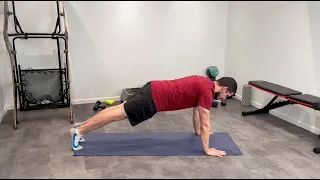
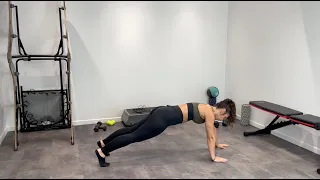
Move forward slowly into a solid plank position; shorten the distance if hamstring tightness limits the movement.
5 - 6 Repetitions
Place the feet slightly wider apart to limit pelvic rotation and engage the core before the pressing sets.
8 - 10 Repetitions
Standard
Main
Aim for about two repetitions in reserve. Once you can perform the top of the target range with good form on every set, first increase the range of motion or add a pause at the bottom, then progress to a more difficult variation. Use the knee-supported variation if you cannot reach the lower end of the range with clean form. Read more
Aim for about two repetitions in reserve. Once you can perform the top of the target range with good form on every set, first increase the range of motion or add a pause at the bottom, then progress to a more difficult variation. Use the knee-supported variation if you cannot reach the lower end of the range with clean form.
Set 1: 8 - 15 Repetitions Rest time : 1 minute
Set 2: 8 - 15 Repetitions Rest time : 1 minute
Set 3: 8 - 15 Repetitions Rest time : 1 minute
Set 4: 8 - 15 Repetitions Rest time : 45 seconds
Aim for a strong upper-back contraction by driving the elbows into the floor without shrugging the shoulders. To progress without equipment, slow the lowering phase or briefly hold the contraction at the top. Read more
Aim for a strong upper-back contraction by driving the elbows into the floor without shrugging the shoulders. To progress without equipment, slow the lowering phase or briefly hold the contraction at the top.
Set 1: 10 - 18 Repetitions Rest time : 1 minute
Set 2: 10 - 18 Repetitions Rest time : 1 minute
Set 3: 10 - 18 Repetitions Rest time : 1 minute
Set 4: 10 - 18 Repetitions Rest time : 45 seconds
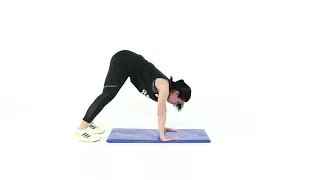
Keep the hips high and direct the head between the hands. Reduce the range of motion if the shoulders lose their intended path; gradually increase the range before choosing a more challenging variation. Read more
Keep the hips high and direct the head between the hands. Reduce the range of motion if the shoulders lose their intended path; gradually increase the range before choosing a more challenging variation.
Set 1: 6 - 12 Repetitions Rest time : 1 minute
Set 2: 6 - 12 Repetitions Rest time : 1 minute
Set 3: 6 - 12 Repetitions Rest time : 45 seconds
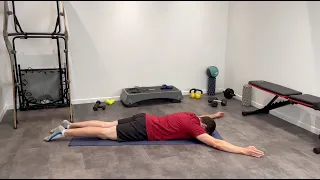
Raise the arms without arching the lower back. The priority is to improve scapular control to compensate for the lack of loaded pulling; add a pause at the top before increasing the difficulty. Read more
Raise the arms without arching the lower back. The priority is to improve scapular control to compensate for the lack of loaded pulling; add a pause at the top before increasing the difficulty.
Set 1: 10 - 16 Repetitions Rest time : 45 seconds
Set 2: 10 - 16 Repetitions Rest time : 45 seconds
Set 3: 10 - 16 Repetitions Rest time : 30 seconds
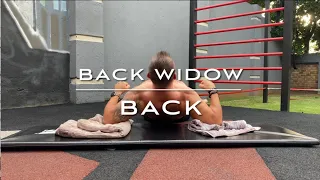
Keep the forehead close to the floor and squeeze the shoulder blades together without using momentum. If the set becomes too easy, slow the lowering phase and hold the contraction longer rather than speeding up. Read more
Keep the forehead close to the floor and squeeze the shoulder blades together without using momentum. If the set becomes too easy, slow the lowering phase and hold the contraction longer rather than speeding up.
Set 1: 10 - 16 Repetitions Rest time : 45 seconds
Set 2: 10 - 16 Repetitions Rest time : 45 seconds
Set 3: 10 - 16 Repetitions Rest time : 30 seconds
Maintain a stable line from shoulders to hips to ankles. Start from the knees if necessary; progress by increasing duration, then by using a longer-lever variation, without compromising core bracing. Read more
Maintain a stable line from shoulders to hips to ankles. Start from the knees if necessary; progress by increasing duration, then by using a longer-lever variation, without compromising core bracing.
Set 1: 25 seconds - 45 seconds Rest time : 45 seconds
Set 2: 25 seconds - 45 seconds Rest time : 45 seconds
Set 3: 25 seconds - 45 seconds Rest time : 30 seconds
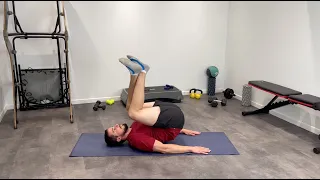
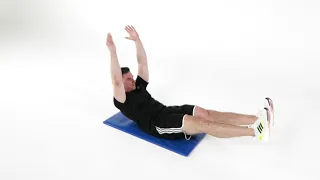
Keep the lower back in contact with the floor and exhale during the extension. Gradually lengthen the levers only if the pelvis remains stable. Read more
Keep the lower back in contact with the floor and exhale during the extension. Gradually lengthen the levers only if the pelvis remains stable.
Set 1: 8 - 12 Repetitions Rest time : 45 seconds
Set 2: 8 - 12 Repetitions Rest time : 45 seconds
Set 3: 8 - 12 Repetitions
Standard
Cool-down
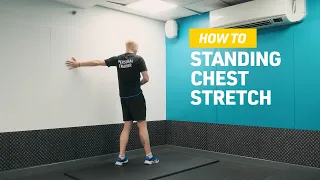
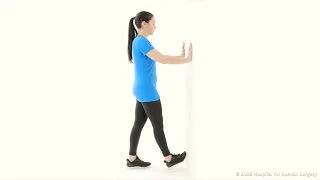
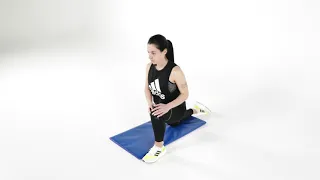
Use a gentle stretch after the pressing volume; stay well below any pinching sensation at the front of the shoulder.
20 seconds - 30 seconds
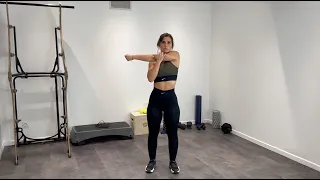
Gently release the back of the shoulder without pulling forcefully on the joint.
20 seconds - 30 seconds
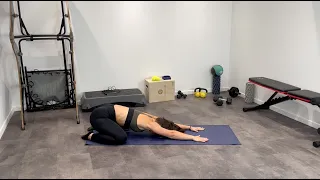
Use this stretch only as part of the cooldown to relax the upper back after scapular work.
20 seconds - 30 seconds
Standard
Warm-up
Mobilize the hips in a controlled manner before squats and lunges; avoid forcing the range of motion.
10 - 12 Repetitions
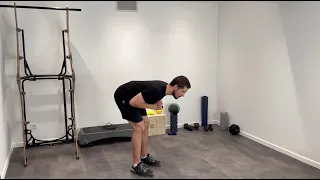
Practice the hip hinge with a neutral spine to prepare the hamstrings and glutes.
10 - 12 Repetitions
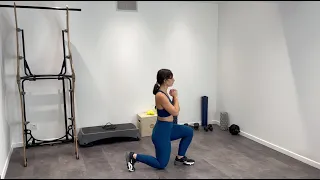
Use a comfortable range of motion and a smooth tempo; shorten the step if the front knee becomes uncomfortable.
8 - 10 Repetitions
Keep the movement light and controlled to prepare the ankles; eliminate bouncing if the impact is uncomfortable.
15 - 20 Repetitions
Standard
Main
Descend only as low as you can while maintaining control. Once the top of the target range is mastered, progress with a pause at the bottom, a slower tempo, or one-and-a-half repetitions before considering a unilateral variation; do not use jumping as the primary progression. Read more
Descend only as low as you can while maintaining control. Once the top of the target range is mastered, progress with a pause at the bottom, a slower tempo, or one-and-a-half repetitions before considering a unilateral variation; do not use jumping as the primary progression.
Set 1: 10 - 20 Repetitions Rest time : 1 minute
Set 2: 10 - 20 Repetitions Rest time : 1 minute
Set 3: 10 - 20 Repetitions Rest time : 1 minute
Set 4: 10 - 20 Repetitions Rest time : 45 seconds
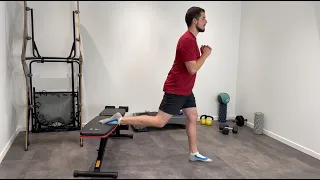
Keep the front foot stable and control the descent. Reduce the range of motion if the knee is uncomfortable; then gradually increase the range or add a pause before choosing a more difficult variation. Read more
Keep the front foot stable and control the descent. Reduce the range of motion if the knee is uncomfortable; then gradually increase the range or add a pause before choosing a more difficult variation.
Set 1: 8 - 14 Repetitions Rest time : 1 minute
Set 2: 8 - 14 Repetitions Rest time : 1 minute
Set 3: 8 - 14 Repetitions Rest time : 45 seconds
Use balance as a secondary constraint, not the goal: keep the hips facing the floor and limit the range of motion if the pelvis rotates. Return to the Bodyweight Good Morning if stability prevents you from effectively loading the hamstrings. Read more
Use balance as a secondary constraint, not the goal: keep the hips facing the floor and limit the range of motion if the pelvis rotates. Return to the Bodyweight Good Morning if stability prevents you from effectively loading the hamstrings.
Set 1: 8 - 12 Repetitions Rest time : 1 minute
Set 2: 8 - 12 Repetitions Rest time : 1 minute
Set 3: 8 - 12 Repetitions Rest time : 45 seconds
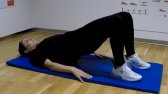
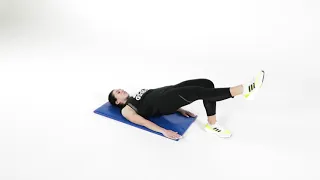
Finish the extension by contracting the glutes without arching the lower back. Once the top of the target range is mastered, add a pause at the top, then progress to the Single-Leg Glute Bridge if control remains solid. Read more
Finish the extension by contracting the glutes without arching the lower back. Once the top of the target range is mastered, add a pause at the top, then progress to the Single-Leg Glute Bridge if control remains solid.
Set 1: 12 - 20 Repetitions Rest time : 45 seconds
Set 2: 12 - 20 Repetitions Rest time : 45 seconds
Set 3: 12 - 20 Repetitions Rest time : 30 seconds
Move through the full available range of motion without bouncing. Once the top of the target range becomes easy, slow the lowering phase or progress to a unilateral version. Read more
Move through the full available range of motion without bouncing. Once the top of the target range becomes easy, slow the lowering phase or progress to a unilateral version.
Set 1: 12 - 25 Repetitions Rest time : 45 seconds
Set 2: 12 - 25 Repetitions Rest time : 45 seconds
Set 3: 12 - 25 Repetitions Rest time : 30 seconds
Posteriorly tilt the pelvis slightly without using momentum. Reduce the range of motion if the lower back lifts abruptly; progress through control and range of motion rather than speed. Read more
Posteriorly tilt the pelvis slightly without using momentum. Reduce the range of motion if the lower back lifts abruptly; progress through control and range of motion rather than speed.
Set 1: 10 - 15 Repetitions Rest time : 45 seconds
Set 2: 10 - 15 Repetitions Rest time : 45 seconds
Set 3: 10 - 15 Repetitions
Standard
Cool-down
Use a light quadriceps stretch after squats and lunges; keep the knees close together without pulling forcefully.
20 seconds - 30 seconds
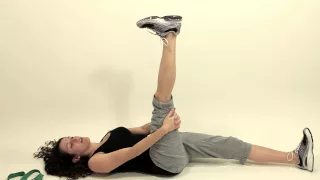
Gently stretch the hamstrings without excessively rounding the back.
20 seconds - 30 seconds
Keep the heel on the floor and maintain a comfortable level of tension after calf work.
20 seconds - 30 seconds
Standard
Warm-up
Use a moderate pace to gradually raise body temperature; replace with non-jumping lateral steps if the impact is uncomfortable. Read more
Use a moderate pace to gradually raise body temperature; replace with non-jumping lateral steps if the impact is uncomfortable.
30 seconds - 45 seconds
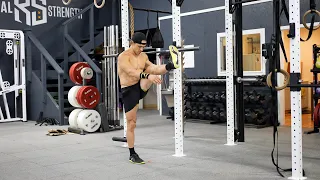
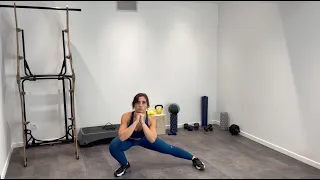
Push the hips back and keep the supporting foot stable to prepare for frontal-plane movement.
8 - 10 Repetitions
Prepare the shoulder blades before pressing movements while keeping the elbows straight and the core braced.
8 - 12 Repetitions
Reinforce the hip-hinge pattern with a controlled range of motion before the lower-body movements.
10 - 12 Repetitions
Standard
Main
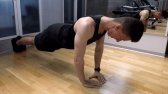
Keep the elbows close to the body without forcing an excessively narrow hand position. If you cannot reach the lower end of the range with clean form, use the knee-supported variation; if the top of the range is stable, slow the descent or add a pause. Read more
Keep the elbows close to the body without forcing an excessively narrow hand position. If you cannot reach the lower end of the range with clean form, use the knee-supported variation; if the top of the range is stable, slow the descent or add a pause.
Set 1: 8 - 14 Repetitions Rest time : 1 minute
Set 2: 8 - 14 Repetitions Rest time : 1 minute
Set 3: 8 - 14 Repetitions Rest time : 45 seconds
Emphasize scapular retraction to give the back a meaningful role in the session despite the lack of pulling equipment. Progress with pauses and tempo before increasing the range of motion. Read more
Emphasize scapular retraction to give the back a meaningful role in the session despite the lack of pulling equipment. Progress with pauses and tempo before increasing the range of motion.
Set 1: 10 - 18 Repetitions Rest time : 1 minute
Set 2: 10 - 18 Repetitions Rest time : 1 minute
Set 3: 10 - 18 Repetitions Rest time : 45 seconds
Maintain a stable movement path and a range of motion that allows full control. Once the top of the target range is mastered, add a pause at the bottom or slow the descent instead of adding jumps. Read more
Maintain a stable movement path and a range of motion that allows full control. Once the top of the target range is mastered, add a pause at the bottom or slow the descent instead of adding jumps.
Set 1: 8 - 14 Repetitions Rest time : 1 minute
Set 2: 8 - 14 Repetitions Rest time : 1 minute
Set 3: 8 - 14 Repetitions Rest time : 45 seconds
Keep the pelvis level and finish the movement with the glute of the supporting leg. Return to the bilateral Glute Bridge if the pelvis rotates; then progress with a pause at the top and greater range of motion. Read more
Keep the pelvis level and finish the movement with the glute of the supporting leg. Return to the bilateral Glute Bridge if the pelvis rotates; then progress with a pause at the top and greater range of motion.
Set 1: 8 - 15 Repetitions Rest time : 45 seconds
Set 2: 8 - 15 Repetitions Rest time : 45 seconds
Set 3: 8 - 15 Repetitions Rest time : 30 seconds
Keep the pelvis neutral and stop the set as soon as the lower back begins to sag. Progress by increasing duration, then by using a longer lever or a more challenging variation without sacrificing position. Read more
Keep the pelvis neutral and stop the set as soon as the lower back begins to sag. Progress by increasing duration, then by using a longer lever or a more challenging variation without sacrificing position.
Set 1: 30 seconds - 50 seconds Rest time : 45 seconds
Set 2: 30 seconds - 50 seconds Rest time : 45 seconds
Set 3: 30 seconds - 50 seconds
Circuit 3 rounds
Main

Do each exercise one after another. When you finish the list, rest then start again.
Keep the shoulders over the hands and use a brisk but controlled pace. Progress first through duration and consistency, not impact. Read more
Keep the shoulders over the hands and use a brisk but controlled pace. Progress first through duration and consistency, not impact.
Round 1: 25 seconds - 40 seconds
Round 2: 25 seconds - 40 seconds
Round 3: 25 seconds - 40 seconds
Chain without rest
Maintain a controlled pace. Reduce impact by switching to a fast high-knee march if technique or joint comfort deteriorates. Read more
Maintain a controlled pace. Reduce impact by switching to a fast high-knee march if technique or joint comfort deteriorates.
Round 1: 20 seconds - 35 seconds
Round 2: 20 seconds - 35 seconds
Round 3: 20 seconds - 35 seconds
Chain without rest
Stay light on your feet. If impact becomes limiting after the strength work, use a non-jumping version with lateral steps. Read more
Stay light on your feet. If impact becomes limiting after the strength work, use a non-jumping version with lateral steps.
Round 1: 25 seconds - 40 seconds Rest time : 1 minute
Round 2: 25 seconds - 40 seconds Rest time : 1 minute
Round 3: 25 seconds - 40 seconds Rest time : 1 minute
1 minute rest between each round
Repeat 3 times
1 minute rest
Standard
Cool-down
Gently stretch the front of the hip after split squats without increasing the lower-back arch.
20 seconds - 30 seconds
Use a gentle stretch after push-ups without forcing the shoulder into rotation.
20 seconds - 30 seconds
Maintain moderate tension to cool down after posterior-chain work.
20 seconds - 30 seconds
Standard
Warm-up
Prepare the shoulders with a gradually increasing range of motion before push-ups and upper-back work.
10 Repetitions
Mobilize the hips without excessive momentum before lateral lunges and hip-hinge work.
10 - 12 Repetitions
Prepare the shoulders, core, and posterior chain simultaneously with a slow, controlled pace.
5 - 6 Repetitions
Activate the glutes without creating significant fatigue before the session's unilateral work.
12 - 15 Repetitions
Standard
Main
Second exposure of the week: keep about two repetitions in reserve and prioritize strict form. If the top of the target range is stable across all sets, progress through range of motion, a pause, or a more difficult variation. Read more
Second exposure of the week: keep about two repetitions in reserve and prioritize strict form. If the top of the target range is stable across all sets, progress through range of motion, a pause, or a more difficult variation.
Set 1: 8 - 15 Repetitions Rest time : 1 minute
Set 2: 8 - 15 Repetitions Rest time : 1 minute
Set 3: 8 - 15 Repetitions Rest time : 45 seconds
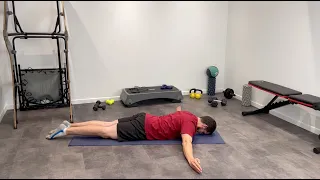
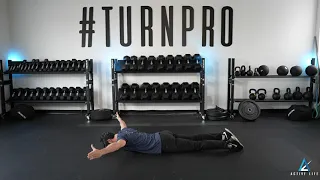
Keep the arms close to the floor and move the shoulder blades without arching the lower back. This exercise complements the Back Widow from a different angle to target the upper back more comprehensively without equipment. Read more
Keep the arms close to the floor and move the shoulder blades without arching the lower back. This exercise complements the Back Widow from a different angle to target the upper back more comprehensively without equipment.
Set 1: 10 - 16 Repetitions Rest time : 45 seconds
Set 2: 10 - 16 Repetitions Rest time : 45 seconds
Set 3: 10 - 16 Repetitions Rest time : 30 seconds
Raise the arms and legs slightly without seeking excessive lumbar hyperextension. Progress with a brief hold at the top; reduce the range of motion if the lower back begins to dominate the movement. Read more
Raise the arms and legs slightly without seeking excessive lumbar hyperextension. Progress with a brief hold at the top; reduce the range of motion if the lower back begins to dominate the movement.
Set 1: 10 - 15 Repetitions Rest time : 45 seconds
Set 2: 10 - 15 Repetitions Rest time : 45 seconds
Set 3: 10 - 15 Repetitions Rest time : 30 seconds
Load the hip of the bent leg while keeping the other leg long. Reduce the range of motion if the adductor feels excessively stretched; then progress through greater range of motion or a pause. Read more
Load the hip of the bent leg while keeping the other leg long. Reduce the range of motion if the adductor feels excessively stretched; then progress through greater range of motion or a pause.
Set 1: 8 - 12 Repetitions Rest time : 1 minute
Set 2: 8 - 12 Repetitions Rest time : 1 minute
Set 3: 8 - 12 Repetitions Rest time : 45 seconds
Second unilateral hip-hinge exposure, separated by several days. Keep the hips square; return to the Bodyweight Good Morning if balance limits effective muscular loading. Read more
Second unilateral hip-hinge exposure, separated by several days. Keep the hips square; return to the Bodyweight Good Morning if balance limits effective muscular loading.
Set 1: 8 - 12 Repetitions Rest time : 1 minute
Set 2: 8 - 12 Repetitions Rest time : 1 minute
Set 3: 8 - 12 Repetitions Rest time : 45 seconds
Second unilateral glute exposure. Keep the pelvis level; switch to the bilateral Glute Bridge if movement quality declines, or add a pause at the top if the upper end of the target range is mastered. Read more
Second unilateral glute exposure. Keep the pelvis level; switch to the bilateral Glute Bridge if movement quality declines, or add a pause at the top if the upper end of the target range is mastered.
Set 1: 8 - 15 Repetitions Rest time : 45 seconds
Set 2: 8 - 15 Repetitions Rest time : 45 seconds
Set 3: 8 - 15 Repetitions Rest time : 30 seconds
Choose a position that allows you to keep the lower back pressed against the floor. Shorten the levers if necessary; progress by increasing duration, then gradually extending the arms and legs. Read more
Choose a position that allows you to keep the lower back pressed against the floor. Shorten the levers if necessary; progress by increasing duration, then gradually extending the arms and legs.
Set 1: 20 seconds - 40 seconds Rest time : 45 seconds
Set 2: 20 seconds - 40 seconds Rest time : 45 seconds
Set 3: 20 seconds - 40 seconds
Standard
Cool-down
Gently stretch the back of the shoulder after the pressing and upper-back work.
20 seconds - 30 seconds
Use a moderate stretch for the front of the hip after lunges without excessively shifting the pelvis forward.
20 seconds - 30 seconds
Use a simple lower-body cooldown without trying to achieve a maximal stretch.
20 seconds - 30 seconds