Intro
Required equipment
No equipment
Standard
Warm-up

Mobilize the shoulders without forcing the range of motion to prepare for pressing movements and upper-back work.
10 Repetitions
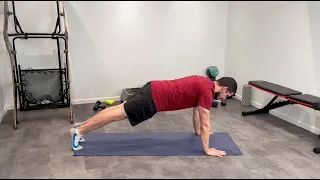
Keep the elbows straight and allow only the shoulder blades to move; reduce the range of motion if control deteriorates.
8 - 12 Repetitions
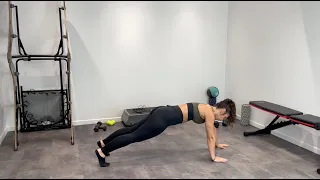
Move forward slowly into a solid plank position; shorten the distance if hamstring tightness limits the movement.
5 - 6 Repetitions
Place the feet slightly wider apart to limit pelvic rotation and engage the core before the pressing sets.
8 - 10 Repetitions
Standard
Main
Aim for about two repetitions in reserve. Once you can perform the top of the target range with good form on every set, first increase the range of motion or add a pause at the bottom, then progress to a more difficult variation. Use the knee-supported variation if you cannot reach the lower end of the range with clean form. Read more Read less
Aim for about two repetitions in reserve. Once you can perform the top of the target range with good form on every set, first increase the range of motion or add a pause at the bottom, then progress to a more difficult variation. Use the knee-supported variation if you cannot reach the lower end of the range with clean form.
Set
1: 8 - 15 Repetitions
Rest time : 1 minute
Set
2: 8 - 15 Repetitions
Rest time : 1 minute
Set
3: 8 - 15 Repetitions
Rest time : 1 minute
Set
4: 8 - 15 Repetitions
Rest time : 45 seconds
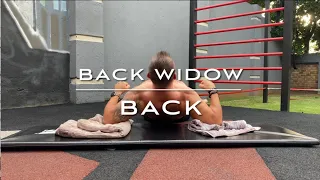
Aim for a strong upper-back contraction by driving the elbows into the floor without shrugging the shoulders. To progress without equipment, slow the lowering phase or briefly hold the contraction at the top. Read more Read less
Aim for a strong upper-back contraction by driving the elbows into the floor without shrugging the shoulders. To progress without equipment, slow the lowering phase or briefly hold the contraction at the top.
Set
1: 10 - 18 Repetitions
Rest time : 1 minute
Set
2: 10 - 18 Repetitions
Rest time : 1 minute
Set
3: 10 - 18 Repetitions
Rest time : 1 minute
Set
4: 10 - 18 Repetitions
Rest time : 45 seconds
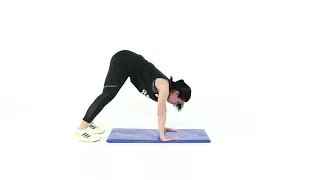
Keep the hips high and direct the head between the hands. Reduce the range of motion if the shoulders lose their intended path; gradually increase the range before choosing a more challenging variation. Read more Read less
Keep the hips high and direct the head between the hands. Reduce the range of motion if the shoulders lose their intended path; gradually increase the range before choosing a more challenging variation.
Set
1: 6 - 12 Repetitions
Rest time : 1 minute
Set
2: 6 - 12 Repetitions
Rest time : 1 minute
Set
3: 6 - 12 Repetitions
Rest time : 45 seconds
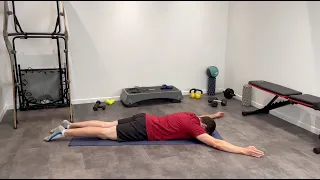
Raise the arms without arching the lower back. The priority is to improve scapular control to compensate for the lack of loaded pulling; add a pause at the top before increasing the difficulty. Read more Read less
Raise the arms without arching the lower back. The priority is to improve scapular control to compensate for the lack of loaded pulling; add a pause at the top before increasing the difficulty.
Set
1: 10 - 16 Repetitions
Rest time : 45 seconds
Set
2: 10 - 16 Repetitions
Rest time : 45 seconds
Set
3: 10 - 16 Repetitions
Rest time : 30 seconds
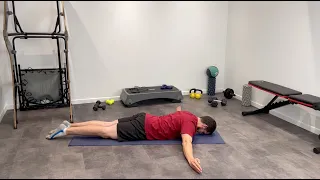
Keep the forehead close to the floor and squeeze the shoulder blades together without using momentum. If the set becomes too easy, slow the lowering phase and hold the contraction longer rather than speeding up. Read more Read less
Keep the forehead close to the floor and squeeze the shoulder blades together without using momentum. If the set becomes too easy, slow the lowering phase and hold the contraction longer rather than speeding up.
Set
1: 10 - 16 Repetitions
Rest time : 45 seconds
Set
2: 10 - 16 Repetitions
Rest time : 45 seconds
Set
3: 10 - 16 Repetitions
Rest time : 30 seconds
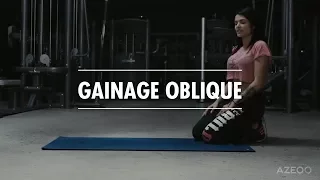
Maintain a stable line from shoulders to hips to ankles. Start from the knees if necessary; progress by increasing duration, then by using a longer-lever variation, without compromising core bracing. Read more Read less
Maintain a stable line from shoulders to hips to ankles. Start from the knees if necessary; progress by increasing duration, then by using a longer-lever variation, without compromising core bracing.
Set
1: 25 seconds - 45 seconds
Rest time : 45 seconds
Set
2: 25 seconds - 45 seconds
Rest time : 45 seconds
Set
3: 25 seconds - 45 seconds
Rest time : 30 seconds
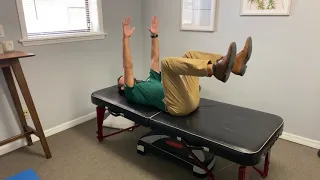
Keep the lower back in contact with the floor and exhale during the extension. Gradually lengthen the levers only if the pelvis remains stable. Read more Read less
Keep the lower back in contact with the floor and exhale during the extension. Gradually lengthen the levers only if the pelvis remains stable.
Set
1: 8 - 12 Repetitions
Rest time : 45 seconds
Set
2: 8 - 12 Repetitions
Rest time : 45 seconds
Set
3: 8 - 12 Repetitions
Standard
Cool-down
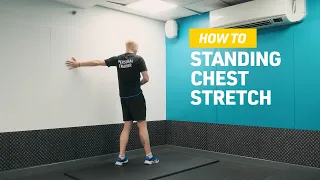
Use a gentle stretch after the pressing volume; stay well below any pinching sensation at the front of the shoulder.
20 seconds - 30 seconds
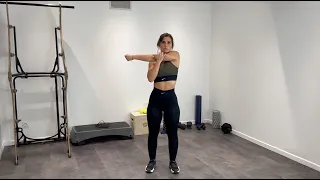
Gently release the back of the shoulder without pulling forcefully on the joint.
20 seconds - 30 seconds
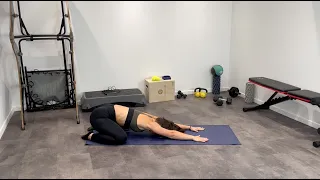
Use this stretch only as part of the cooldown to relax the upper back after scapular work.
20 seconds - 30 seconds
This workout is part of a complete program.
View program