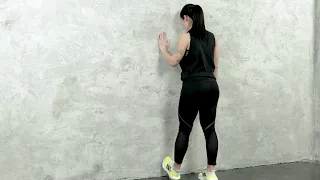
Demonstration video
Receive your personalized program
Stop training at random.
Get my programGet a program adapted to your goals, level, and available equipment. Reach your goals faster with a structured plan designed just for you.
- Program tailored to your profile
- Guided progression
- Compatible with your equipment
- Structured plan
Our coach prepares your program
Get my programHow to do the downdog calf stretch
Instructions
- Start in a downward dog position with hands and feet on the mat.
- Lift one heel off the ground while pressing the opposite heel toward the floor.
- Keep your hips raised and spine extended.
- Hold the stretch for the desired time before switching sides.
Technical tips
- Do not round your back, keep it lengthened.
- Distribute weight evenly between hands and feet.
- Keep shoulders relaxed and away from ears.
Breathing tips
- Inhale as you prepare and lengthen the spine.
- Exhale slowly as you press the heel toward the ground.
- Maintain steady breathing while holding the stretch.
Medical restrictions
- Severe wrist pain or carpal tunnel syndrome
- Acute hamstring or calf injury
- Shoulder impingement or instability
Description
The Downdog Calf Stretch is a beginner-friendly yoga-inspired stretch designed to lengthen and release tightness in the calves while also providing a gentle stretch for the hamstrings and lower back. Performed from the downward dog position, this exercise involves pressing one heel toward the floor while lifting the opposite heel, allowing for targeted isolation of each calf. It is particularly beneficial for individuals who spend long hours standing, running, or engaging in sports that place heavy demand on the lower legs.
In addition to improving calf flexibility, the Downdog Calf Stretch encourages better ankle mobility, which is crucial for proper walking, running, and squatting mechanics. The position also engages the hamstrings, glutes, and core muscles, promoting an overall sense of balance and stability. Because of its controlled nature, it can be incorporated into warm-ups to prepare the muscles for activity or used as part of a cool-down routine to reduce tension and prevent stiffness.
This stretch is widely used in yoga, Pilates, and general fitness programs, making it highly versatile and accessible without equipment. Regular practice can enhance circulation, reduce the risk of muscle cramps, and support better posture through improved lower-body alignment. Ideal for athletes, fitness enthusiasts, and beginners alike, the Downdog Calf Stretch provides both immediate relief and long-term mobility benefits.
Read more
Read less
Description
The Downdog Calf Stretch is a beginner-friendly yoga-inspired stretch designed to lengthen and release tightness in the calves while also providing a gentle stretch for the hamstrings and lower back. Performed from the downward dog position, this exercise involves pressing one heel toward the floor while lifting the opposite heel, allowing for targeted isolation of each calf. It is particularly beneficial for individuals who spend long hours standing, running, or engaging in sports that place heavy demand on the lower legs. In addition to improving calf flexibility, the Downdog Calf Stretch encourages better ankle mobility, which is crucial for proper walking, running, and squatting mechanics. The position also engages the hamstrings, glutes, and core muscles, promoting an overall sense of balance and stability. Because of its controlled nature, it can be incorporated into warm-ups to prepare the muscles for activity or used as part of a cool-down routine to reduce tension and prevent stiffness. This stretch is widely used in yoga, Pilates, and general fitness programs, making it highly versatile and accessible without equipment. Regular practice can enhance circulation, reduce the risk of muscle cramps, and support better posture through improved lower-body alignment. Ideal for athletes, fitness enthusiasts, and beginners alike, the Downdog Calf Stretch provides both immediate relief and long-term mobility benefits.
Read more Read lessFAQ