Standing Hamstring Curl
Demonstration video

Recommended by our experts
Receive your personalized program
Stop training at random.
Get my program- Program tailored to your profile
- Guided progression
- Compatible with your equipment
- Structured plan
Our coach prepares your program
Get my programHow to do Standing Hamstring Curl
Instructions
- Stand upright with your feet hip-width apart.
- Lightly place one hand on a stable support if needed.
- Shift your weight onto one leg while keeping your torso tall.
- Bend the opposite knee and bring your heel toward your buttocks.
- Pause briefly at the top without moving your thigh forward.
- Lower your foot slowly to the starting position.
- Complete the repetitions, then switch legs.
Technical tips
- Keep both knees close together throughout the movement.
- Maintain a neutral pelvis and avoid arching your lower back.
- Keep the working thigh vertical instead of lifting it forward.
- Move slowly and avoid using momentum.
- Keep a slight bend in the supporting knee rather than locking it.
Breathing tips
- Exhale as you bend your knee and lift your heel.
- Inhale as you lower your foot under control.
- Continue breathing naturally while maintaining an upright posture.
Medical restrictions
- Acute hamstring strain or tendon injury
- Acute knee pain, swelling, locking, or instability
- Severe balance impairment without supervision or secure support
- Recent knee or hip surgery without medical clearance
Description
Standing Knee Flexion is a low-impact bodyweight exercise that develops controlled bending of the knee while maintaining an upright position. Its primary value is improving the strength, coordination, and movement awareness needed for efficient lower-body function. The exercise is accessible to beginners and useful for people who want a simple way to build confidence with single-leg movement.
Performing the movement one side at a time helps reveal differences in control between the left and right legs. This unilateral demand can support more symmetrical movement and improve awareness of how each leg contributes during everyday tasks. The upright position also challenges postural stability and proprioception, which are important for walking, changing direction, climbing stairs, and maintaining balance during daily activities.
Regular practice may improve knee control, lower-limb coordination, and the ability to manage the leg through a comfortable range of motion. It can also support smoother gait mechanics by reinforcing the action used when the foot leaves the ground during walking. Because the exercise places minimal external load on the body, it is suitable for low-intensity strength development and gradual return-to-movement programs.
Standing Knee Flexion is particularly practical for home fitness, active aging, beginner conditioning, and general strengthening. It offers a clear progression pathway toward more demanding leg curl exercises while helping users establish control before adding resistance. Its simplicity, accessibility, and functional carryover make it a valuable exercise for improving everyday movement quality without requiring specialized equipment.
Frequently asked questions
-
What are the benefits of Standing Knee Flexion?
Standing Knee Flexion improves knee control, lower-body coordination, single-leg stability, and confidence during everyday movements such as walking and climbing stairs. -
What is the most common mistake I make during Standing Knee Flexion?
The most common mistake is moving the thigh forward or arching the lower back instead of bending only at the knee. Keep your knees aligned and your pelvis stable. -
Is Standing Knee Flexion safe for my knees?
Standing Knee Flexion is generally a low-impact knee exercise when performed in a comfortable range. Stop if you experience sharp pain, locking, swelling, or instability. -
Which muscles do I work with Standing Knee Flexion?
The exercise primarily targets the hamstrings. The calf muscles assist with knee bending, while the gluteal and abdominal muscles help stabilize the body. -
How many Standing Knee Flexion repetitions should I perform?
Beginners can perform 2 to 3 sets of 10 to 15 controlled repetitions per leg. Prioritize smooth movement and balance over speed. -
How is Standing Knee Flexion different from a machine leg curl?
Standing Knee Flexion uses bodyweight and adds a balance challenge, while a machine leg curl provides greater resistance and more support for targeted strength development.
Variants and alternatives
See all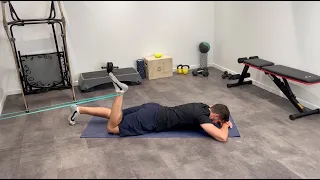
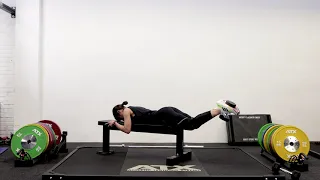
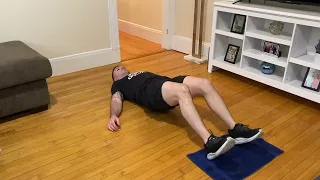
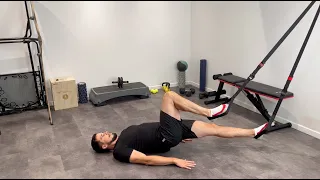
Related fitness articles
See all
Body recomposition: lose fat while building muscle
Muscle gain

Fitness formulas: protein, water, creatine and caffeine
Muscle gain

Carb cycling: useful for losing weight and performing better?
Nutrition
Muscle failure in strength training: what the science says
Muscle gain

Peptides in bodybuilding: effectiveness and risks
Nutrition
Chest pump push-up workout
Muscle gain
Succeeding at your first pull-up
At the gym

Shoulder pain in weight training: prevention and solutions
Risk of injuries
Recommended by our experts
Receive your personalized program
Stop training at random.
Get my program- Program tailored to your profile
- Guided progression
- Compatible with your equipment
- Structured plan
Our coach prepares your program
Get my program