Lower body â quadriceps and glutes
11 Exercises
Intro
Required equipment
Muscles
Standard
Warm-up
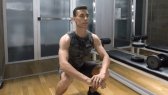
Brief warm-up before dumbbell work: use a comfortable range of motion and keep your knees tracking in line with your feet. If you feel joint discomfort, reduce the range of motion. Read more Read less
Brief warm-up before dumbbell work: use a comfortable range of motion and keep your knees tracking in line with your feet. If you feel joint discomfort, reduce the range of motion.
12 - 15 Repetitions
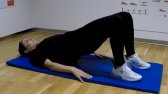
Activate the glutes without creating fatigue. Hold a brief contraction at the top and avoid overextending the lower back. Read more Read less
Activate the glutes without creating fatigue. Hold a brief contraction at the top and avoid overextending the lower back.
12 - 15 Repetitions
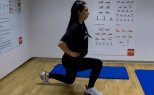
Prepare the hips and knees with controlled steps. Lightly hold on to a stable support if balance limits the warm-up.
8 - 10 Repetitions
Standard
Main
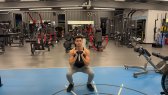
For muscle growth, use a load that leaves around 2 repetitions in reserve. Keep your core braced and use a controlled depth. If the available load becomes limiting, slow the lowering phase or increase the range of motion without compromising your position. Read more Read less
For muscle growth, use a load that leaves around 2 repetitions in reserve. Keep your core braced and use a controlled depth. If the available load becomes limiting, slow the lowering phase or increase the range of motion without compromising your position.
Set
1: 8 - 12 Repetitions
Rest time : 2 minutes
Set
2: 8 - 12 Repetitions
Rest time : 2 minutes
Set
3: 8 - 12 Repetitions
Rest time : 2 minutes
Set
4: 8 - 12 Repetitions
Rest time : 1 minute
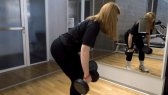
Train the hamstrings with a controlled hip hinge: push the hips back, keep a neutral spine, and keep the dumbbells close to your legs. Perform one or two progressive warm-up sets that do not count toward your working sets. Stop lowering as soon as you can no longer maintain proper position. Read more Read less
Train the hamstrings with a controlled hip hinge: push the hips back, keep a neutral spine, and keep the dumbbells close to your legs. Perform one or two progressive warm-up sets that do not count toward your working sets. Stop lowering as soon as you can no longer maintain proper position.
Set
1: 8 - 12 Repetitions
Rest time : 2 minutes
Set
2: 8 - 12 Repetitions
Rest time : 2 minutes
Set
3: 8 - 12 Repetitions
Rest time : 1 minute
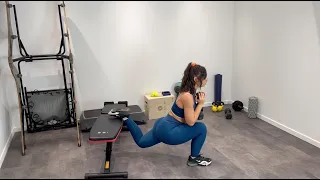
This unilateral exercise helps distribute the workload between both legs. Use a bench or a completely stable chair for the rear foot. If the setup feels uncomfortable, replace it with Dumbbell Reverse Lunge. Read more Read less
This unilateral exercise helps distribute the workload between both legs. Use a bench or a completely stable chair for the rear foot. If the setup feels uncomfortable, replace it with Dumbbell Reverse Lunge.
Set
1: 8 - 12 Repetitions
Rest time : 1 minute
Set
2: 8 - 12 Repetitions
Rest time : 1 minute
Set
3: 8 - 12 Repetitions
Rest time : 1 minute
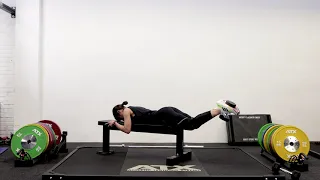
Add more direct hamstring work to better balance lower-body training volume. Hold the dumbbell securely between your feet and use a moderate load that you can control through the full range of motion. If holding the dumbbell is not secure, replace it with Dumbbell Romanian Deadlift using a lighter load. Read more Read less
Add more direct hamstring work to better balance lower-body training volume. Hold the dumbbell securely between your feet and use a moderate load that you can control through the full range of motion. If holding the dumbbell is not secure, replace it with Dumbbell Romanian Deadlift using a lighter load.
Set
1: 10 - 15 Repetitions
Rest time : 1 minute
Set
2: 10 - 15 Repetitions
Rest time : 1 minute
Set
3: 10 - 15 Repetitions
Rest time : 1 minute
Superset
Main
Do each exercise back to back without resting between them. Rest after completing the pair.
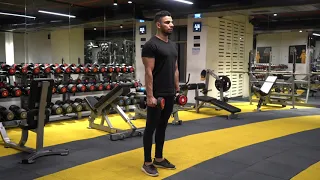
Use a full range of motion and a slow, controlled movement to maintain tension despite limited equipment. Lightly hold on to a support if needed so the exercise does not become primarily a balance challenge. Read more Read less
Use a full range of motion and a slow, controlled movement to maintain tension despite limited equipment. Lightly hold on to a support if needed so the exercise does not become primarily a balance challenge.
Set
1: 12 - 20 Repetitions
Set
2: 12 - 20 Repetitions
Set
3: 12 - 20 Repetitions
Chain without rest
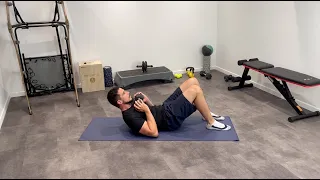
Use a light to moderate load held against the chest so progression remains measurable, as with the other main exercises. Curl the torso without pulling on the neck, and reduce the load if the lower back becomes uncomfortable. Read more Read less
Use a light to moderate load held against the chest so progression remains measurable, as with the other main exercises. Curl the torso without pulling on the neck, and reduce the load if the lower back becomes uncomfortable.
Set
1: 10 - 15 Repetitions
Rest time : 1 minute
Set
2: 10 - 15 Repetitions
Rest time : 1 minute
Set
3: 10 - 15 Repetitions
Standard
Cool-down

Use this as a brief cooldown after quadriceps work. Stretch without pain and avoid pulling forcefully on the knee.
30 seconds - 40 seconds
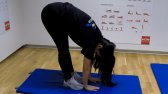
Maintain mild to moderate tension along the back of the thigh without excessively rounding the back or forcing the range of motion. Read more Read less
Maintain mild to moderate tension along the back of the thigh without excessively rounding the back or forcing the range of motion.
30 seconds - 40 seconds
This workout is part of a complete program.
View program