Demonstration video
Receive your personalized program
Stop training at random.
Get my programGet a program adapted to your goals, level, and available equipment. Reach your goals faster with a structured plan designed just for you.
- Program tailored to your profile
- Guided progression
- Compatible with your equipment
- Structured plan
Our coach prepares your program
Get my programHow to do the diaphragmatic breathing lying down
Instructions
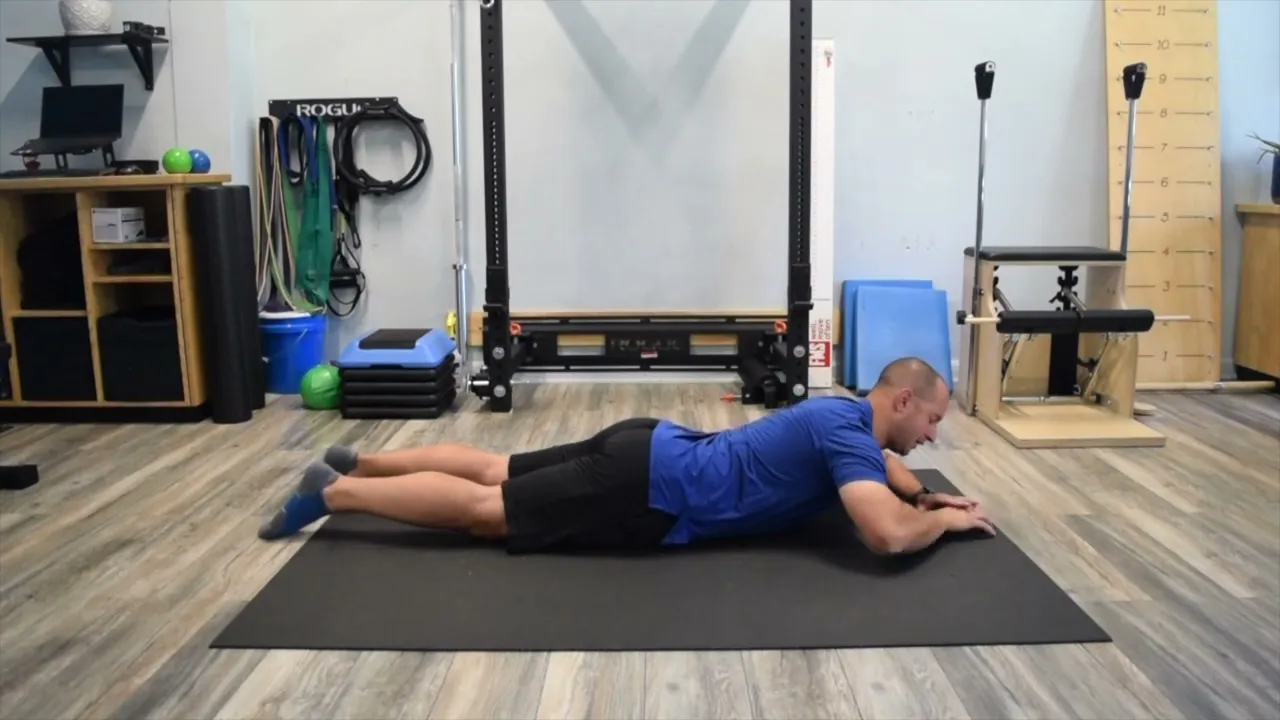
- Lie on your back on a yoga mat with knees bent and feet flat on the floor.
- Place one hand on your chest and the other on your abdomen.
- Slowly inhale through your nose, allowing your abdomen to rise.
- Keep your chest as still as possible while breathing in.
- Exhale slowly through your mouth or nose, letting your abdomen fall.
- Continue breathing slowly and rhythmically for the desired duration.
Technical tips
- Focus on expanding the abdomen rather than lifting the chest.
- Keep your shoulders relaxed and your neck neutral on the floor.
- Move slowly and maintain a steady rhythm to encourage deeper breathing.
- Use gentle abdominal expansion rather than forcing the breath.
Breathing tips
- Inhale slowly through the nose to allow the abdomen to expand naturally.
- Pause briefly at the top of the inhale without straining.
- Exhale slowly and completely to promote relaxation.
- Aim for longer, controlled exhalations to encourage calm breathing patterns.
Medical restrictions
- Severe respiratory distress or acute breathing difficulty
- Recent abdominal surgery unless cleared by a healthcare professional
- Severe uncontrolled respiratory conditions
Description
Supine breathing, commonly known as diaphragmatic breathing lying down, is a foundational breathing exercise designed to improve breathing efficiency, relaxation, and body awareness. Performed while lying comfortably on the floor or a yoga mat, this exercise encourages slow, controlled breaths that emphasize abdominal expansion rather than shallow chest breathing. The supine position naturally supports the spine and reduces tension in the body, making it easier to focus on deep, rhythmic breathing.
This exercise is widely used in fitness, yoga, rehabilitation, and stress-management programs. Practicing diaphragmatic breathing helps restore a more natural breathing pattern, which many people lose due to stress, poor posture, or sedentary habits. By consciously slowing the breath and allowing the abdomen to rise and fall, practitioners can improve oxygen exchange and promote a calmer physiological state.
Supine breathing is also an effective tool for relaxation and recovery. The slow breathing rhythm stimulates the parasympathetic nervous system, which helps reduce stress levels, lower heart rate, and support mental focus. For athletes and active individuals, this technique can be integrated into warm-ups, cooldowns, or mobility sessions to improve breathing control and enhance overall body awareness.
Because it requires no equipment and is easy to learn, diaphragmatic breathing lying down is an excellent entry point for beginners while still being valuable for experienced practitioners. Consistent practice can contribute to better breathing habits, improved relaxation, and greater control over stress and physical tension.
Read more
Read less
Description
Supine breathing, commonly known as diaphragmatic breathing lying down, is a foundational breathing exercise designed to improve breathing efficiency, relaxation, and body awareness. Performed while lying comfortably on the floor or a yoga mat, this exercise encourages slow, controlled breaths that emphasize abdominal expansion rather than shallow chest breathing. The supine position naturally supports the spine and reduces tension in the body, making it easier to focus on deep, rhythmic breathing. This exercise is widely used in fitness, yoga, rehabilitation, and stress-management programs. Practicing diaphragmatic breathing helps restore a more natural breathing pattern, which many people lose due to stress, poor posture, or sedentary habits. By consciously slowing the breath and allowing the abdomen to rise and fall, practitioners can improve oxygen exchange and promote a calmer physiological state. Supine breathing is also an effective tool for relaxation and recovery. The slow breathing rhythm stimulates the parasympathetic nervous system, which helps reduce stress levels, lower heart rate, and support mental focus. For athletes and active individuals, this technique can be integrated into warm-ups, cooldowns, or mobility sessions to improve breathing control and enhance overall body awareness. Because it requires no equipment and is easy to learn, diaphragmatic breathing lying down is an excellent entry point for beginners while still being valuable for experienced practitioners. Consistent practice can contribute to better breathing habits, improved relaxation, and greater control over stress and physical tension.
Read more Read lessFAQ