Standing W Raise
Demonstration video

Recommended by our experts
Receive your personalized program
Stop training at random.
Get my program- Program tailored to your profile
- Guided progression
- Compatible with your equipment
- Structured plan
Our coach prepares your program
Get my programHow to do Standing W Raise
Instructions
- Stand with your feet about hip-width apart and keep a slight bend in your knees.
- Hinge at the hips and lean your torso forward while keeping your spine neutral.
- Bend your elbows to about 90 degrees and position your arms so they form a W shape.
- Draw your shoulder blades back and down, then raise your arms until they are approximately level with your torso.
- Pause briefly, then lower your arms slowly to the starting position.
Technical tips
- Keep your neck long and avoid shrugging your shoulders.
- Brace your trunk and keep your ribs from flaring.
- Use a controlled range of motion without forcing your hands or elbows higher.
- Do not swing your arms or extend your lower back to create momentum.
Breathing tips
- Inhale before beginning each repetition.
- Exhale as you raise your arms and draw your shoulder blades together.
- Inhale as you lower your arms under control.
Medical restrictions
- Acute shoulder pain or recent shoulder surgery
- Symptomatic rotator cuff injury or shoulder impingement
- Acute neck or upper-back pain aggravated by arm elevation
- Low-back pain that prevents maintaining a comfortable hip-hinge position
Description
The Standing W Raise is a bodyweight upper-body exercise designed to improve scapular control, shoulder positioning, and postural endurance. It is performed from a stable standing hip-hinge position while the elbows remain bent and the arms form a clear “W” shape. The movement emphasizes controlled arm elevation combined with deliberate retraction and depression of the shoulder blades. This exercise is especially useful for people who spend long periods sitting, working at a desk, or training with a high volume of pressing movements. By reinforcing a balanced shoulder position, it can support cleaner upper-body mechanics during rows, presses, pull-ups, and everyday reaching tasks. The standing version also introduces a modest trunk-stability demand because the torso must remain fixed while the arms move. Because no equipment is required, the Standing W Raise works well in warm-ups, posture-focused routines, rehabilitation-oriented strength sessions, and low-load accessory training. It can be performed almost anywhere and is easy to scale by reducing the range of motion, slowing the tempo, or adding a brief pause at the top. The exercise should feel controlled rather than forceful. Quality matters more than lifting the arms as high as possible. A smooth repetition with stable ribs, a neutral spine, and relaxed neck positioning provides greater benefit than using momentum. Regular practice can improve body awareness, movement precision, and the ability to maintain a strong upper-body posture during training and daily activities.
Frequently asked questions
-
What are the benefits of doing the Standing W Raise?
The Standing W Raise improves scapular control, shoulder positioning, postural endurance, and upper-body movement quality without requiring equipment. -
What is the most common mistake in the Standing W Raise?
The most common mistake is shrugging the shoulders or arching the lower back to lift the arms higher. Keep the neck relaxed, ribs controlled, and movement range comfortable. -
Is the Standing W Raise safe for my shoulders and back?
It is generally safe when performed pain-free with a neutral spine and controlled range. Stop if you feel sharp pain, pinching, numbness, or symptoms that worsen during the movement. -
What muscles does the Standing W Raise target?
It primarily targets the shoulders and upper back, with strong involvement from the rear deltoids, rhomboids, and trapezius while the trunk stabilizes the hip-hinge position. -
How is the Standing W Raise different from the Prone W Raise?
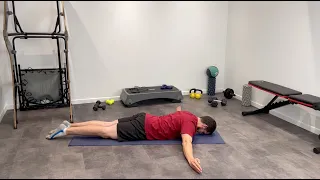
The standing version requires more trunk and hip-hinge stability, while the prone version provides more external support and may make it easier to isolate the upper-body movement. -
How many repetitions of the Standing W Raise should I do?
A practical starting point is 2 to 3 sets of 8 to 15 controlled repetitions, using a slow tempo and stopping before technique deteriorates.
Variants and alternatives
See all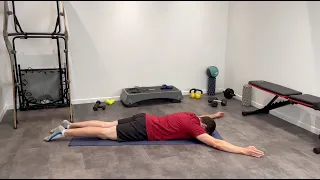
Related fitness articles
See all
Body recomposition: lose fat while building muscle
Muscle gain

Fitness formulas: protein, water, creatine and caffeine
Muscle gain

Carb cycling: useful for losing weight and performing better?
Nutrition

Muscle failure in strength training: what the science says
Muscle gain

Peptides in bodybuilding: effectiveness and risks
Nutrition
Chest pump push-up workout
Muscle gain
Succeeding at your first pull-up
At the gym

Shoulder pain in weight training: prevention and solutions
Risk of injuries
Recommended by our experts
Receive your personalized program
Stop training at random.
Get my program- Program tailored to your profile
- Guided progression
- Compatible with your equipment
- Structured plan
Our coach prepares your program
Get my program