Wall Lat Stretch
Demonstration video

Recommended by our experts
Receive your personalized program
Stop training at random.
Get my program- Program tailored to your profile
- Guided progression
- Compatible with your equipment
- Structured plan
Our coach prepares your program
Get my programHow to do Wall Lat Stretch
Instructions
- Stand facing a wall about one arm’s length away.
- Place both palms on the wall slightly above head height and shoulder-width apart.
- Step backward, soften your knees, and keep your arms straight.
- Push your hips backward while lowering your chest between your arms.
- Stop when you feel a comfortable stretch along the sides of your upper body.
- Hold the position, then slowly return to standing.
Technical tips
- Keep your ribs gently drawn down to avoid excessive lower-back arching.
- Hinge from your hips instead of rounding your lower back.
- Keep your elbows straight without forcefully locking them.
- Adjust your distance from the wall to control the stretch intensity.
- Use a pain-free range and avoid forcing your chest downward.
Breathing tips
- Inhale slowly through your nose before moving into the stretch.
- Exhale as you push your hips backward and lower your chest.
- Continue breathing steadily while holding the position.
- Use each exhale to relax slightly deeper without forcing the range.
Medical restrictions
- Acute shoulder pain, instability, or impingement symptoms
- Recent shoulder, elbow, or spinal surgery without medical clearance
- Acute lower-back pain aggravated by hip hinging
- Numbness, tingling, or radiating pain during overhead movement
Description
The Standing Wall Lat Stretch is a practical flexibility exercise that supports comfortable overhead movement and improved upper-body range of motion. It is particularly useful for people who spend long periods sitting, perform frequent pulling or pressing workouts, or regularly work with the arms positioned in front of the body. These habits can contribute to a restricted overhead position and a persistent feeling of tightness along the sides of the torso.
Regular practice can improve shoulder flexion, upper-back extension, and control of the rib cage during overhead movement. These changes may support more efficient technique in pull-ups, pulldowns, overhead presses, front squats, and other exercises that require the arms to move freely above the head. Improved range can also make everyday tasks such as reaching a high shelf, lifting objects overhead, or maintaining an upright posture feel easier and more natural.
The exercise provides a gentle way to explore range of motion without loading the joints heavily. Its intensity is easy to regulate, which makes it appropriate for both beginners and experienced athletes. When performed consistently, it can help improve movement awareness, reduce the sensation of stiffness after training, and promote smoother transitions into overhead positions.
The Standing Wall Lat Stretch is also convenient for short movement breaks during the day. A brief, controlled hold can help counter prolonged desk posture and restore a sense of length through the upper body, making it a useful addition to a general flexibility or recovery routine.
Frequently asked questions
-
What are the benefits of doing the Standing Wall Lat Stretch?
The Standing Wall Lat Stretch can improve overhead range of motion, reduce upper-body stiffness, support better posture, and make pulling and pressing movements feel more comfortable. -
What is the most common mistake when I do the Standing Wall Lat Stretch?
The most common mistake is excessively arching the lower back instead of moving through the hips and upper back. Keep your ribs controlled and use a comfortable range. -
Is the Standing Wall Lat Stretch safe for my shoulders and lower back?
It is generally safe when performed slowly and without pain. Reduce the depth if you feel joint discomfort, pinching, numbness, or excessive pressure in your lower back. -
How long should I hold the Standing Wall Lat Stretch?
Hold the stretch for 20 to 30 seconds and repeat it two or three times. Longer holds of up to 60 seconds may be used during a dedicated flexibility session.
Variants and alternatives
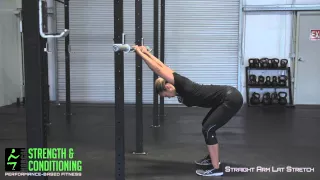
See all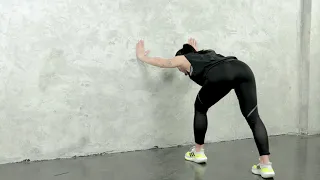
Related fitness articles
See all
Body recomposition: lose fat while building muscle
Muscle gain

Fitness formulas: protein, water, creatine and caffeine
Muscle gain

Carb cycling: useful for losing weight and performing better?
Nutrition

Muscle failure in strength training: what the science says
Muscle gain

Peptides in bodybuilding: effectiveness and risks
Nutrition
Chest pump push-up workout
Muscle gain
Succeeding at your first pull-up
At the gym

Shoulder pain in weight training: prevention and solutions
Risk of injuries
Recommended by our experts
Receive your personalized program
Stop training at random.
Get my program- Program tailored to your profile
- Guided progression
- Compatible with your equipment
- Structured plan
Our coach prepares your program
Get my program