Intro
Required equipment
No equipment
Muscles
Standard
Warm-up
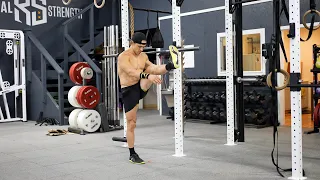
Mobilize the hips in a controlled manner before squats and lunges; avoid forcing the range of motion.
10 - 12 Repetitions
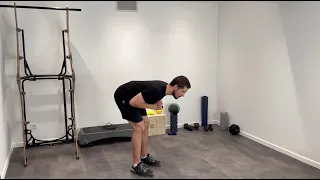
Practice the hip hinge with a neutral spine to prepare the hamstrings and glutes.
10 - 12 Repetitions
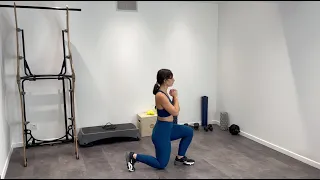
Use a comfortable range of motion and a smooth tempo; shorten the step if the front knee becomes uncomfortable.
8 - 10 Repetitions
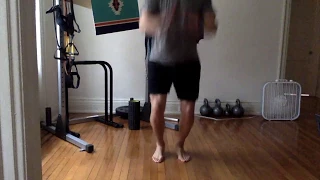
Keep the movement light and controlled to prepare the ankles; eliminate bouncing if the impact is uncomfortable.
15 - 20 Repetitions
Standard
Main
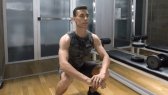
Descend only as low as you can while maintaining control. Once the top of the target range is mastered, progress with a pause at the bottom, a slower tempo, or one-and-a-half repetitions before considering a unilateral variation; do not use jumping as the primary progression. Read more Read less
Descend only as low as you can while maintaining control. Once the top of the target range is mastered, progress with a pause at the bottom, a slower tempo, or one-and-a-half repetitions before considering a unilateral variation; do not use jumping as the primary progression.
Set
1: 10 - 20 Repetitions
Rest time : 1 minute
Set
2: 10 - 20 Repetitions
Rest time : 1 minute
Set
3: 10 - 20 Repetitions
Rest time : 1 minute
Set
4: 10 - 20 Repetitions
Rest time : 45 seconds
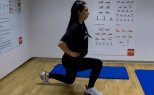
Keep the front foot stable and control the descent. Reduce the range of motion if the knee is uncomfortable; then gradually increase the range or add a pause before choosing a more difficult variation. Read more Read less
Keep the front foot stable and control the descent. Reduce the range of motion if the knee is uncomfortable; then gradually increase the range or add a pause before choosing a more difficult variation.
Set
1: 8 - 14 Repetitions
Rest time : 1 minute
Set
2: 8 - 14 Repetitions
Rest time : 1 minute
Set
3: 8 - 14 Repetitions
Rest time : 45 seconds
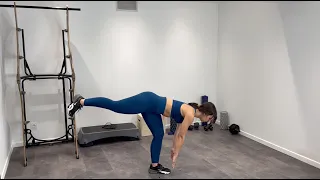
Use balance as a secondary constraint, not the goal: keep the hips facing the floor and limit the range of motion if the pelvis rotates. Return to the Bodyweight Good Morning if stability prevents you from effectively loading the hamstrings. Read more Read less
Use balance as a secondary constraint, not the goal: keep the hips facing the floor and limit the range of motion if the pelvis rotates. Return to the Bodyweight Good Morning if stability prevents you from effectively loading the hamstrings.
Set
1: 8 - 12 Repetitions
Rest time : 1 minute
Set
2: 8 - 12 Repetitions
Rest time : 1 minute
Set
3: 8 - 12 Repetitions
Rest time : 45 seconds
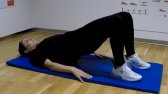
Finish the extension by contracting the glutes without arching the lower back. Once the top of the target range is mastered, add a pause at the top, then progress to the Single-Leg Glute Bridge if control remains solid. Read more Read less
Finish the extension by contracting the glutes without arching the lower back. Once the top of the target range is mastered, add a pause at the top, then progress to the Single-Leg Glute Bridge if control remains solid.
Set
1: 12 - 20 Repetitions
Rest time : 45 seconds
Set
2: 12 - 20 Repetitions
Rest time : 45 seconds
Set
3: 12 - 20 Repetitions
Rest time : 30 seconds
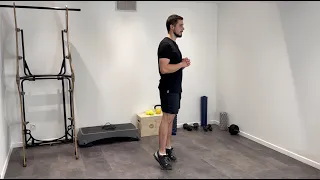
Move through the full available range of motion without bouncing. Once the top of the target range becomes easy, slow the lowering phase or progress to a unilateral version. Read more Read less
Move through the full available range of motion without bouncing. Once the top of the target range becomes easy, slow the lowering phase or progress to a unilateral version.
Set
1: 12 - 25 Repetitions
Rest time : 45 seconds
Set
2: 12 - 25 Repetitions
Rest time : 45 seconds
Set
3: 12 - 25 Repetitions
Rest time : 30 seconds
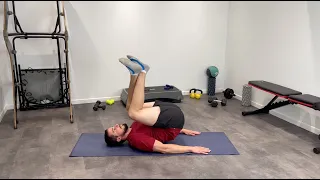
Posteriorly tilt the pelvis slightly without using momentum. Reduce the range of motion if the lower back lifts abruptly; progress through control and range of motion rather than speed. Read more Read less
Posteriorly tilt the pelvis slightly without using momentum. Reduce the range of motion if the lower back lifts abruptly; progress through control and range of motion rather than speed.
Set
1: 10 - 15 Repetitions
Rest time : 45 seconds
Set
2: 10 - 15 Repetitions
Rest time : 45 seconds
Set
3: 10 - 15 Repetitions
Standard
Cool-down
Use a light quadriceps stretch after squats and lunges; keep the knees close together without pulling forcefully.
20 seconds - 30 seconds
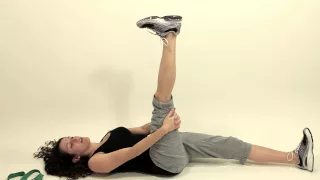
Gently stretch the hamstrings without excessively rounding the back.
20 seconds - 30 seconds
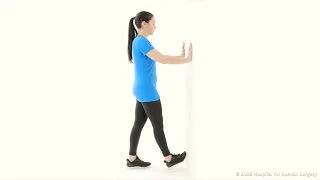
Keep the heel on the floor and maintain a comfortable level of tension after calf work.
20 seconds - 30 seconds
This workout is part of a complete program.
View program