Banded Glute Bridge March
Demonstration video

Recommended by our experts
Receive your personalized program
Stop training at random.
Get my program- Program tailored to your profile
- Guided progression
- Compatible with your equipment
- Structured plan
Our coach prepares your program
Get my programHow to do Banded Glute Bridge March
Instructions
- Lie on your back with knees bent, feet flat on the floor, and a resistance band above your knees.
- Lift your hips toward the ceiling, forming a straight line from shoulders to knees.
- Keeping hips elevated, lift one knee toward your chest in a controlled motion.
- Lower the lifted leg back to the floor and repeat with the opposite leg.
- Alternate legs while maintaining hip elevation throughout the movement.
Technical Tips
- Keep your core engaged to avoid arching the lower back.
- Do not let hips drop during leg lifts.
- Push knees outward slightly against the band for added glute engagement.
Breathing Tips
- Inhale before lifting the leg.
- Exhale as you lift one leg toward the chest.
- Inhale as you lower the leg and prepare to switch sides.
Medical restrictions
- Lower back pain
- Hip instability
- Recent hamstring strain
- Pelvic floor dysfunction
Description
The Banded Glute Bridge March is a dynamic lower-body exercise that enhances glute activation, core stability, and hip control. Performed with a resistance band placed above the knees, this movement combines the traditional glute bridge with a controlled marching motion to target each leg individually. As one leg lifts off the ground, the other continues to maintain hip elevation, intensifying the workload on the glutes and hamstrings. The added resistance band further activates the hip abductors, ensuring the knees remain properly aligned. This exercise is excellent for building unilateral strength, improving pelvic stability, and correcting imbalances between sides. It is particularly beneficial for athletes, fitness enthusiasts, and individuals recovering from lower-body injuries. Suitable for intermediate levels, the Banded Glute Bridge March can be used as a glute activation drill, a stability challenge, or as part of a functional strength routine. Whether in rehabilitation, warm-up, or bodyweight training, it provides a high return on effort for glute-focused development and postural control.
Frequently asked questions
-
What muscles do I work with the Banded Glute Bridge March?
The Banded Glute Bridge March primarily targets the glutes while also engaging the hamstrings, abs, quadriceps, and hip abductors due to the resistance band and unilateral leg movement. -
Is the Banded Glute Bridge March good for building glutes?
Yes, this exercise is excellent for building glutes as it isolates each side and uses a resistance band to increase glute and hip activation throughout the movement. -
Can I do the Banded Glute Bridge March without a resistance band?
You can perform the glute bridge march without a band, but the resistance band enhances glute engagement and hip stability, making it more effective. -
Should I feel my lower back during this exercise?
No, if performed correctly, your glutes should do most of the work. If you feel strain in your lower back, check your form and ensure your core is engaged. -
How many reps should I do of the Banded Glute Bridge March?
Aim for 8–12 controlled reps per leg, focusing on form and stability rather than speed or volume.
Variants and alternatives
See all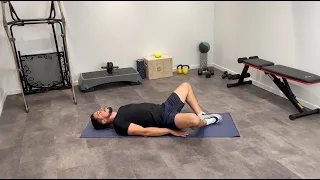
Frog pumps
Beginner
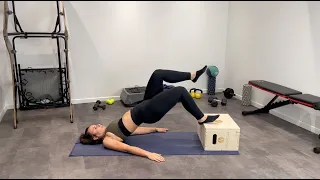
Feet elevated single leg glute bridge
Intermediate

Glute bridge hold
Beginner
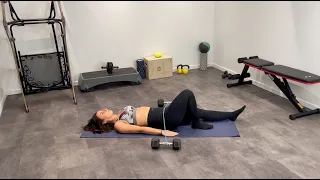
Banded single-leg glute bridge
Intermediate
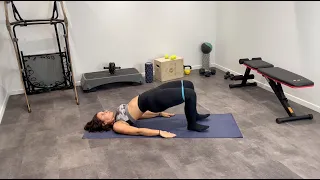
Glute loop glute bridges
Beginner
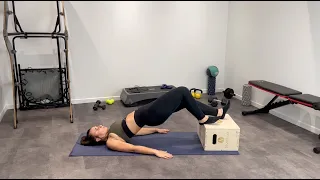
Feet elevated staggered glute bridge
Intermediate
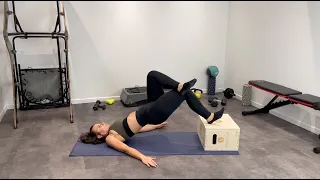
Feet elevated figure four glute bridge
Intermediate
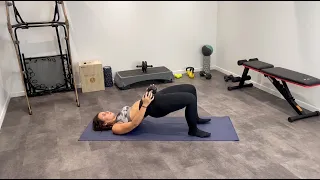
Dumbbell glute bridge
Beginner
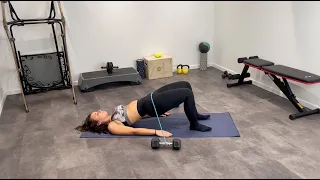
Banded glute bridge hold
Beginner
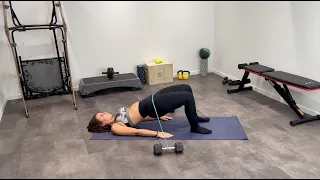
Banded glute bridge
Beginner
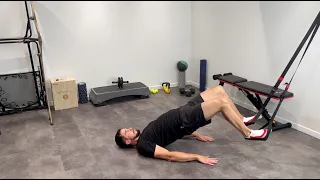
Trx glute bridge
Intermediate
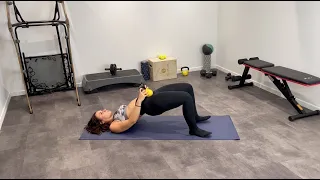
Kettlebell glute bridge
Beginner
Related fitness articles
See all
Body recomposition: lose fat while building muscle
Muscle gain

Fitness formulas: protein, water, creatine and caffeine
Muscle gain

Carb cycling: useful for losing weight and performing better?
Nutrition

Muscle failure in strength training: what the science says
Muscle gain

Peptides in bodybuilding: effectiveness and risks
Nutrition
Chest pump push-up workout
Muscle gain
Succeeding at your first pull-up
At the gym

Shoulder pain in weight training: prevention and solutions
Risk of injuries
Recommended by our experts
Receive your personalized program
Stop training at random.
Get my program- Program tailored to your profile
- Guided progression
- Compatible with your equipment
- Structured plan
Our coach prepares your program
Get my program