Kettlebell Wrist Curl
Demonstration video

Recommended by our experts
Receive your personalized program
Stop training at random.
Get my program- Program tailored to your profile
- Guided progression
- Compatible with your equipment
- Structured plan
Our coach prepares your program
Get my programHow to do Kettlebell Wrist Curl
Instructions
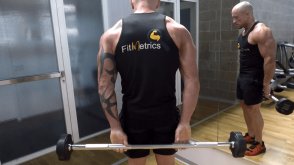
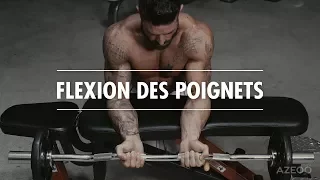
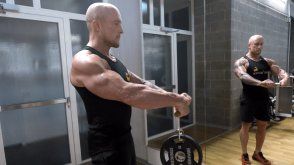
- Sit on a bench with your forearm resting on your thigh or bench, palm facing up, holding a kettlebell.
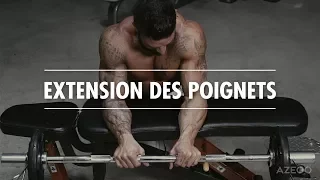
- Allow your wrist to extend fully downward while keeping your forearm stable.
- Curl the kettlebell upward by flexing your wrist only.
- Pause briefly at the top for maximal contraction.
- Lower the kettlebell slowly back to the starting position with control.
Technical Tips
- Keep your forearm completely still to isolate wrist flexion.
- Do not use momentum or lift your elbow off your thigh.
- Maintain a neutral grip without excessive squeezing to reduce forearm fatigue outside target muscles.
Breathing Tips
- Inhale as you lower the kettlebell slowly.
- Exhale as you curl the kettlebell upward.
Medical restrictions
- Wrist tendonitis
- Forearm strain
- Severe carpal tunnel syndrome
- Recent wrist surgery
Description
The kettlebell wrist curl is an effective isolation exercise designed to strengthen the forearm flexor muscles, improve wrist stability, and enhance grip strength for daily activities and other compound lifts. This exercise involves curling the wrist upward while holding a kettlebell, providing a direct load to the wrist flexors and stimulating hypertrophy and endurance adaptation in the forearms. Kettlebells create a unique resistance pattern compared to dumbbells due to their weight distribution, demanding greater stabilisation from the wrist joint throughout the movement. Incorporating kettlebell wrist curls into your routine can help reduce injury risk during heavy lifts such as deadlifts or rows by reinforcing wrist support and improving overall forearm conditioning. The wrist curl is suitable for beginners and athletes alike aiming to increase forearm size, grip strength, and wrist joint resilience. It is easy to integrate into arm or grip-focused training sessions as an accessory exercise to complement biceps, back, or functional grip training programmes.
Frequently asked questions
-
How do I perform kettlebell wrist curls correctly?
To perform kettlebell wrist curls correctly, sit with your forearm supported on your thigh, hold the kettlebell palm-up, let your wrist extend fully, and curl it upward using only wrist flexion while keeping your forearm still for maximum forearm activation and wrist strengthening. -
What muscles do kettlebell wrist curls work?
Kettlebell wrist curls primarily target the forearm flexor muscles, which are responsible for wrist flexion and grip strength, making them essential for improving wrist stability and supporting heavy lifts in bodybuilding and strength training. -
Are kettlebell wrist curls good for grip strength?
Yes, kettlebell wrist curls are excellent for improving grip strength as they directly strengthen the forearm flexors, enhancing your ability to hold weights securely during exercises such as deadlifts, rows, and carries. -
Should I use kettlebells or dumbbells for wrist curls?
Both kettlebells and dumbbells are effective for wrist curls, but kettlebells create a different load angle and stability demand due to their offset weight, which can provide an additional challenge and improve wrist stabilisation for balanced forearm development.
Related fitness articles
See all
Body recomposition: lose fat while building muscle
Muscle gain

Fitness formulas: protein, water, creatine and caffeine
Muscle gain

Carb cycling: useful for losing weight and performing better?
Nutrition

Muscle failure in strength training: what the science says
Muscle gain

Peptides in bodybuilding: effectiveness and risks
Nutrition
Chest pump push-up workout
Muscle gain
Succeeding at your first pull-up
At the gym

Shoulder pain in weight training: prevention and solutions
Risk of injuries
Recommended by our experts
Receive your personalized program
Stop training at random.
Get my program- Program tailored to your profile
- Guided progression
- Compatible with your equipment
- Structured plan
Our coach prepares your program
Get my program