Two-Handed Kettlebell Rear Delt Row
Demonstration video

Recommended by our experts
Receive your personalized program
Stop training at random.
Get my program- Program tailored to your profile
- Guided progression
- Compatible with your equipment
- Structured plan
Our coach prepares your program
Get my programHow to do Two-Handed Kettlebell Rear Delt Row
Instructions
- Stand with feet hip-width apart and place a kettlebell on the floor between your feet.
- Bend at the hips and knees to grip the kettlebell with both hands, keeping your back flat and chest up.
- Hinge your torso forward so it is nearly parallel to the ground, arms extended holding the kettlebell.
- Pull the kettlebell toward your upper abdomen by driving your elbows back and squeezing your shoulder blades together.
- Pause at the top, then slowly lower the kettlebell back down with control.
- Repeat the movement for the desired number of reps.
Technical Tips
- Keep your spine neutral and core braced throughout the movement.
- Avoid using momentum—focus on controlled movement.
- Pull with your elbows, not your hands.
- Keep the kettlebell close to your body during the row.
Breathing Tips
- Inhale as you lower the kettlebell.
- Exhale while pulling the kettlebell up.
Medical restrictions
- Avoid if experiencing acute lower back pain or lumbar instability.
- Not suitable for individuals with active shoulder impingement.
- Consult a healthcare professional if recovering from rotator cuff injury.
Description
The Two-Handed Kettlebell Rear Delt Row is a beginner-friendly exercise that targets the rear deltoids and upper back using a single kettlebell gripped with both hands. This movement is ideal for individuals with limited equipment or those looking to develop foundational strength and posture. The bent-over position emphasizes shoulder blade retraction and scapular stability, helping to correct postural imbalances commonly caused by dominant pressing routines. Holding the kettlebell with both hands ensures symmetrical activation and simplifies the load management, making it accessible for all fitness levels. This exercise is a practical addition to any upper-body or pull-day training program focused on improving shoulder health and upper back definition.
Frequently asked questions
-
Can I train my rear delts with just one kettlebell?
Yes, the Two-Handed Kettlebell Rear Delt Row effectively targets your rear delts using only one kettlebell, making it a practical choice for minimal equipment workouts. -
Is the Two-Handed Kettlebell Row suitable for beginners?
Absolutely, this exercise is beginner-friendly due to its stable grip and controlled movement, making it ideal for learning rear delt activation. -
What weight should I use for the Two-Handed Rear Delt Row?
Choose a moderate weight that allows you to perform the movement with control and proper form, avoiding momentum or swinging. -
Should I bend my knees during the row?
Yes, slightly bending your knees helps support the lower back and maintain a stable base during the movement. -
Can I include this exercise in a home workout?
Yes, this exercise requires only one kettlebell and no additional equipment, making it perfect for home-based upper-body training.
Variants and alternatives
See all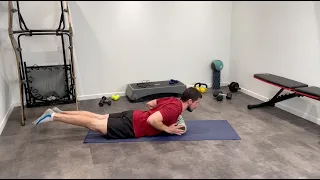
Prone pillow case row
Beginner
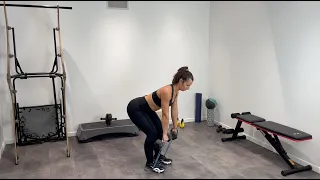
Banded pronation row with dumbbells
Intermediate
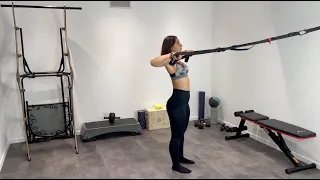
Trx rear delt row
Intermediate
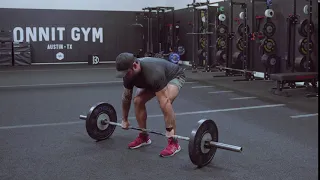
Barbell pendlay row
Intermediate
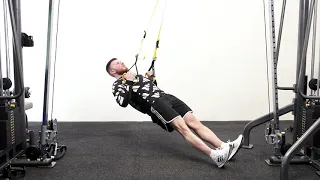
Trx inverted row
Beginner
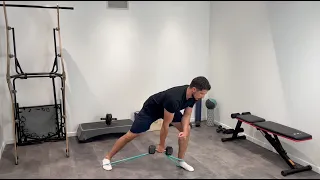
Banded chainsaw dumbbell row
Intermediate
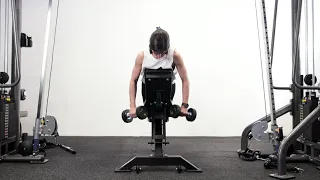
Dumbbell incline row
Intermediate
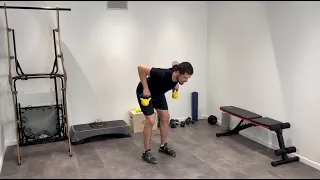
Kettlebell pronated row
Intermediate
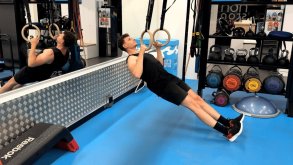
Ring row
Beginner
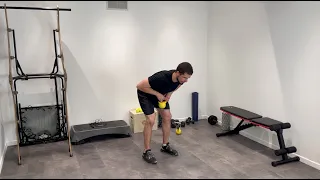
Single kettlebell pronation row
Intermediate
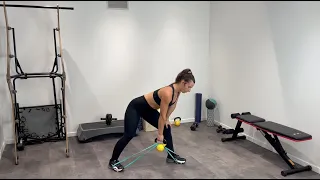
Banded kb chainsaw row
Intermediate
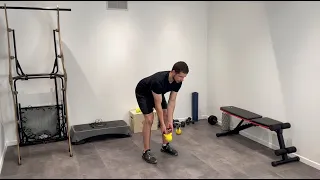
Single kettlebell supinated row
Intermediate
Related fitness articles
See all
Body recomposition: lose fat while building muscle
Muscle gain

Fitness formulas: protein, water, creatine and caffeine
Muscle gain

Carb cycling: useful for losing weight and performing better?
Nutrition

Muscle failure in strength training: what the science says
Muscle gain

Peptides in bodybuilding: effectiveness and risks
Nutrition
Chest pump push-up workout
Muscle gain
Succeeding at your first pull-up
At the gym

Shoulder pain in weight training: prevention and solutions
Risk of injuries
Recommended by our experts
Receive your personalized program
Stop training at random.
Get my program- Program tailored to your profile
- Guided progression
- Compatible with your equipment
- Structured plan
Our coach prepares your program
Get my program