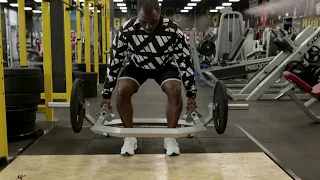
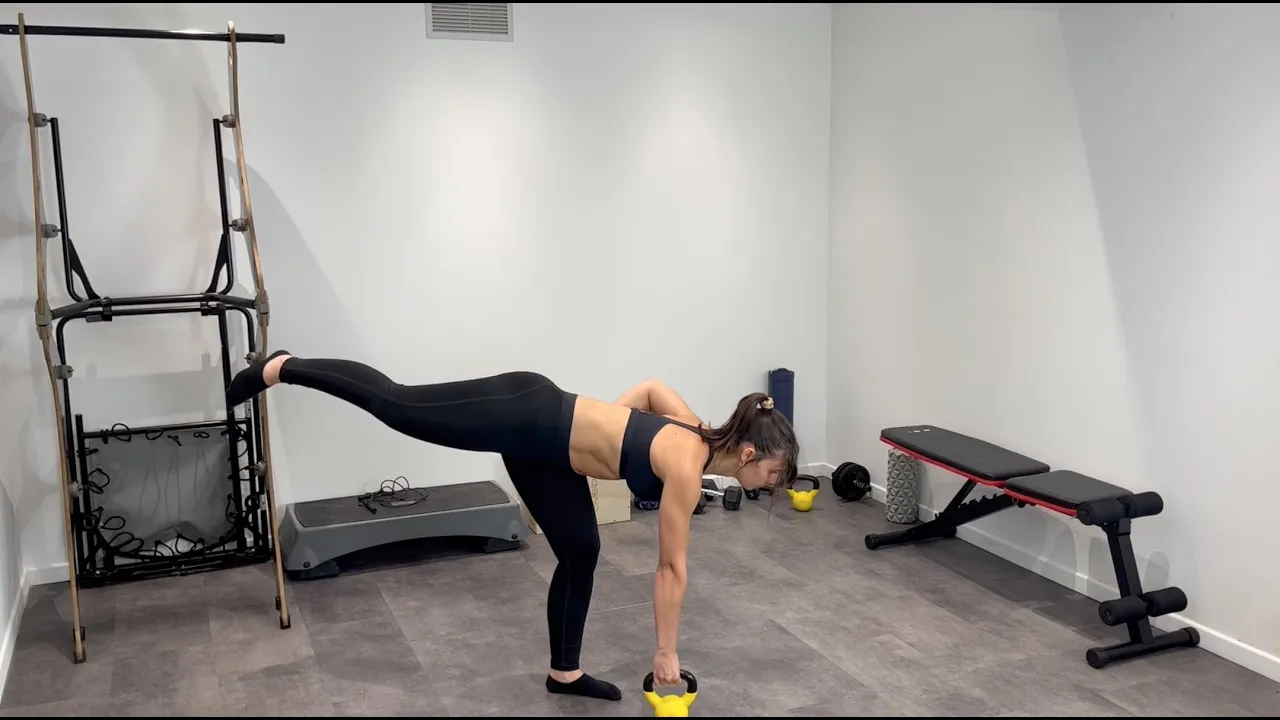
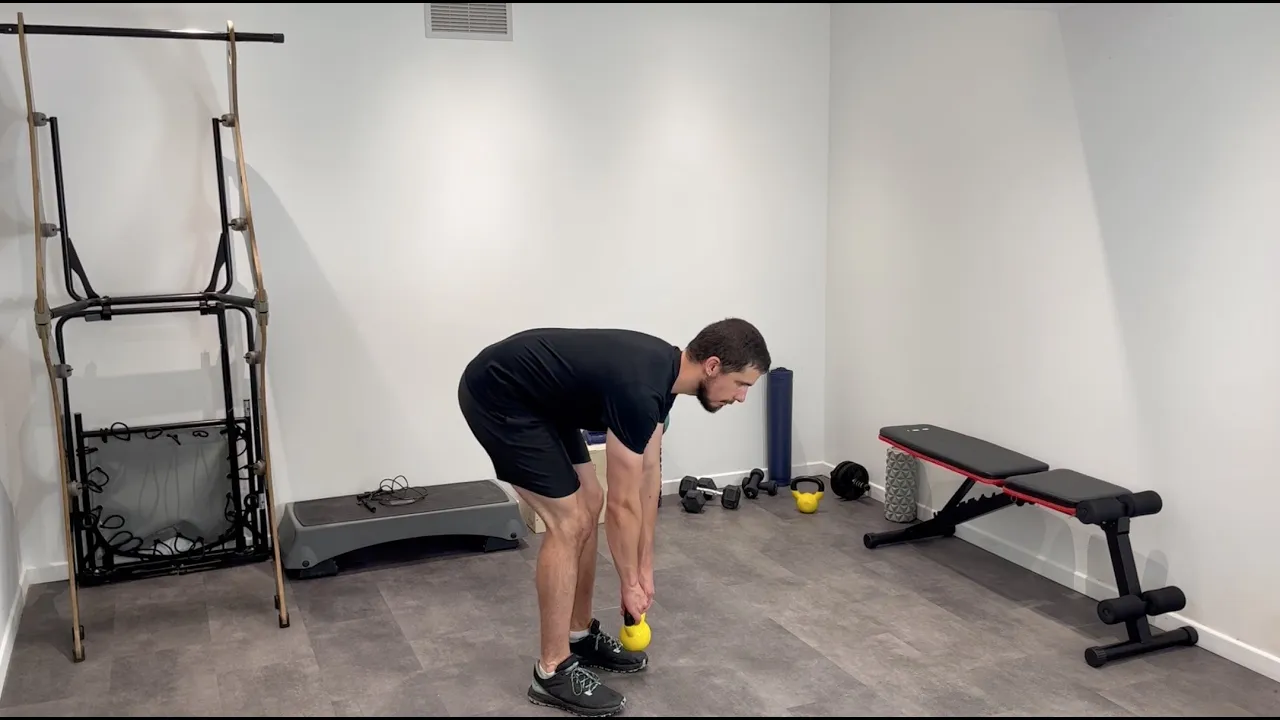
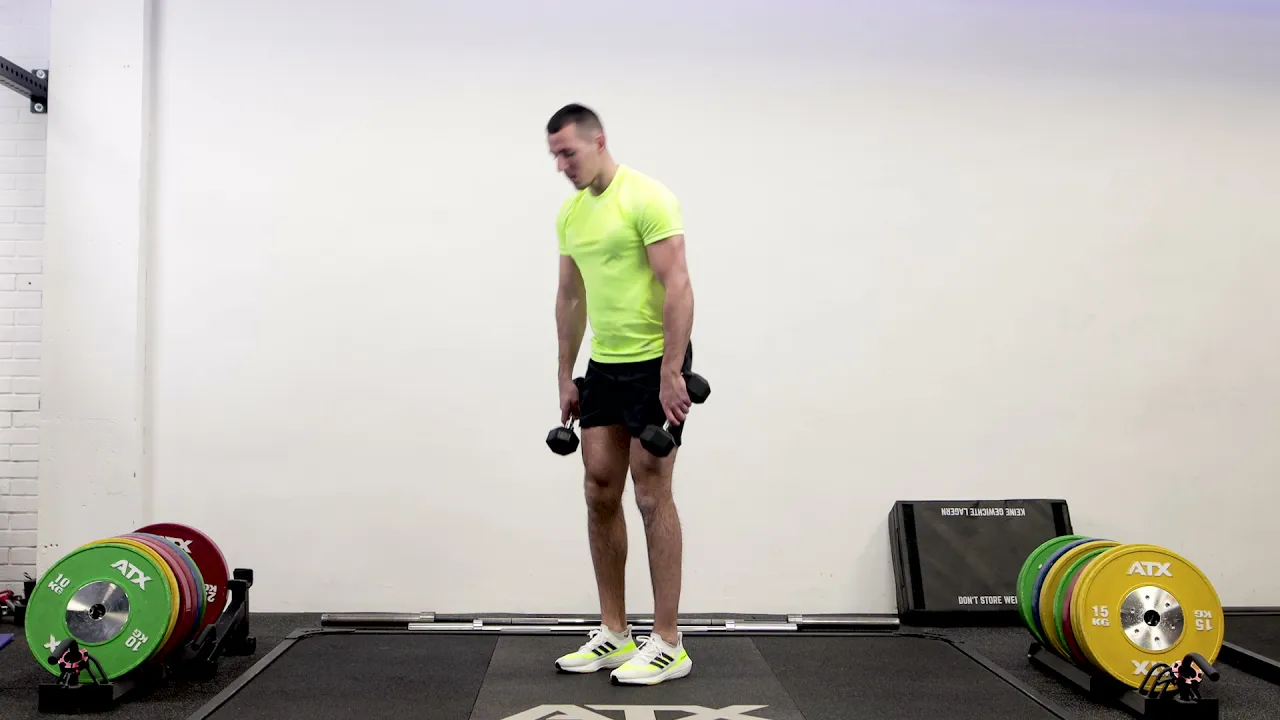
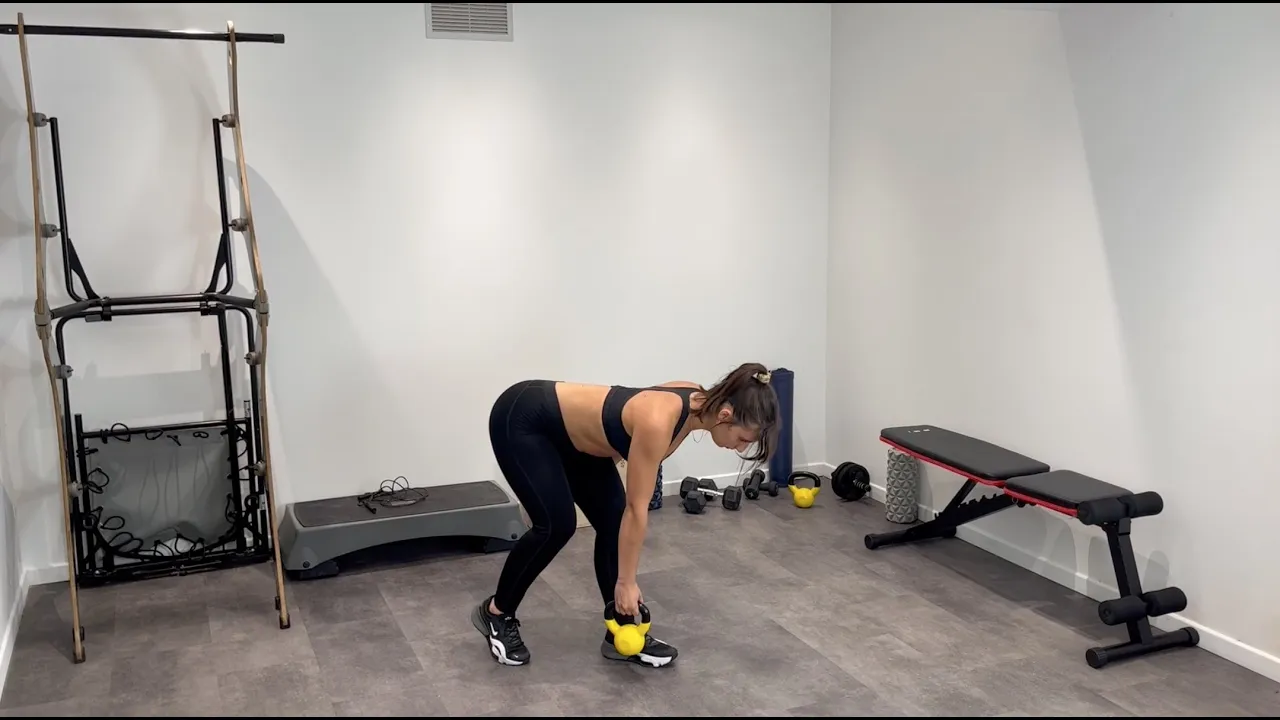
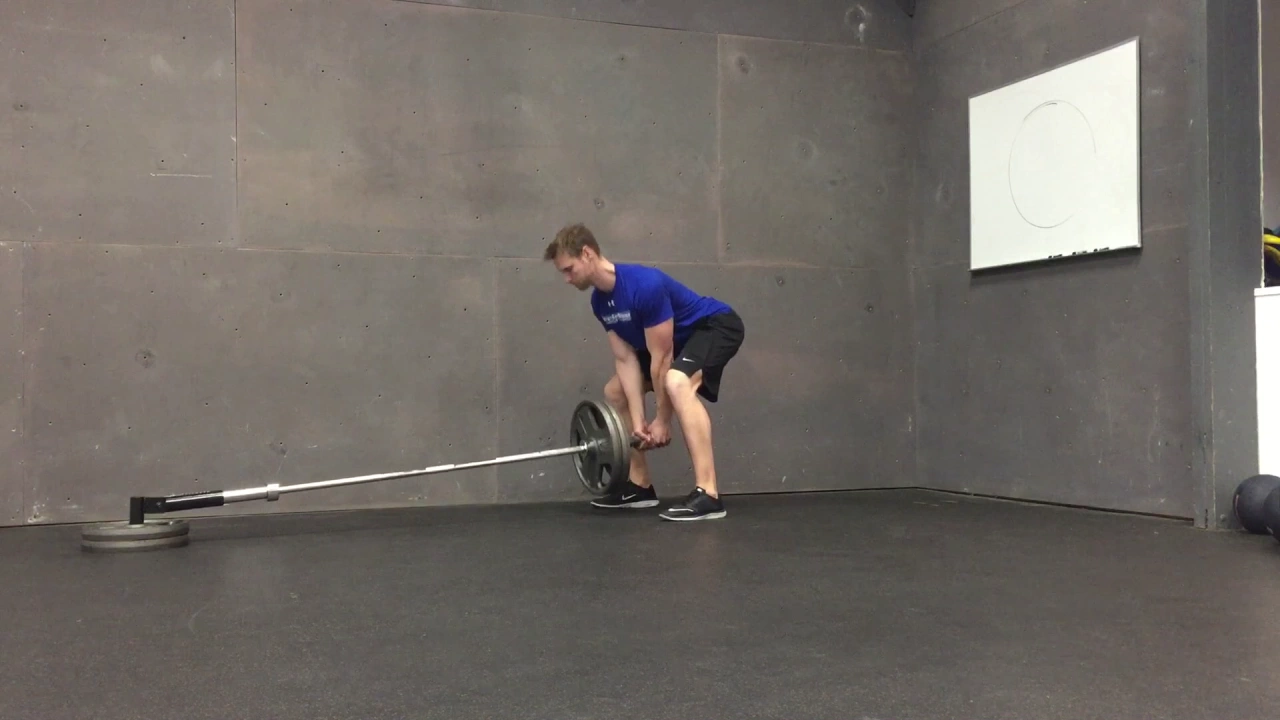
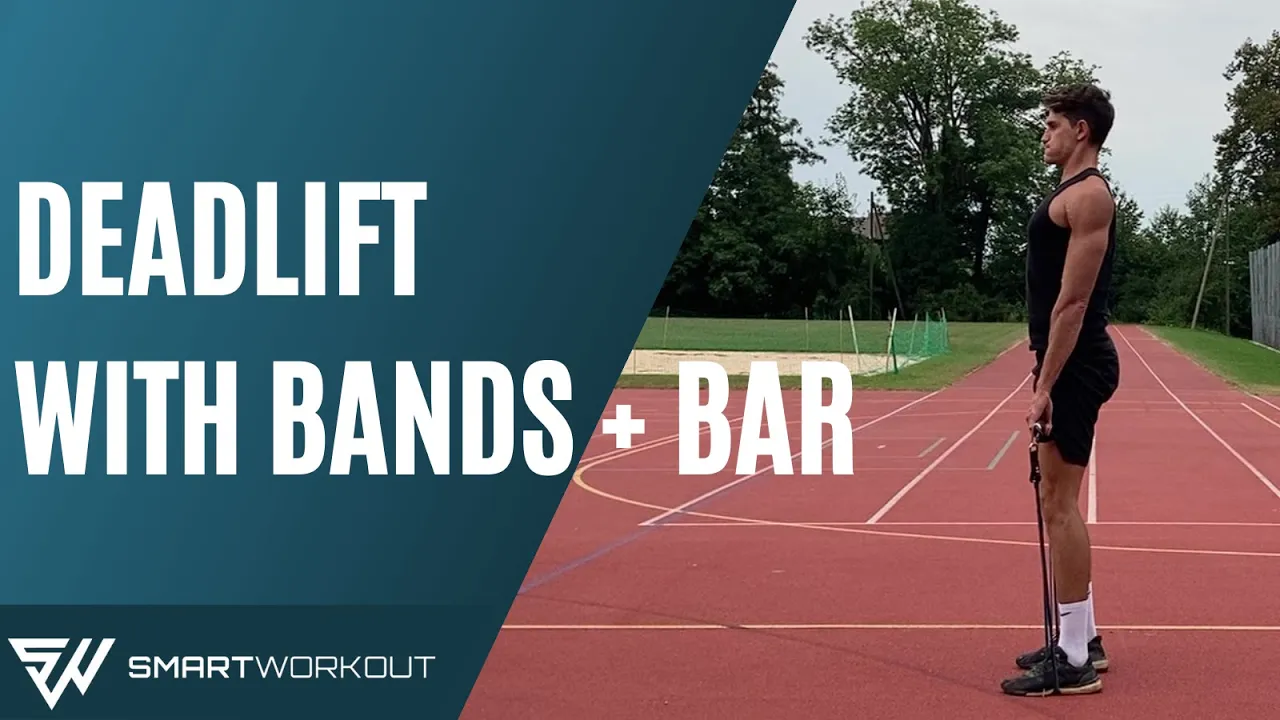
Demonstration video
Receive your personalized program
Stop training at random.
Get my programGet a program adapted to your goals, level, and available equipment. Reach your goals faster with a structured plan designed just for you.
- Program tailored to your profile
- Guided progression
- Compatible with your equipment
- Structured plan
Our coach prepares your program
Get my programHow to do the romanian deadlift
Instructions
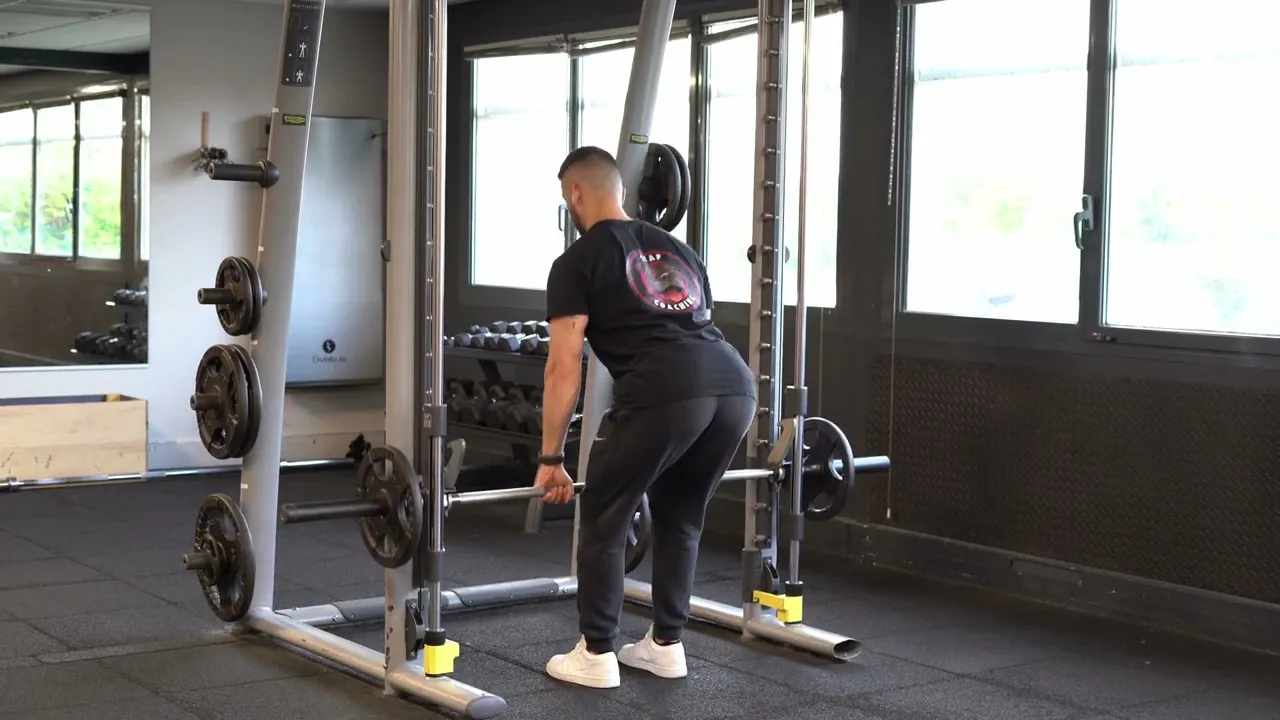
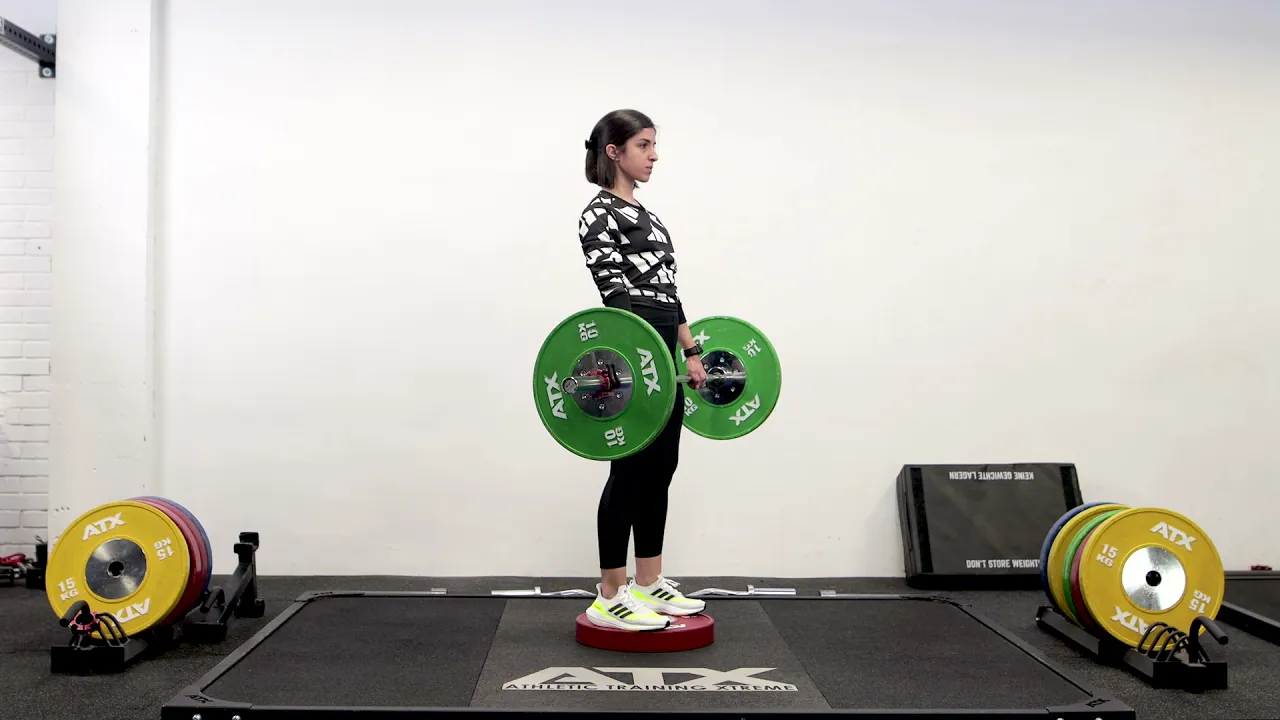
- Stand tall with your feet hip-width apart and your knees slightly bent.
- Brace your midsection and keep your chest open.
- Push your hips straight back while keeping your spine neutral.
- Lower your torso until you feel a strong stretch in the back of your thighs.
- Keep your weight balanced through your midfoot and heels.
- Drive your hips forward to return to standing without rounding your back.
- Repeat for controlled repetitions.
Technical tips
- Think about closing a car door with your hips.
- Keep the movement in the hips, not in the knees.
- Maintain a long neck and neutral spine throughout the rep.
- Stop lowering when your back position starts to change.
- Move slowly on the way down to improve control.
Breathing tips
- Inhale before hinging to create trunk tension.
- Hold gentle brace as you lower under control.
- Exhale as you drive the hips forward and stand tall.
- Reset your breath before the next repetition.
Medical restrictions
- Avoid this exercise if you have acute low back pain or a recent lumbar injury.
- Do not perform it with an active hamstring strain.
- Use caution if you have balance issues or dizziness when bending forward.
- Consult a qualified professional after hip surgery or with unresolved sciatic symptoms.
Description
The Romanian deadlift is a classic hip-hinge exercise that teaches you how to bend forward efficiently while keeping tension through the entire movement. When performed without equipment, it becomes an excellent drill for learning body control, improving posture under load-free conditions, and building movement quality before progressing to dumbbells, kettlebells, or a barbell. It is widely used in strength training, fitness, and athletic preparation because it reinforces one of the most important patterns in human movement: controlled hip flexion and extension.
A bodyweight Romanian deadlift helps develop better awareness of how to shift the hips back without collapsing through the torso. That makes it valuable for beginners learning the deadlift pattern, athletes refining mechanics, and anyone who wants a low-impact way to improve posterior-chain strength endurance. It can also support better sprinting, jumping, lifting, and everyday bending tasks by improving coordination and force transfer through the hips.
Another key benefit is that it builds control rather than relying on momentum. Because there is no external load, you can slow the lowering phase, focus on balance, and groove proper alignment. This makes the movement useful in warm-ups, technique sessions, and home workouts. Over time, the Romanian deadlift can improve hinge mechanics, body awareness, and movement efficiency, creating a strong foundation for more advanced strength exercises and reducing common form errors in loaded training.
Read more
Read less
Description
The Romanian deadlift is a classic hip-hinge exercise that teaches you how to bend forward efficiently while keeping tension through the entire movement. When performed without equipment, it becomes an excellent drill for learning body control, improving posture under load-free conditions, and building movement quality before progressing to dumbbells, kettlebells, or a barbell. It is widely used in strength training, fitness, and athletic preparation because it reinforces one of the most important patterns in human movement: controlled hip flexion and extension. A bodyweight Romanian deadlift helps develop better awareness of how to shift the hips back without collapsing through the torso. That makes it valuable for beginners learning the deadlift pattern, athletes refining mechanics, and anyone who wants a low-impact way to improve posterior-chain strength endurance. It can also support better sprinting, jumping, lifting, and everyday bending tasks by improving coordination and force transfer through the hips. Another key benefit is that it builds control rather than relying on momentum. Because there is no external load, you can slow the lowering phase, focus on balance, and groove proper alignment. This makes the movement useful in warm-ups, technique sessions, and home workouts. Over time, the Romanian deadlift can improve hinge mechanics, body awareness, and movement efficiency, creating a strong foundation for more advanced strength exercises and reducing common form errors in loaded training.
Read more Read lessFAQ