Chair Stand
Demonstration video

Recommended by our experts
Receive your personalized program
Stop training at random.
Get my program- Program tailored to your profile
- Guided progression
- Compatible with your equipment
- Structured plan
Our coach prepares your program
Get my programHow to do Chair Stand
Instructions
- Sit on a stable chair with feet flat on the floor, hip-width apart.
- Position your feet slightly behind your knees for better leverage.
- Lean your torso slightly forward while keeping your back neutral.
- Push through your heels and stand up until fully upright.
- Pause briefly at the top, maintaining balance.
- Lower yourself back down in a controlled manner until seated.
Technical tips
- Keep your knees aligned with your toes throughout the movement.
- Avoid collapsing your chest; maintain an upright posture.
- Distribute weight evenly through your heels and midfoot.
- Control the descent to avoid dropping onto the chair.
- Engage your core to stabilize your spine.
Breathing tips
- Inhale while sitting down and preparing for the movement.
- Exhale as you push through your legs to stand up.
- Maintain steady breathing throughout repetitions.
- Avoid holding your breath to reduce unnecessary pressure.
Medical restrictions
- Recent knee surgery or severe knee pain
- Hip joint injuries or mobility limitations
- Severe lower back pain or spinal instability
- Balance disorders without supervision
Description
The sit-to-stand exercise is a fundamental functional movement that mimics one of the most common daily activities: standing up from a seated position. It is widely used in fitness, rehabilitation, and general health programs due to its accessibility and effectiveness. This exercise helps develop foundational strength, coordination, and movement control, making it ideal for beginners, older adults, and anyone looking to improve overall lower body function.
In addition to building strength, the sit-to-stand movement enhances balance and stability, which are essential for preventing falls and maintaining independence in everyday life. It also reinforces proper movement mechanics that carry over into more advanced exercises such as squats and lunges. Because it requires no equipment, it can be performed virtually anywhere, making it a convenient option for home workouts or warm-up routines.
The sit-to-stand exercise also plays a key role in improving mobility and joint function, especially when performed with controlled tempo and proper form. It can be easily modified to suit different fitness levels, whether by adjusting chair height, adding assistance, or increasing repetition volume. Overall, it is a practical, scalable, and highly effective movement for building strength, improving functional fitness, and supporting long-term physical health.
Frequently asked questions
-
What are the benefits of doing the sit-to-stand exercise?
The sit-to-stand exercise improves lower body strength, balance, and functional mobility. It helps you perform daily activities more efficiently and reduces the risk of falls, especially for beginners and older adults. -
What is the most common mistake when performing sit-to-stand?
A common mistake is letting the knees collapse inward or using momentum instead of controlled movement. Maintaining proper knee alignment and controlled tempo ensures better results and reduces injury risk. -
Is the sit-to-stand exercise safe for my knees and back?
Yes, it is generally safe when performed with proper technique. Keep your back neutral, engage your core, and avoid excessive forward knee movement to minimize stress on joints. -
How can I make the sit-to-stand exercise easier or harder?
To make it easier, use a higher chair or push off lightly with your hands. To increase difficulty, lower the chair height, slow down the movement, or hold additional resistance like a weight. -
How does sit-to-stand compare to a squat?
The sit-to-stand is a beginner-friendly version of a squat that provides more support and control. Squats require greater balance and strength, making them more challenging but also more advanced.
Variants and alternatives
See all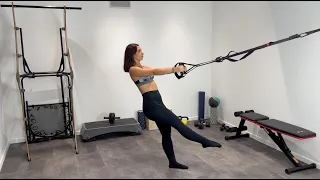
Trx pistol pendulum squat
Advanced
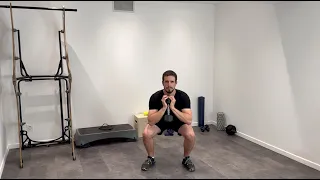
Dumbbell goblet pulse squat
Intermediate
Sumo squat with kettlebell
Beginner
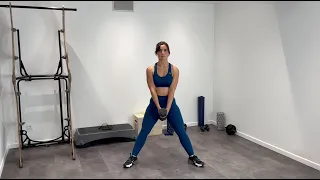
Dumbbell sumo squat
Beginner
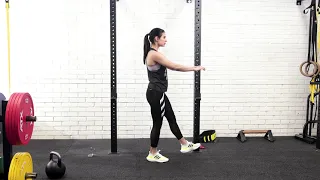
Pistol (one legged squat)
Advanced
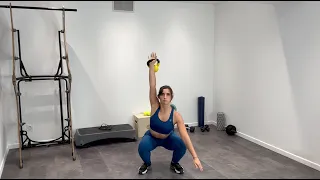
Single arm overhead squat with kettlebell
Advanced
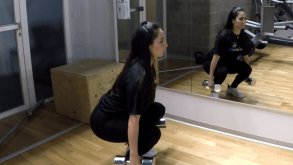
Dumbbell squat
Beginner
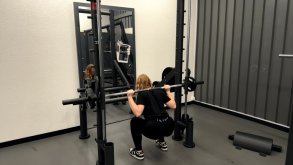
Smith machine squat
Beginner
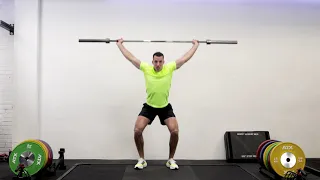
Overhead squat
Advanced
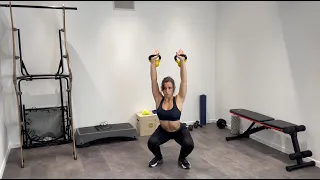
Kettlebell overhead squat
Advanced
Band squat hold
Beginner
Hack squat machine
Beginner
Related fitness articles
See all
Body recomposition: lose fat while building muscle
Muscle gain

Fitness formulas: protein, water, creatine and caffeine
Muscle gain

Carb cycling: useful for losing weight and performing better?
Nutrition

Muscle failure in strength training: what the science says
Muscle gain

Peptides in bodybuilding: effectiveness and risks
Nutrition
Chest pump push-up workout
Muscle gain
Succeeding at your first pull-up
At the gym

Shoulder pain in weight training: prevention and solutions
Risk of injuries
Recommended by our experts
Receive your personalized program
Stop training at random.
Get my program- Program tailored to your profile
- Guided progression
- Compatible with your equipment
- Structured plan
Our coach prepares your program
Get my program