Cable Chest Press
Demonstration video

Recommended by our experts
Receive your personalized program
Stop training at random.
Get my program- Program tailored to your profile
- Guided progression
- Compatible with your equipment
- Structured plan
Our coach prepares your program
Get my programHow to do Cable Chest Press
Instructions
- Set both cable pulleys around chest height and attach handles.
- Stand between the cables with one foot slightly forward for balance.
- Hold the handles beside your chest with elbows bent and slightly below shoulder height.
- Brace your core and keep your torso tall.
- Press the handles forward until your arms are nearly straight.
- Pause briefly, then return the handles under control to the starting position.
Technical tips
- Keep your wrists straight and aligned with your forearms.
- Do not let the elbows flare excessively above shoulder height.
- Avoid leaning too far forward or turning the press into a push-off movement.
- Control the cables on the way back instead of letting the weight pull your arms open.
- Keep the shoulder blades stable and avoid shrugging during the press.
Breathing tips
- Inhale as you bring the handles back toward your chest.
- Exhale as you press the handles forward.
- Keep light abdominal pressure throughout the set to maintain stability.
- Avoid holding your breath unless using a brief brace for heavier controlled reps.
Medical restrictions
- Avoid this exercise with acute shoulder pain or recent shoulder injury.
- Use caution with a history of shoulder impingement, labrum injury, or rotator cuff irritation.
- Avoid heavy loading after recent chest, shoulder, or elbow surgery unless cleared by a medical professional.
- Stop if you feel sharp pain, numbness, or joint instability during the movement.
- People with uncontrolled high blood pressure should avoid breath-holding and heavy maximal efforts.
Description
The Cable Chest Press is a highly effective strength exercise performed with a cable machine, offering constant resistance through the entire pressing motion. Unlike many fixed-path machines, the cable setup requires the lifter to control the handles independently, which can improve coordination, pressing control, and overall upper-body stability. This makes it a valuable option for building strength, improving symmetry, and developing a controlled pressing pattern that transfers well to many athletic and fitness goals.
A major benefit of the Cable Chest Press is its smooth resistance curve. The cables keep tension active from the start to the end of each repetition, allowing for a strong contraction without relying on momentum. The exercise is also easy to adjust: pulley height, stance, handle path, and body angle can all be modified to match different training goals and comfort levels.
Because it is performed standing or seated, the Cable Chest Press can fit well into bodybuilding, general fitness, functional training, and hypertrophy-focused programs. It is commonly used as a main pressing movement, an accessory exercise after heavier presses, or a controlled finisher at the end of a workout. For users who want a joint-friendly pressing option with excellent tension and precise control, the Cable Chest Press is a practical and versatile choice.
Frequently asked questions
-
What are the benefits of doing the Cable Chest Press?
The Cable Chest Press builds pressing strength, improves upper-body control, provides constant cable tension, and helps train both sides evenly because each handle must be controlled independently. -
What muscles does the Cable Chest Press target?
The Cable Chest Press primarily targets the chest, with support from the front deltoids, triceps, serratus anterior, and core muscles that help stabilize the body during the press. -
What is the most common mistake in the Cable Chest Press?
The most common mistake is letting the elbows flare too high or allowing the cables to pull the arms back too far, which can reduce control and increase shoulder stress. -
Is the Cable Chest Press safe for my shoulders?
The Cable Chest Press can be shoulder-friendly when performed with controlled range of motion, elbows slightly below shoulder height, and moderate load. Stop if you feel sharp pain or joint instability. -
Is the Cable Chest Press better than the machine chest press?
The Cable Chest Press offers more freedom of movement and requires more stabilization, while a machine chest press is easier to control and may be better for beginners or heavier loading. -
How many reps should I do for the Cable Chest Press?
For general strength and muscle building, perform 8 to 12 controlled reps per set. For lighter accessory work or a pump-focused finisher, 12 to 15 reps can work well. -
Can I do the Cable Chest Press one arm at a time?
Yes. A single-arm Cable Chest Press is a common variation that can help improve side-to-side balance, core stability, and pressing control.
Variants and alternatives
See all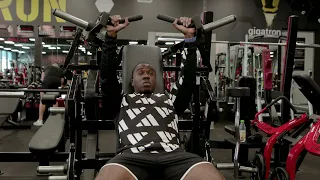
Seated leverage decline chest press
Intermediate
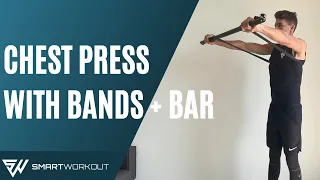
Chest press with resistance bands
Beginner
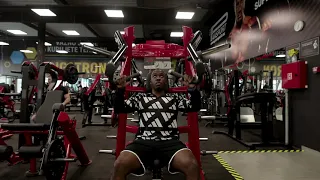
Leverage incline chest press
Beginner
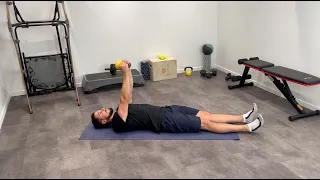
Kettlebell chest press
Intermediate
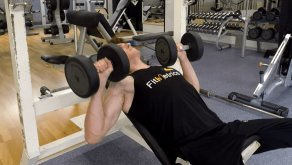
Incline dumbbell press
Intermediate
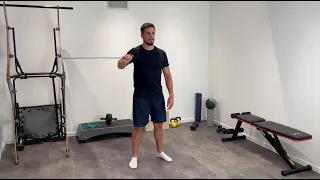
Single arm band chest press
Intermediate
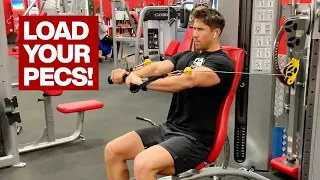
Seated cable chest press
Beginner
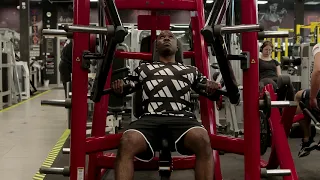
Leverage chest press
Beginner
Related programs
See all
Related fitness articles
See all
Body recomposition: lose fat while building muscle
Muscle gain

Fitness formulas: protein, water, creatine and caffeine
Muscle gain

Carb cycling: useful for losing weight and performing better?
Nutrition

Muscle failure in strength training: what the science says
Muscle gain

Peptides in bodybuilding: effectiveness and risks
Nutrition
Chest pump push-up workout
Muscle gain
Succeeding at your first pull-up
At the gym

Shoulder pain in weight training: prevention and solutions
Risk of injuries
Recommended by our experts
Receive your personalized program
Stop training at random.
Get my program- Program tailored to your profile
- Guided progression
- Compatible with your equipment
- Structured plan
Our coach prepares your program
Get my program