Seated Dumbbell Rear Delt Row
Demonstration video
Recommended by our experts
Receive your personalized program
Stop training at random.
Get my program- Program tailored to your profile
- Guided progression
- Compatible with your equipment
- Structured plan
Our coach prepares your program
Get my programHow to do Seated Dumbbell Rear Delt Row
Instructions
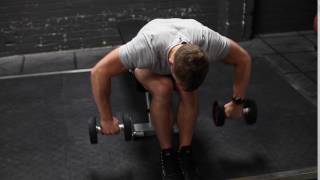
- Sit near the edge of a bench with your feet firmly planted on the floor and a dumbbell in each hand.
- Hinge forward at the hips while keeping your spine neutral and let the dumbbells hang below your shoulders.
- Keep a slight bend in your elbows and raise your upper arms out and back, leading with the elbows.
- Continue until your upper arms are roughly in line with your torso and squeeze your rear shoulders and upper back.
- Lower the dumbbells under control to the starting position and repeat.
Technical tips
- Lead the movement with your elbows rather than pulling with your hands.
- Keep your elbows flared away from your torso to emphasize the rear deltoids.
- Maintain a stable torso and avoid using momentum to lift the dumbbells.
- Use a moderate load that allows controlled shoulder movement through the full range of motion.
- Keep your neck neutral and avoid shrugging your shoulders toward your ears.
Breathing tips
- Exhale as you row the dumbbells upward and outward.
- Inhale as you lower the dumbbells under control.
- Maintain steady breathing without holding your breath during repetitions.
Medical restrictions
- Avoid the exercise with acute shoulder pain, significant shoulder instability, or a recent shoulder injury unless cleared by a healthcare professional.
- Avoid or modify the exercise if the forward-leaning seated position aggravates an acute lower-back condition.
- Use caution with acute elbow or wrist injuries that cause pain while gripping or rowing the dumbbells.
Description
The Seated Dumbbell Rear Delt Row is an upper-body resistance exercise designed to strengthen the posterior shoulders and upper back. The seated, forward-leaning position reduces lower-body involvement and helps emphasize horizontal shoulder abduction and scapular retraction. It is particularly useful for developing the rear deltoids, improving upper-back strength, supporting balanced shoulder development, and complementing pressing-focused training.
Frequently asked questions
-
What are the benefits of the Seated Dumbbell Rear Delt Row?
The exercise strengthens the rear deltoids and upper back, improves shoulder balance, develops scapular control, and provides useful pulling volume to complement chest and shoulder pressing exercises. -
What is the most common mistake when doing the Seated Dumbbell Rear Delt Row?
A common mistake is keeping the elbows too close to the torso, which shifts more work toward the lats. Keep the elbows flared and lead with them to emphasize the rear deltoids. -
Is the Seated Dumbbell Rear Delt Row safe for my shoulders and back?
It is generally safe when performed with a neutral spine, controlled tempo, appropriate load, and pain-free shoulder motion. Stop or modify the exercise if you experience sharp shoulder or lower-back pain. -
How is the seated rear delt row different from a standing dumbbell rear delt row?
The seated version provides a more stable base and reduces assistance from the legs, which can make it easier to isolate the rear shoulders and upper back. The standing version requires more stabilization from the hips, trunk, and lower back. -
What muscles does the Seated Dumbbell Rear Delt Row work?
It primarily targets the shoulders and upper back, with strong emphasis on the rear deltoids and rhomboids. The trapezius, brachialis, and forearm muscles also assist during the rowing motion.
Related programs
See all
Related fitness articles
See all
Body recomposition: lose fat while building muscle
Muscle gain

Fitness formulas: protein, water, creatine and caffeine
Muscle gain

Carb cycling: useful for losing weight and performing better?
Nutrition

Muscle failure in strength training: what the science says
Muscle gain

Peptides in bodybuilding: effectiveness and risks
Nutrition
Chest pump push-up workout
Muscle gain
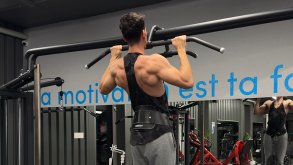
Succeeding at your first pull-up
At the gym

Shoulder pain in weight training: prevention and solutions
Risk of injuries
Recommended by our experts
Receive your personalized program
Stop training at random.
Get my program- Program tailored to your profile
- Guided progression
- Compatible with your equipment
- Structured plan
Our coach prepares your program
Get my program