Build muscle at home with dumbbells
Intro

8-week dumbbell hypertrophy program: four upper/lower-body sessions, controlled training volume, simple progression, and substitutions adapted to the equipment available.
This program develops the entire body with four strength-training sessions per week and a consistent structure maintained over eight weeks. Training volume is deliberately controlled to keep each session compatible with a duration of around 60 minutes.
Who is this program for?
It is designed for an intermediate trainee who wants to build muscle with basic equipment and has around 60 minutes available per session. Two upper-body sessions and two lower-body sessions provide regular stimulation for the major muscle groups while allowing sufficient recovery.
Weekly structure
- Monday: upper body A, with an emphasis on chest and horizontal pulling.
- Tuesday: lower body A, focusing on quadriceps, hamstrings, and glutes.
- Thursday: upper body B, using complementary angles for the back and shoulders.
- Saturday: lower body B, targeting the full legs, glutes, and core.
Equipment and substitutions
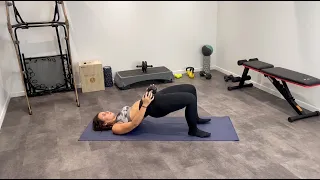
Dumbbells are the primary equipment. A kettlebell or barbell can replace a dumbbell when the movement allows it. If you do not have a bench, use the floor for presses and glute bridges, or a stable chair for movements that require support. If you have a resistance band, you can use it to add a vertical pulling movement or replace certain isolation exercises.
Progression with dumbbells
Train with around two repetitions in reserve. When the next available dumbbell represents a much larger increase than planned, keep the current load and first progress within the repetition range using strict technique before moving up to the next weight.
Monday : Upper body a — chest, back, and shoulders
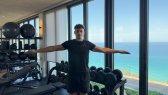
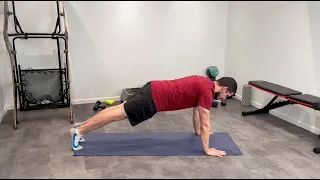
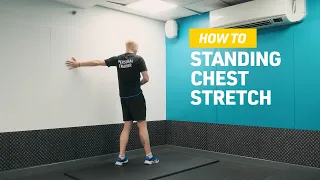
Keep your elbows straight and move only the shoulder blades to prepare for pressing movements and stabilize the shoulders. Read more Read less
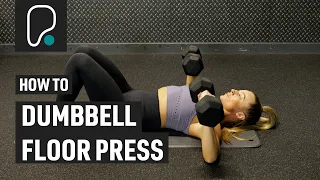
Train with around two repetitions in reserve. Lower your arms to the floor under control; if your shoulder becomes uncomfortable, slightly reduce the range of motion. Read more Read less
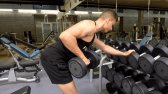
Complete the prescribed repetition range on each side. Stabilize your torso against a chair or sturdy support and avoid rotating your trunk to finish the repetition. Read more Read less
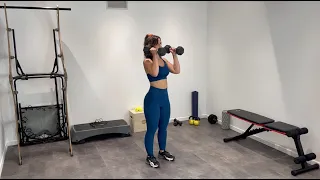
Keep your core braced and stop the set before your lower back begins to arch. A neutral grip is acceptable if it feels more comfortable. Read more Read less

Lower only as far as you can while maintaining control of your shoulders and rib cage. If a resistance band can be securely anchored overhead, Band Lat Pulldown can replace this exercise to add a true vertical pulling movement. Read more Read less
Do each exercise back to back without resting between them. Rest after completing the pair.

Use a load that allows you to lift without momentum. If the next available dumbbell is too heavy, keep the current load and first progress through additional repetitions and better control. Read more Read less
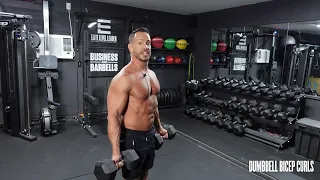
Keep your elbows close to your body and avoid swinging your torso. If the available weight increase is too large, stay with the same dumbbell until you can confidently perform the top end of the repetition range. Read more Read less
Keep your rib cage controlled and your elbows pointing forward. If the position bothers your shoulders, replace the exercise with Dumbbell Lying Triceps Extension. When dumbbell weight increments are large, prioritize additional repetitions and better control before increasing the load. Read more Read less
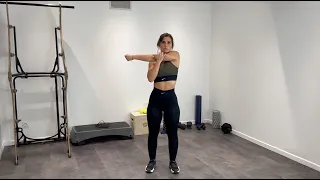
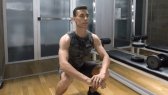
Lower through a comfortable range of motion and use this set to confirm that your knees, hips, and back are ready for loaded work. Read more Read less
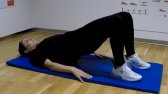
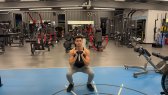
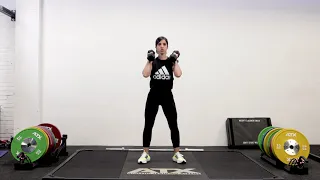
Keep around two repetitions in reserve and use a depth you can control. If grip strength becomes the limiting factor, hold two dumbbells in a front-loaded position. Read more Read less
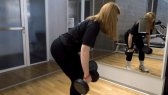
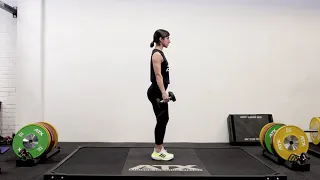
Push your hips back while keeping the dumbbells close to your legs. Stop the descent before you lose a neutral spine position. Read more Read less
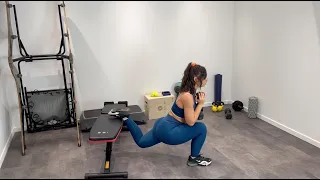
Complete the prescribed repetition range on each leg. Use a stable chair for the rear foot; if balance limits the set too much, replace the exercise with Dumbbell Split Squat. Read more Read less
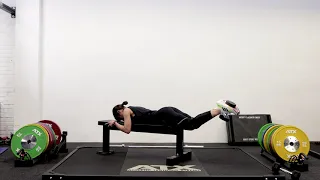
Lie face down and hold a light, stable dumbbell between your feet only if you can secure it without any risk of dropping it. Otherwise, use Band Leg Curl if you have a resistance band that can be anchored securely. Read more Read less
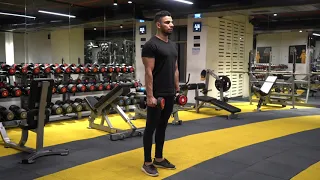
Pause briefly at the top and control the descent. Lightly hold on to a support if needed so that balance does not limit the calf muscles. Read more Read less
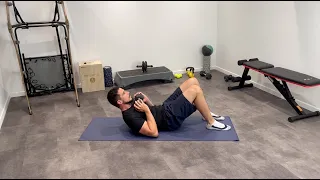
Hold the dumbbell against your chest and curl your torso without pulling on your neck. Use bodyweight only if the added load interferes with control. Read more Read less
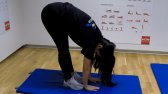
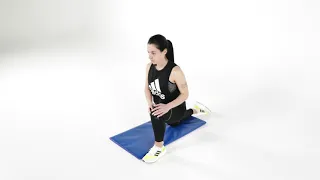
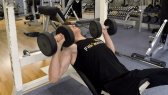
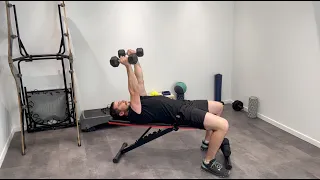
Use an incline bench if available. Without a bench, replace the exercise with Dumbbell Floor Press or Push-Up at a difficulty that allows you to stay within a similar repetition range. Read more Read less
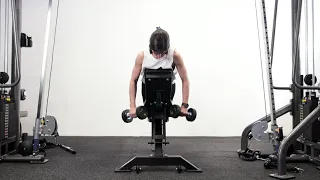
Use an incline bench if available to minimize momentum. Without a bench, replace the exercise with One-Arm Dumbbell Row supported on a stable chair. Read more Read less
Perform the rotation without forcing the shoulder and keep your torso stable. If the rotation is uncomfortable, replace the exercise with Dumbbell Shoulder Press. Read more Read less
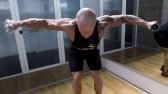
Lean your torso forward while keeping your back stable, and raise your arms out to the sides without momentum. Reduce the load if your trapezius muscles begin to dominate the movement. Read more Read less
Do each exercise back to back without resting between them. Rest after completing the pair.