Build your muscular endurance with lasting strength
Intro

Intermediate 3-session-per-week program designed to build muscular endurance with dumbbells, balanced supersets, and sustainable progression.
This eight-week program primarily develops muscular endurance through moderate-to-high-repetition sets, supersets, and controlled rest periods. The structure is intentionally compact to preserve execution quality and keep sessions to about 60 minutes.
Who is this program for?
It is suitable for an intermediate female trainee who wants to better sustain repeated efforts using simple equipment while maintaining a clear focus on strength training.
Weekly structure
- Monday: upper body and posterior chain, with moderate volume and supersets.
- Wednesday: lower body and complementary upper-body strengthening.
- Friday: full body with different angles to limit unnecessary repetition.
- The days in between promote recovery and help maintain good effort quality.
Equipment and substitutions
A pair of adjustable dumbbells or several pairs of dumbbells is sufficient. A kettlebell or barbell can replace the dumbbells when the movement remains equivalent. A bench is optional: the floor can replace the bench for presses, and a very stable chair can be used for support when indicated. A resistance band is not required.
Only validate a load once every set reaches the top of the prescribed range with stable technique and about two repetitions in reserve.
Monday : Upper-body and posterior-chain endurance
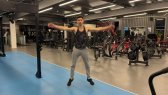
To prepare for an endurance session, maintain a smooth pace that slightly increases heart rate without creating fatigue before the supersets. Read more Read less

To prepare for the pressing and pulling work that follows, use controlled, progressive circles without forcing shoulder range of motion. Read more Read less
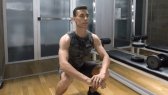
To activate the legs before the dumbbell work, descend only through a comfortable range of motion and keep the knees tracking in line with the feet. Read more Read less
Do each exercise back to back without resting between them. Rest after completing the pair.
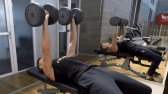
For muscular endurance, choose a load that leaves about two repetitions in reserve. An exposure should only be considered successful if all four sets reach the top of the prescribed range with stable technique. If no bench is available, substitute Dumbbell Floor Press. Use the smallest load increment actually available. Read more Read less

Perform the same number of repetitions on each side and keep the torso stable. Reach the top of the prescribed range on all sets before increasing the load. If the next dumbbell represents too large a jump, keep the current load and consolidate clean repetitions. Read more Read less
Do each exercise back to back without resting between them. Rest after completing the pair.
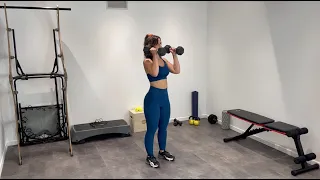
Keep about two repetitions in reserve and use a controlled movement path. Stop the set if the lower back has to arch to finish. Use the smallest available increment. Read more Read less
Only one weekly exposure is retained to limit redundant hip-hinge work. Keep the dumbbells close to the legs and stop the descent before any loss of spinal neutrality. Read more Read less
Do each exercise back to back without resting between them. Rest after completing the pair.

Use a light load that allows strict repetitions. For this isolation exercise, do not force a disproportionately large load increase: if the smallest available increment is clearly greater than 5%, keep the current load and remain at the top of the prescribed range with control. Read more Read less
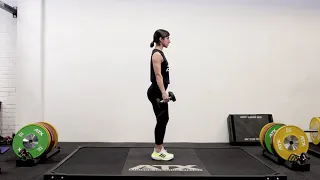
Perform the prescribed range on each leg with a stable stride. Use light support if balance is more limiting than the legs. Increase only using the smallest practical load increment available. Read more Read less
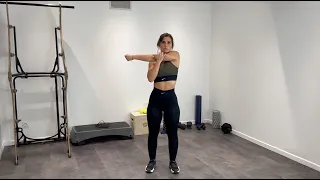
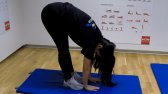
After the hip-hinge work, keep the spine long and stop the range of motion once a moderate hamstring stretch is achieved. Read more Read less
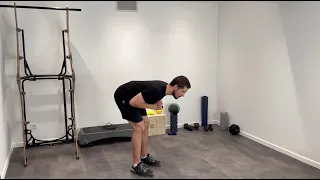
Prepare the hip-hinge pattern with a controlled range of motion before the Romanian Deadlift sets, without seeking a maximal stretch. Read more Read less
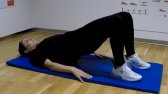
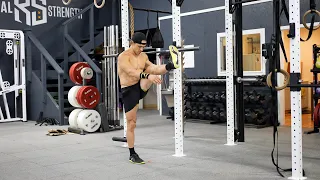
Perform the repetitions on each leg with a progressively increasing range of motion and without excessive momentum to prepare the hips and thighs. Read more Read less
Do each exercise back to back without resting between them. Rest after completing the pair.
Choose a load that allows you to maintain depth and control across all sets. Success means reaching the top of the prescribed range on every set with about two repetitions in reserve and stable technique. Read more Read less

This variation adds a different working angle for the back using the available equipment. Keep the ribs controlled and use a comfortable shoulder range of motion. If the shoulder becomes uncomfortable, reduce the range of motion. Increase only using the smallest available increment. Read more Read less
Do each exercise back to back without resting between them. Rest after completing the pair.
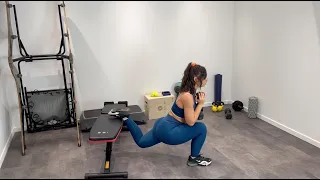
Perform the prescribed range on each leg. Use a bench or a very stable chair; if the setup is not safe, substitute Dumbbell Reverse Lunge. Keep about two repetitions in reserve. Read more Read less
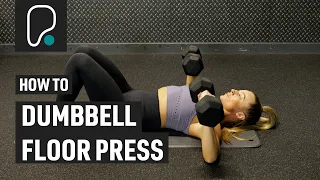
The floor naturally limits the range of motion and removes dependence on a bench. Reach the top of the prescribed range on all sets with stable technique before increasing the load. Read more Read less
Do each exercise back to back without resting between them. Rest after completing the pair.
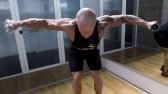
Keep the dumbbells light and the shoulder blades controlled. If the smallest load increase is too large, keep the current load rather than compromising execution. Read more Read less
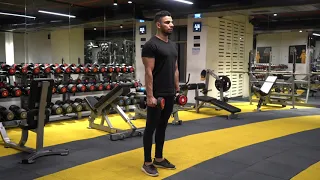
Use a full range of motion and light support if needed. The longer sets are intended to build local muscular endurance; do not speed up the repetitions just to reach the top of the prescribed range. Read more Read less

After the squat and lunge volume, keep the knees close together and pull only until mild tension is felt in the front of the thigh. Read more Read less
Relax the posterior chain with moderate tension, without intentionally rounding the lower back to seek more range of motion. Read more Read less
Friday : Full-body endurance and dynamic finisher
Reinforce the unloaded hip-hinge pattern before the full-body session, using a slow movement and a comfortable range of motion. Read more Read less
Prepare the shoulders before presses, rows, and raises by gradually increasing the range of motion without creating tension. Read more Read less
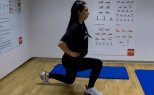
Alternate repetitions to prepare the legs. Stay in control and keep this block easy so it does not reduce endurance for the main work. Read more Read less
Do each exercise back to back without resting between them. Rest after completing the pair.
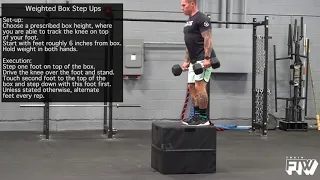
Perform the prescribed range on each leg using a low, stable, non-slip platform. Choose a height that allows you to drive through the working leg without excessive push-off from the foot on the floor. If no safe platform is available, substitute Dumbbell Reverse Lunge. Read more Read less
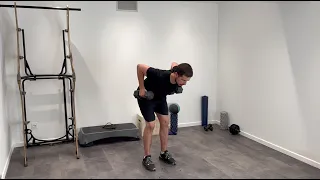
Keep the torso fixed and pull without momentum. If the lower back becomes the limiting factor, substitute One-Arm Dumbbell Row with support. Reach the top of the prescribed range on all sets before increasing the load. Read more Read less
Do each exercise back to back without resting between them. Rest after completing the pair.

Use a stable incline bench to vary the pressing angle. If no adjustable bench is available, substitute Dumbbell Floor Press. Keep about two repetitions in reserve and maintain the same level of control across all sets. Read more Read less
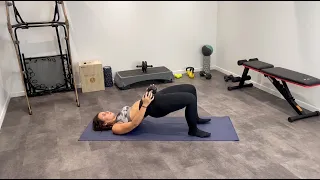
Position the dumbbell securely on the pelvis, using padding if needed. Finish the repetition with the glutes without lumbar hyperextension. Use the smallest available load increment. Read more Read less
Do each exercise back to back without resting between them. Rest after completing the pair.
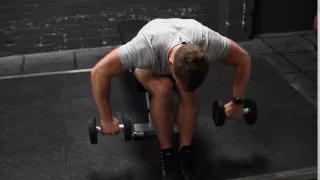
Use a moderate load and keep the elbows flared to complement rear-shoulder work without exactly repeating the Reverse Fly. Reduce the load if the movement becomes jerky. Read more Read less

Keep the arms stable and avoid any torso swinging. If the jump between two dumbbells is too large, stay at the current load and consolidate the top of the prescribed range. Read more Read less
Do each exercise back to back without resting between them. Rest after completing the pair.