Demonstration video
Receive your personalized program
Stop training at random.
Get my programGet a program adapted to your goals, level, and available equipment. Reach your goals faster with a structured plan designed just for you.
- Program tailored to your profile
- Guided progression
- Compatible with your equipment
- Structured plan
Our coach prepares your program
Get my programHow to do the low pulley standing fly
Instructions
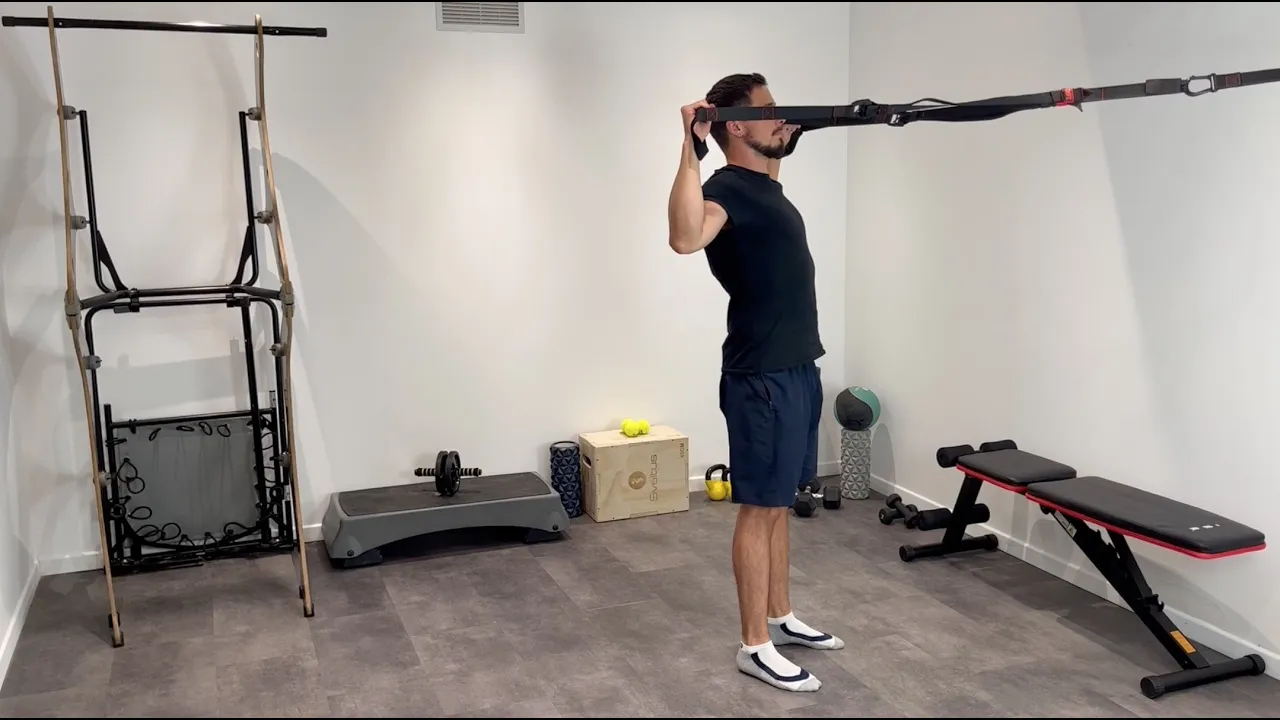
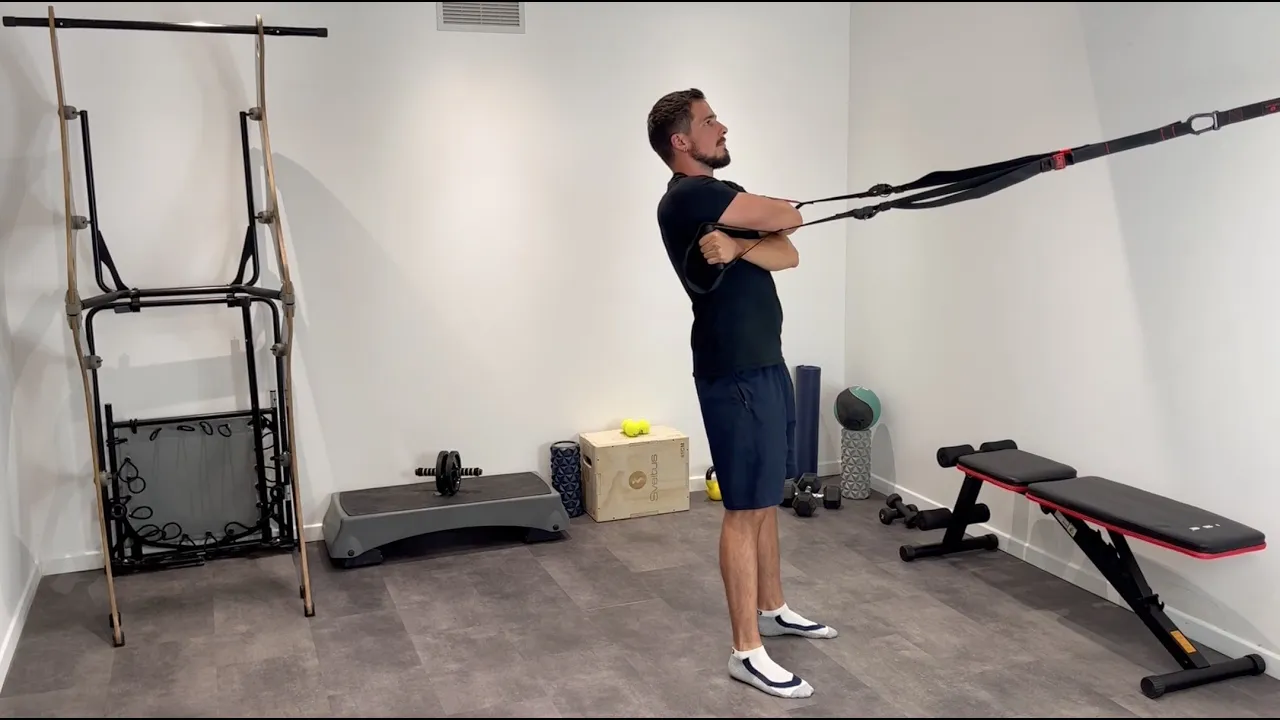
- Stand in the center of a cable machine with pulleys set to the lowest position.
- Grab the handles with each hand and take a step forward to create tension.
- Keep a slight bend in your elbows and raise your arms in an arc in front of your chest.
- Pause briefly at the top of the movement, squeezing your chest.
- Slowly return to the starting position under control.
Technical Tips
- Maintain a slight bend in the elbows throughout the movement.
- Keep your core engaged and your spine neutral.
- Avoid using momentum or swinging your body.
Breathing Tips
- Exhale as you bring the handles together.
- Inhale as you return to the starting position.
Medical restrictions
- Shoulder impingement
- Rotator cuff injuries
- Pectoral muscle strains
Description
The Low Pulley Standing Fly is an effective isolation exercise designed to target the chest muscles with continuous tension throughout the range of motion. By using cables positioned at the lowest setting, this movement emphasizes the contraction of the lower and mid-pectorals while also engaging stabilizing muscles in the shoulders and core. Performed in a standing position, it allows for greater control and functional movement compared to bench-based variations. Ideal for hypertrophy, this exercise supports muscle symmetry and definition, making it a staple in bodybuilding and fitness routines. Its adjustable resistance and smooth motion make it suitable for lifters seeking controlled, precise muscle engagement.
Read more
Read less
Description
The Low Pulley Standing Fly is an effective isolation exercise designed to target the chest muscles with continuous tension throughout the range of motion. By using cables positioned at the lowest setting, this movement emphasizes the contraction of the lower and mid-pectorals while also engaging stabilizing muscles in the shoulders and core. Performed in a standing position, it allows for greater control and functional movement compared to bench-based variations. Ideal for hypertrophy, this exercise supports muscle symmetry and definition, making it a staple in bodybuilding and fitness routines. Its adjustable resistance and smooth motion make it suitable for lifters seeking controlled, precise muscle engagement.
Read more Read lessFAQ