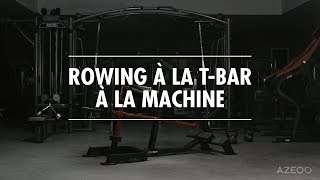
Lying T-Bar Row
Demonstration video
Recommended by our experts
Receive your personalized program
Stop training at random.
Get my program- Program tailored to your profile
- Guided progression
- Compatible with your equipment
- Structured plan
Our coach prepares your program
Get my programHow to do Lying T-Bar Row
Instructions
- Position yourself on the lying T-bar row machine with your chest against the pad and feet secured.
- Grip the handles with both hands using a neutral or overhand grip.
- Start with arms fully extended and back straight.
- Pull the handle toward your torso by retracting your shoulder blades and bending your elbows.
- Squeeze your back muscles at the top of the movement.
- Slowly lower the weight back to the starting position in a controlled manner.
Technical Tips
- Avoid jerking the weight or using momentum.
- Keep your chest firmly pressed against the pad at all times.
- Do not round your lower back during the movement.
- Control the eccentric phase to maximize muscle engagement.
Breathing Tips
- Inhale deeply before initiating the pull.
- Exhale as you pull the handle towards your torso.
- Inhale again during the controlled return to the start position.
Medical restrictions
- Lower back injuries or herniated discs
- Shoulder impingement or instability
- Severe thoracic spine mobility limitations
Description
The Lying T-Bar Row is a powerful upper-body strength exercise that primarily develops the muscles of the back using a chest-supported position. By eliminating momentum and isolating the pulling motion, it ensures strict form and reduces strain on the lower back, making it a safer alternative to traditional bent-over rows. This exercise is ideal for building thickness and density in the mid-back and lats, while also engaging supporting muscles like the rhomboids and biceps. The chest-supported design also encourages better posture and scapular control throughout the movement. Suitable for intermediate to advanced lifters, the Lying T-Bar Row can be effectively used in hypertrophy or strength-focused training routines. Its guided motion and controlled range make it a staple in bodybuilding programs and gym-based back workouts.
Frequently asked questions
-
What muscles does the lying T-bar row target?
The lying T-bar row primarily targets the back muscles, including the lats, rhomboids, and lower traps, while also engaging the biceps and rear deltoids as secondary muscles. -
Is the lying T-bar row safe for lower back issues?
Yes, the lying T-bar row is safer for individuals with lower back concerns because the chest-supported position reduces spinal loading and prevents excessive lumbar strain. -
Can I use different grips on the lying T-bar row?
Yes, using a neutral or overhand grip can emphasize different parts of the back and arm muscles, allowing for targeted variation and improved muscle balance. -
How is the lying T-bar row different from a bent-over row?
Unlike the bent-over row, the lying T-bar row provides chest support, which minimizes lower back involvement and promotes strict form with less momentum. -
Is the lying T-bar row good for beginners?
While effective, the lying T-bar row is better suited for intermediate lifters due to its machine setup and the need for proper technique; beginners may start with simpler row variations first.
Variants and alternatives
See all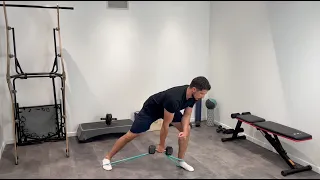
Banded chainsaw dumbbell row
Intermediate
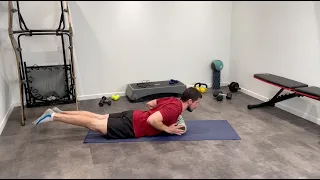
Prone pillow case row
Beginner

Barbell bent-over row
Intermediate

Seated row with resistance band
Beginner
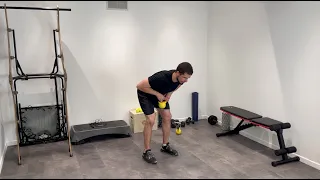
Single kettlebell pronation row
Intermediate
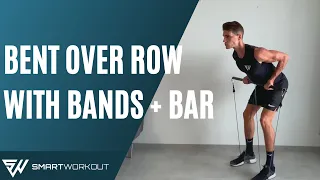
Bent over row with resistance bands bar
Beginner
Reverse grip bent-over row
Intermediate

Lying barbell row
Intermediate

Towel rows
Beginner
T-bar row with handle
Intermediate
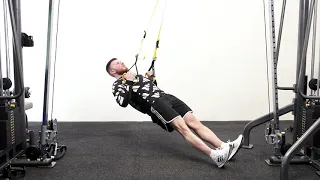
Trx inverted row
Beginner
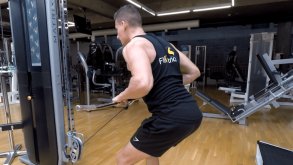
Cable row with straight bar
Intermediate
Related fitness articles
See all
Body recomposition: lose fat while building muscle
Muscle gain

Fitness formulas: protein, water, creatine and caffeine
Muscle gain

Carb cycling: useful for losing weight and performing better?
Nutrition

Muscle failure in strength training: what the science says
Muscle gain

Peptides in bodybuilding: effectiveness and risks
Nutrition
Chest pump push-up workout
Muscle gain

Succeeding at your first pull-up
At the gym

Shoulder pain in weight training: prevention and solutions
Risk of injuries
Recommended by our experts
Receive your personalized program
Stop training at random.
Get my program- Program tailored to your profile
- Guided progression
- Compatible with your equipment
- Structured plan
Our coach prepares your program
Get my program