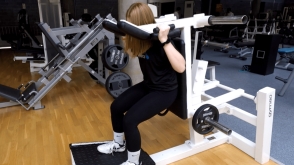
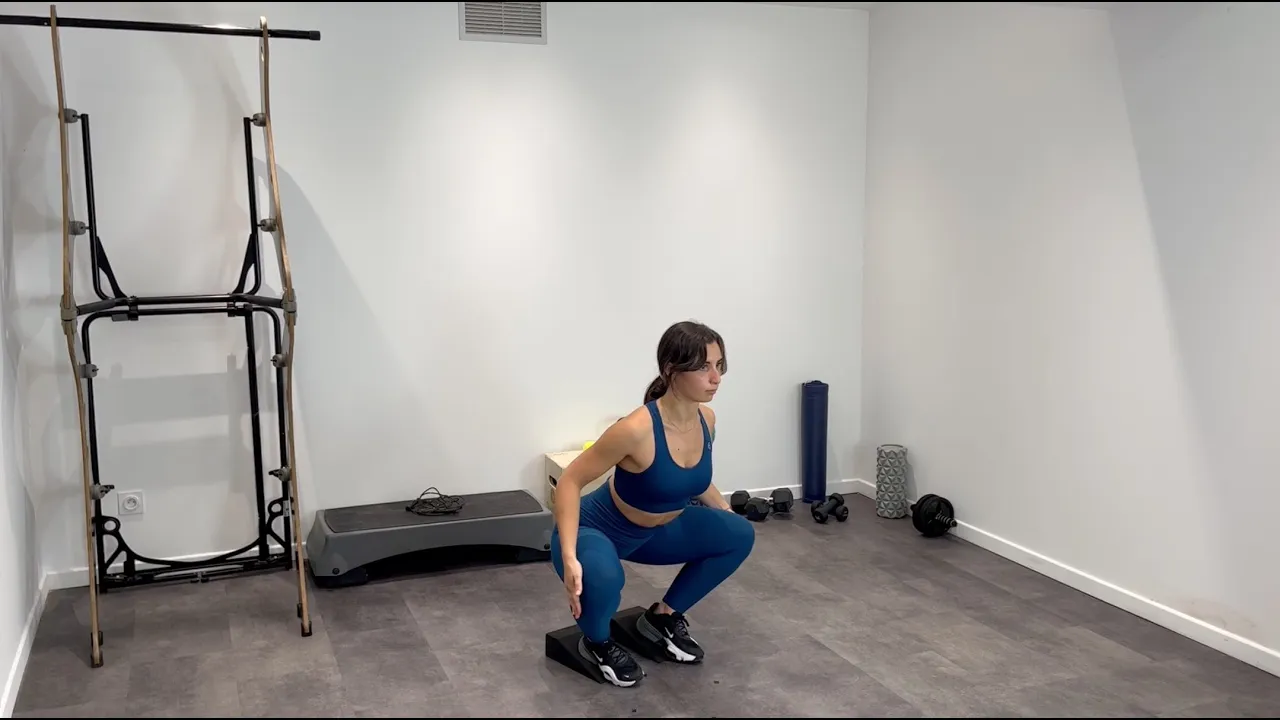
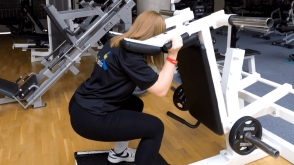
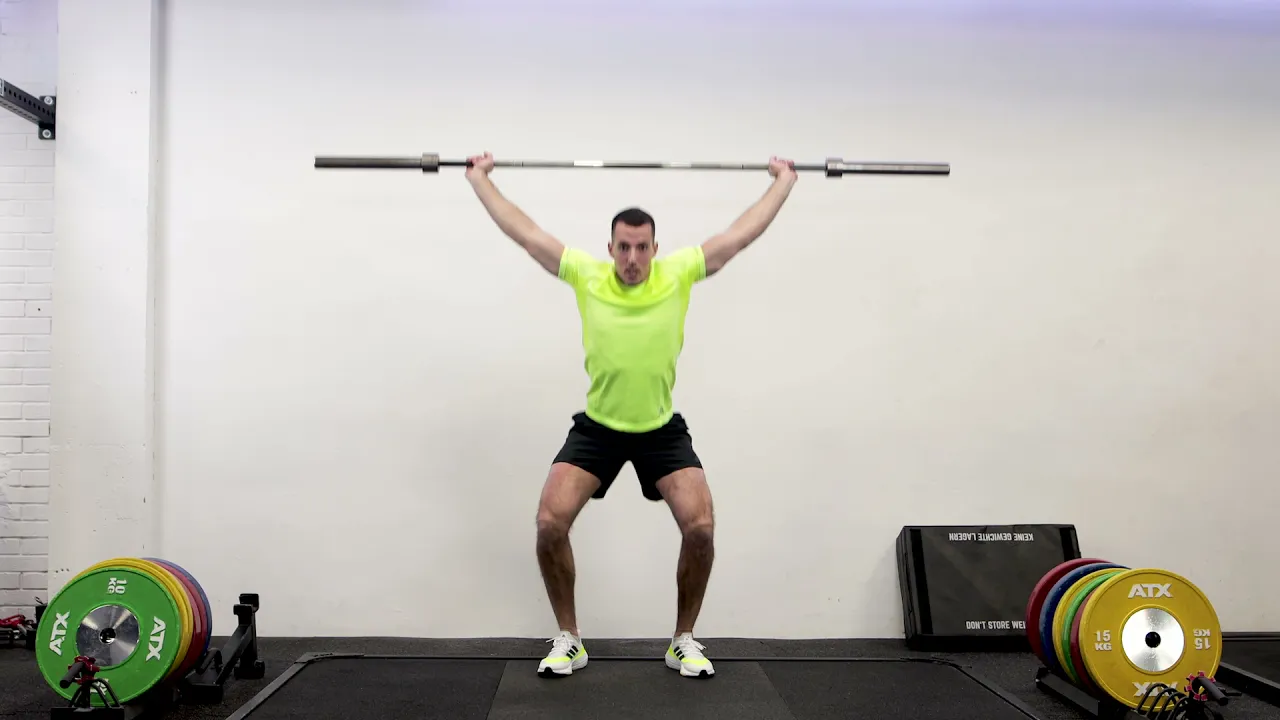
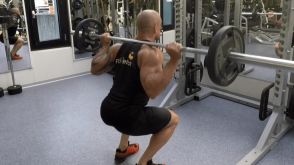
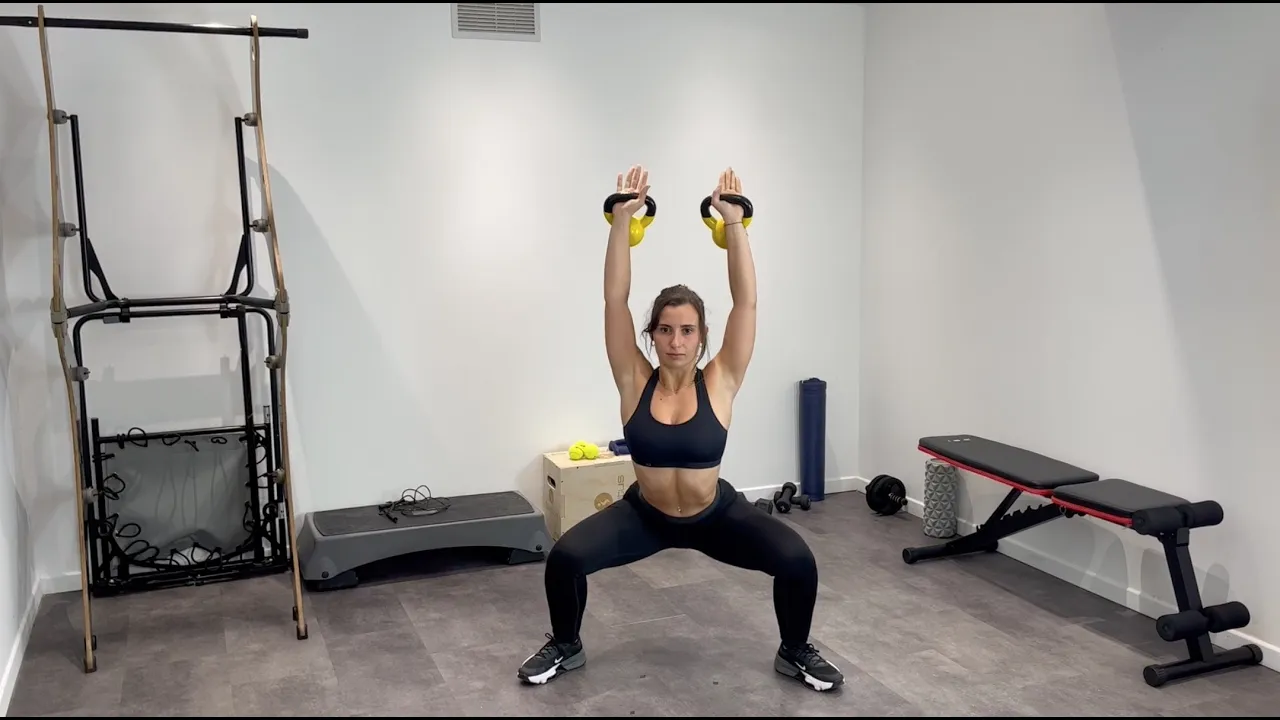
Demonstration video
Receive your personalized program
Stop training at random.
Get my programGet a program adapted to your goals, level, and available equipment. Reach your goals faster with a structured plan designed just for you.
- Program tailored to your profile
- Guided progression
- Compatible with your equipment
- Structured plan
Our coach prepares your program
Get my programHow to do Dumbbell Front Squat
Instructions
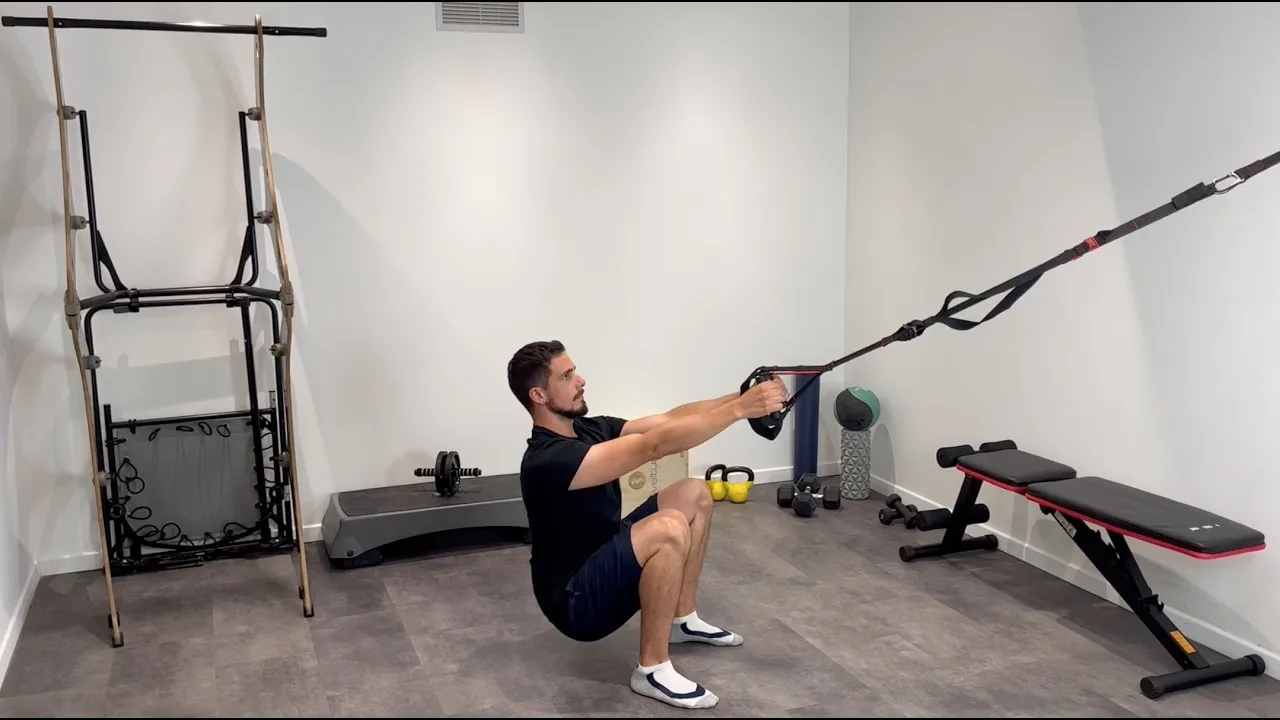
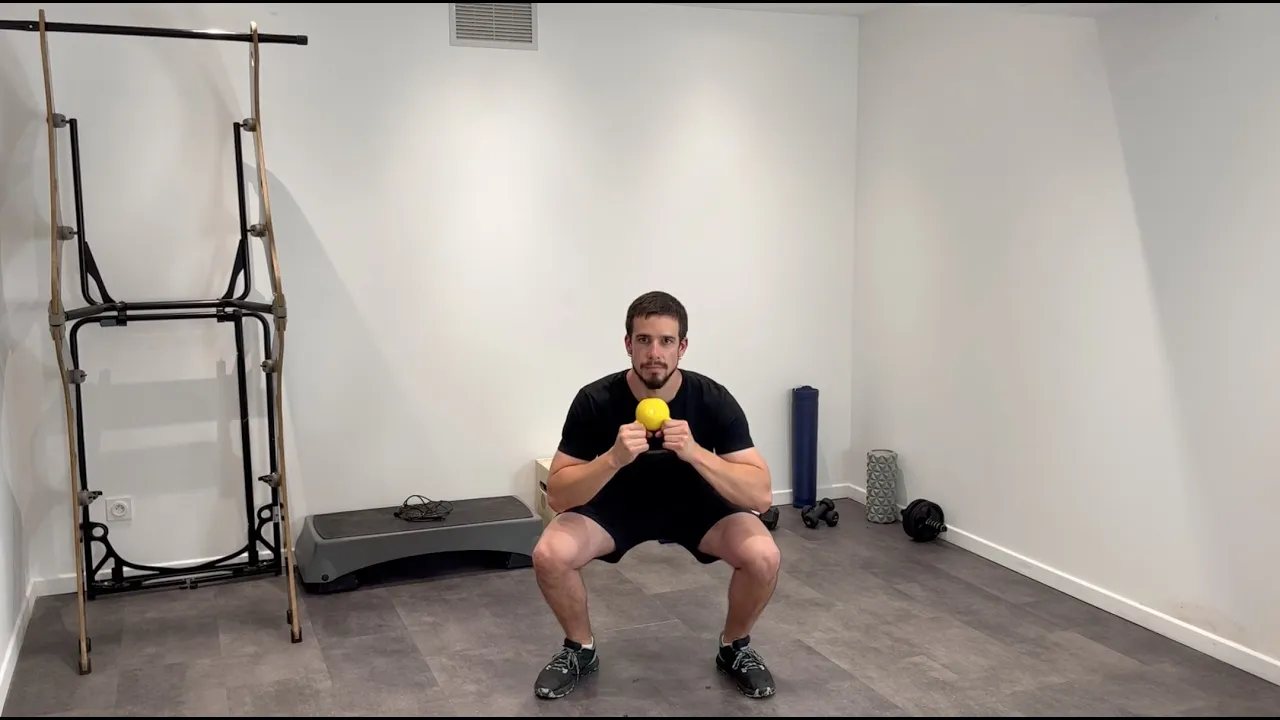
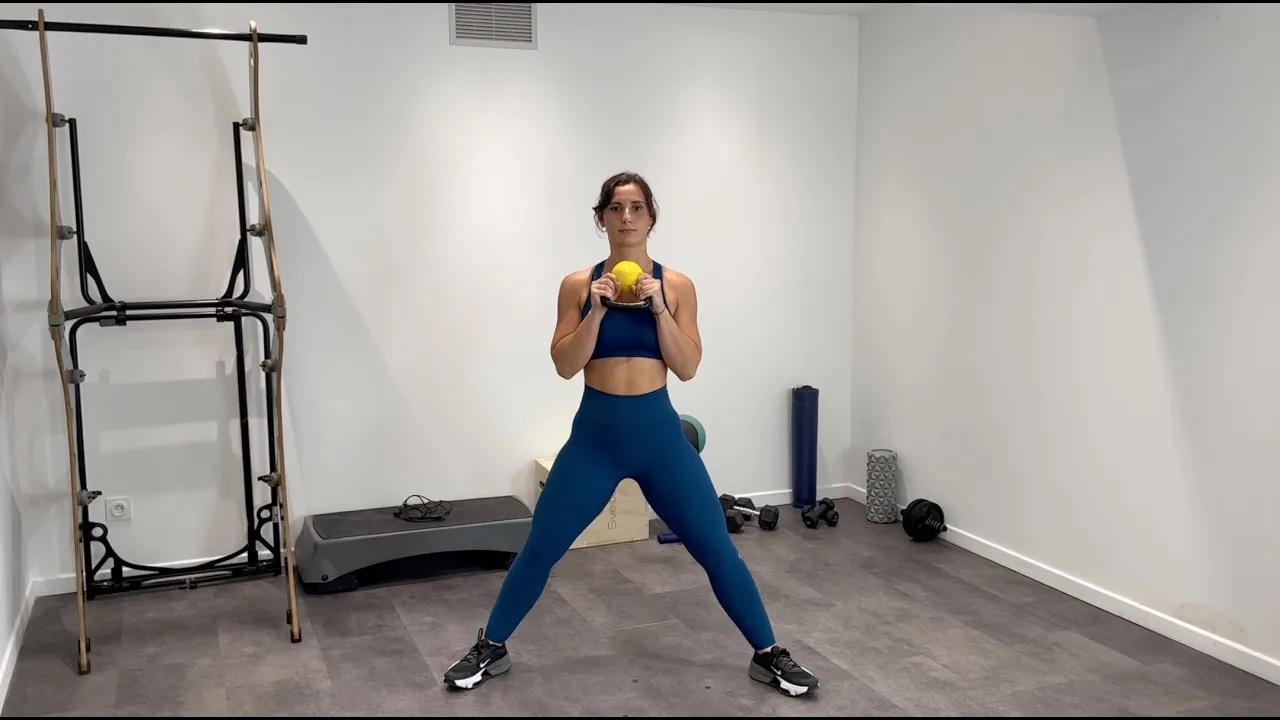
- Stand with feet shoulder-width apart and hold a dumbbell in each hand at shoulder level.
- Engage your core and lift your elbows to keep the dumbbells stable.
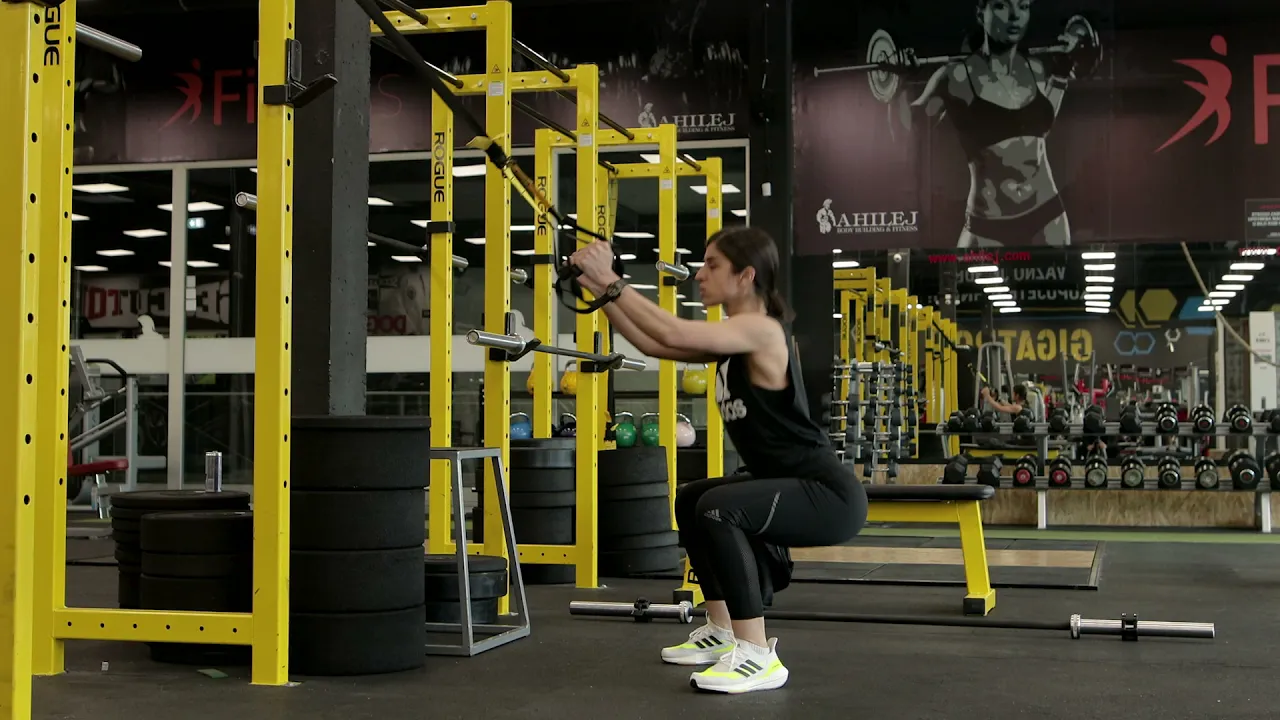
- Initiate the movement by bending your knees and hips simultaneously.
- Lower your body until your thighs are at least parallel to the floor.
- Drive through your heels to return to the starting position.
Technical Tips
- Keep your chest upright and elbows lifted throughout the movement.
- Avoid rounding your back or letting the knees collapse inward.
- Maintain even weight distribution across your feet.
Breathing Tips
- Inhale as you lower into the squat.
- Exhale as you push back up to standing.
Medical restrictions
- Lumbar spine disorders
- Knee joint injuries or post-operative conditions
- Shoulder instability or impingement
Description
The Dumbbell Front Squat is a functional strength exercise that builds lower body power and enhances core engagement. This movement uses dumbbells held at shoulder height, encouraging a tall, upright posture and minimizing stress on the lower back. It primarily targets the quadriceps and glutes, while secondarily recruiting the hamstrings, adductors, and core stabilizers. The front-loaded position challenges trunk stability, making it especially effective for developing total-body control and posture. Unlike barbell variations, this exercise is more accessible and safer for individuals with mobility limitations or training in non-gym environments. It also allows for independent arm positioning, reducing shoulder stress. Ideal for hypertrophy, fat loss, or athletic development, the Dumbbell Front Squat can be integrated into full-body workouts, supersets, or circuit routines. It reinforces efficient squatting mechanics and supports injury prevention through balanced muscular activation.
Read more
Read less
Description
The Dumbbell Front Squat is a functional strength exercise that builds lower body power and enhances core engagement. This movement uses dumbbells held at shoulder height, encouraging a tall, upright posture and minimizing stress on the lower back. It primarily targets the quadriceps and glutes, while secondarily recruiting the hamstrings, adductors, and core stabilizers. The front-loaded position challenges trunk stability, making it especially effective for developing total-body control and posture. Unlike barbell variations, this exercise is more accessible and safer for individuals with mobility limitations or training in non-gym environments. It also allows for independent arm positioning, reducing shoulder stress. Ideal for hypertrophy, fat loss, or athletic development, the Dumbbell Front Squat can be integrated into full-body workouts, supersets, or circuit routines. It reinforces efficient squatting mechanics and supports injury prevention through balanced muscular activation.
Read more Read lessFAQ
Frequently asked questions
-
How do I hold dumbbells during a front squat?
Hold the dumbbells at shoulder height with your elbows lifted and tucked slightly forward to stabilize the load and maintain an upright posture. -
What are the main benefits of dumbbell front squats?
Dumbbell front squats improve lower body strength, core stability, posture, and mobility while reducing spinal load compared to barbell squats. -
Are dumbbell front squats good for home workouts?
Yes, dumbbell front squats are excellent for home workouts as they require minimal equipment and deliver effective lower-body and core training. -
Can I do dumbbell front squats if I have lower back pain?
Yes, if cleared by a healthcare provider, dumbbell front squats may be safer than back-loaded squats due to reduced spinal compression and improved posture. -
Should I go heavy on dumbbell front squats?
Use a weight that challenges your form while allowing control and depth; prioritize technique over maximum load for safety and effectiveness.