Belt Squat
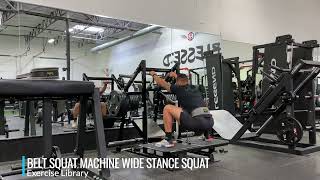
Demonstration video
Recommended by our experts
Receive your personalized program
Stop training at random.
Get my program- Program tailored to your profile
- Guided progression
- Compatible with your equipment
- Structured plan
Our coach prepares your program
Get my programHow to do Belt Squat
Instructions
- Step onto the belt squat machine platform and attach the belt securely around your hips.
- Stand upright with your feet about shoulder-width apart and hold the machine handles for balance.
- Lower your body by bending your hips and knees while keeping your chest upright.
- Descend until your thighs are roughly parallel to the platform or as low as comfortable.
- Push through your feet to extend your hips and knees and return to the starting position.
- Repeat for the desired number of repetitions while maintaining control.
Technical tips
- Keep your torso upright and your core braced throughout the movement.
- Allow your knees to track naturally over your toes during the descent.
- Control the lowering phase instead of dropping quickly into the squat.
- Maintain even pressure through the whole foot rather than shifting onto the toes.
- Use the handles only for stability, not to pull yourself upward.
Breathing tips
- Inhale deeply before starting the descent.
- Hold a light brace through the bottom of the squat for stability.
- Exhale steadily as you drive upward to the standing position.
Medical restrictions
- Acute knee injury or severe knee pain
- Hip joint injury or recent hip surgery
- Recent abdominal or hernia surgery
- Uncontrolled lower back pain without medical clearance
Description
The belt squat is a highly effective lower-body strength exercise performed using a specialized machine that loads resistance through a belt attached around the hips rather than across the shoulders. This unique setup allows athletes and gym-goers to train heavy squat patterns while significantly reducing compression on the spine and upper body. Because the resistance is anchored at the pelvis, the movement closely mimics the mechanics of a traditional squat while providing a more comfortable and accessible loading position.
One of the biggest advantages of the belt squat is its ability to deliver intense lower-body training without requiring heavy barbells on the back. This makes it particularly valuable for individuals who experience discomfort during traditional squats or who want to reduce spinal stress during high-volume training phases. Many lifters also use the belt squat to continue building strength while recovering from upper-body fatigue or minor back irritation.
The exercise also provides excellent stability due to the guided machine setup. This allows users to focus fully on the squat movement pattern, maintain consistent depth, and safely handle heavier loads. As a result, it is widely used in bodybuilding, strength training programs, and general fitness routines.
Another benefit is versatility. Belt squats can be programmed for strength development, muscle hypertrophy, or conditioning depending on the load and repetition scheme. They are also useful as an accessory exercise to complement traditional squats and other compound lower-body movements.
Overall, the belt squat is a practical and joint-friendly way to build powerful lower-body strength while minimizing unnecessary stress on the spine.
Frequently asked questions
-
What are the benefits of doing belt squats?
Belt squats are excellent for building lower-body strength while reducing spinal compression compared to traditional barbell squats. They allow you to train heavy squat patterns with less strain on the back and shoulders, making them useful for both muscle growth and strength development. -
How is a belt squat different from a barbell back squat?
The main difference is where the load is applied. In a belt squat, the resistance is attached to the hips instead of the shoulders. This reduces pressure on the spine and upper body while still allowing you to perform a full squat movement. -
What is the most common mistake when performing belt squats?
A common mistake is leaning too far forward or letting the knees collapse inward. Keeping the torso upright, the core braced, and the knees tracking over the toes helps maintain proper squat mechanics and prevents unnecessary joint stress. -
Is the belt squat safer for my lower back?
For many people, belt squats are more back-friendly because the weight is loaded at the hips instead of compressing the spine. However, proper technique and appropriate load selection are still essential to avoid discomfort or injury. -
How many reps and sets should I do for belt squats?
For strength development, many programs use 4–6 reps per set with heavier loads. For muscle growth and general fitness, 8–15 reps per set across 3–4 sets is a common and effective range.
Variants and alternatives
See all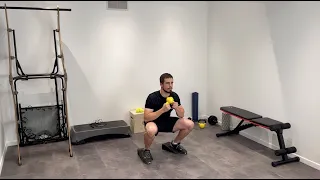
Heels elevated goblet squat
Intermediate
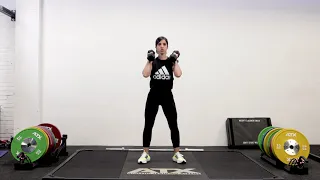
Dumbbell front squat
Intermediate
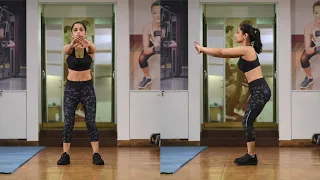
Half squat
Beginner
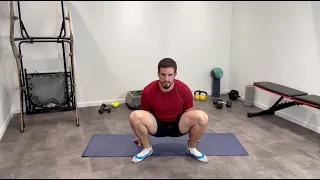
Hand supported squat to shinbox switch
Beginner
Jumping squat
Intermediate
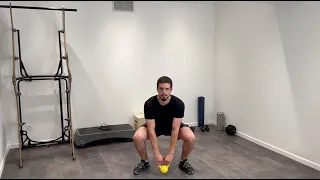
Kettlebell squat
Beginner
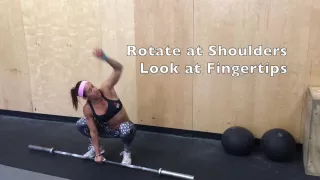
Deep squat thoracic rotation
Intermediate
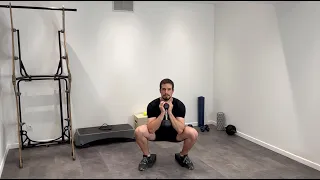
Dumbbell heels elevated goblet squat
Intermediate
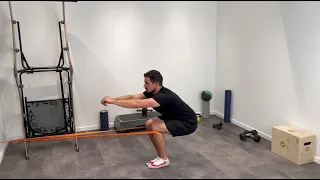
Banded sissy squats
Advanced
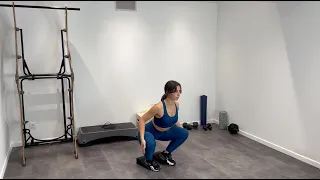
Squat hip rotations
Beginner
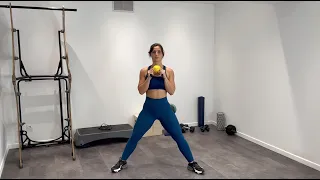
Kettlebell goblet sumo squat
Beginner
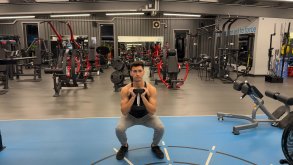
Goblet squat with dumbbell
Beginner
Related fitness articles
See all
Body recomposition: lose fat while building muscle
Muscle gain

Fitness formulas: protein, water, creatine and caffeine
Muscle gain

Carb cycling: useful for losing weight and performing better?
Nutrition

Muscle failure in strength training: what the science says
Muscle gain

Peptides in bodybuilding: effectiveness and risks
Nutrition
Chest pump push-up workout
Muscle gain
Succeeding at your first pull-up
At the gym

Shoulder pain in weight training: prevention and solutions
Risk of injuries
Recommended by our experts
Receive your personalized program
Stop training at random.
Get my program- Program tailored to your profile
- Guided progression
- Compatible with your equipment
- Structured plan
Our coach prepares your program
Get my program