Towel Hamstring Curl
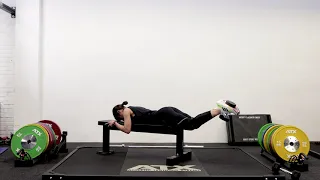
Demonstration video
Recommended by our experts
Receive your personalized program
Stop training at random.
Get my program- Program tailored to your profile
- Guided progression
- Compatible with your equipment
- Structured plan
Our coach prepares your program
Get my programHow to do Towel Hamstring Curl
Instructions
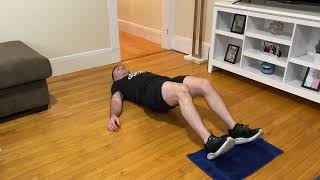
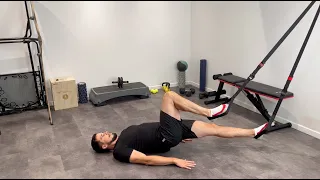
- Lie on your back on a smooth floor surface (like wood or tile) with your knees bent and feet flat on a towel.
- Lift your hips into a bridge position, keeping your weight on your shoulder blades and your heels.
- Slowly slide your feet away from your body by straightening your legs until they are nearly fully extended.
- Contract your hamstrings to pull your heels back toward your glutes while maintaining the elevated hip position.
- Lower your hips slightly if needed to complete the rep, but aim to keep them off the ground throughout the set.
Technical tips
- Keep your core tight and glutes engaged to prevent your lower back from arching excessively.
- Focus on a slow, controlled eccentric (extending) phase to maximize muscle tension.
- Maintain a constant height with your hips to ensure the hamstrings are doing the bulk of the work.
Breathing tips
- Inhale as you slowly slide your feet away from your body.
- Exhale forcefully as you curl your heels back toward your glutes.
Medical restrictions
- Acute lower back pain or lumbar disc herniation
- Recent hamstring strains or tears
- Severe knee instability or ligament injuries
Description
The Leg Curl with Towel is a highly effective bodyweight exercise designed to strengthen the posterior chain with a specific focus on the hamstrings. By utilizing a sliding friction surface, this movement creates a unique stimulus that combines both concentric and eccentric loading. It is an excellent functional alternative to the traditional lying leg curl machine found in commercial gyms, allowing for high-intensity training in a home setting. The primary goal is to improve knee flexion strength and hip stability, which are critical components for athletic performance and injury prevention in sports involving sprinting or jumping.
Performing this exercise regularly helps develop muscular endurance and hypertrophy in the back of the legs. Because it requires the trainee to maintain a bridge position, it also fosters significant isometric strength in the glutes and spinal erectors. This dual demand on the posterior chain makes it a superior choice for those looking to build a resilient lower body. Furthermore, the reliance on bodyweight and a simple household item like a towel makes it an accessible yet challenging addition to any fitness routine, bridging the gap between basic floor exercises and advanced weightlifting movements.
Frequently asked questions
-
What are the benefits of doing Leg Curls with a towel?
Doing Leg Curls with a towel provides intense hamstring activation and improves eccentric strength, which is vital for preventing hamstring pulls. It also builds core and glute stability since you must maintain a bridge position throughout the movement. -
What is the most common mistake in the Towel Leg Curl?
The most common mistake is letting the hips sag or touch the floor during the extension or curl phase. Keeping your hips elevated ensures constant tension on the hamstrings and prevents the lower back from taking over the load. -
Is the Towel Leg Curl safe for my lower back?
Yes, it is generally safe if you engage your core and glutes to maintain a neutral spine. However, if you have existing lower back issues, avoid arching your back and start with a smaller range of motion to ensure your hamstrings are doing the work. -
How does the Towel Leg Curl compare to the seated machine leg curl?
The Towel Leg Curl is more challenging for the core and glutes because it requires hip stabilization (a bridge), whereas the machine curl is a pure isolation movement. The towel version emphasizes the eccentric phase more heavily, which is excellent for functional strength.
Variants and alternatives
See all
Related fitness articles
See all
Body recomposition: lose fat while building muscle
Muscle gain
Fitness formulas: protein, water, creatine and caffeine
Muscle gain

Carb cycling: useful for losing weight and performing better?
Nutrition
Muscle failure in strength training: what the science says
Muscle gain
Peptides in bodybuilding: effectiveness and risks
Nutrition
Chest pump push-up workout
Muscle gain
Succeeding at your first pull-up
At the gym
Shoulder pain in weight training: prevention and solutions
Risk of injuries
Recommended by our experts
Receive your personalized program
Stop training at random.
Get my program- Program tailored to your profile
- Guided progression
- Compatible with your equipment
- Structured plan
Our coach prepares your program
Get my program