Prone Reverse Fly
Demonstration video
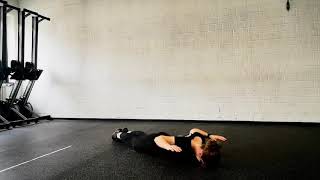
Recommended by our experts
Receive your personalized program
Stop training at random.
Get my program- Program tailored to your profile
- Guided progression
- Compatible with your equipment
- Structured plan
Our coach prepares your program
Get my programHow to do Prone Reverse Fly
Instructions
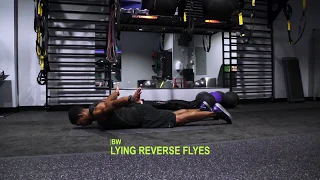
- Lie face down with your legs extended and your forehead hovering just above the floor.
- Extend your arms out to the sides at shoulder height with a slight bend in your elbows.
- Brace your abdomen and keep your neck in a neutral position.
- Draw your shoulder blades gently back and lift your arms a few inches from the floor.
- Pause briefly at the top without raising your chest or shrugging your shoulders.
- Lower your arms slowly until they nearly touch the floor, then repeat.
Technical tips
- Lead the movement with your elbows rather than your hands.
- Keep the elbows softly bent and maintain the same arm angle throughout.
- Use a small, controlled range instead of forcing the arms higher.
- Keep your shoulders away from your ears.
- Avoid arching your lower back or lifting your chest.
Breathing tips
- Inhale in the starting position.
- Exhale as you lift your arms and draw the shoulder blades together.
- Inhale slowly as you lower your arms.
Medical restrictions
- Avoid this exercise during an acute shoulder injury or painful shoulder impingement.
- Seek medical guidance if lying face down aggravates neck or lower-back pain.
- Stop immediately if you feel sharp pain, numbness, or tingling.
Description
The prone reverse fly is a controlled upper-body exercise designed to improve posture, shoulder control, and upper-back endurance. Performed from a face-down position, it trains the body to move the arms away from the floor while keeping the torso stable. This makes it especially useful for reinforcing healthy movement patterns that counter the rounded posture often associated with prolonged sitting, desk work, and frequent use of phones or computers.
A key benefit of the prone reverse fly is improved scapular coordination. Better control of the shoulder blades can support smoother arm movement, more efficient pressing and pulling mechanics, and greater confidence during everyday lifting tasks. The exercise also develops postural endurance, helping you maintain a more upright and balanced upper-body position for longer periods.
Because the movement emphasizes precision rather than speed, it is well suited to technique-focused training, activation work, and low-impact strength sessions. It can be included early in a workout to prepare the upper body for more demanding exercises or used later as a focused accessory movement. Regular practice may also improve body awareness by teaching you to distinguish shoulder-blade movement from excessive neck or lower-back compensation.
The prone reverse fly is most effective when performed with a deliberate tempo and consistent range of motion. Progress comes from cleaner repetitions, longer pauses, and greater control rather than simply moving faster. This makes it a practical choice for building durable movement quality and supporting long-term upper-body function.
Frequently asked questions
-
What are the benefits of doing prone reverse flies?
Prone reverse flies improve shoulder-blade control, postural endurance, upper-body stability, and movement quality for pressing, pulling, and everyday lifting. -
What is the most common mistake I should avoid in a prone reverse fly?
The most common mistake is shrugging the shoulders and lifting the arms too high. Keep the neck relaxed, use a modest range, and move with control. -
Is the prone reverse fly safe for my shoulders?
It is generally shoulder-friendly when performed pain-free with a small range and no shrugging. Stop if you feel pinching or sharp pain and seek professional advice if symptoms persist. -
What muscles do I work with the prone reverse fly?
The exercise primarily trains the shoulders and upper back, with strong involvement from the rear deltoids, rhomboids, and trapezius. -
How many prone reverse fly reps should I do?
Start with 2 to 3 sets of 8 to 15 controlled repetitions. Prioritize smooth movement and a brief pause at the top over higher rep counts.
Related programs
See all
Related fitness articles
See all
Body recomposition: lose fat while building muscle
Muscle gain

Fitness formulas: protein, water, creatine and caffeine
Muscle gain

Carb cycling: useful for losing weight and performing better?
Nutrition

Muscle failure in strength training: what the science says
Muscle gain

Peptides in bodybuilding: effectiveness and risks
Nutrition
Chest pump push-up workout
Muscle gain
Succeeding at your first pull-up
At the gym

Shoulder pain in weight training: prevention and solutions
Risk of injuries
Recommended by our experts
Receive your personalized program
Stop training at random.
Get my program- Program tailored to your profile
- Guided progression
- Compatible with your equipment
- Structured plan
Our coach prepares your program
Get my program