Dumbbell Front Rack Carry
Demonstration video

Recommended by our experts
Receive your personalized program
Stop training at random.
Get my program- Program tailored to your profile
- Guided progression
- Compatible with your equipment
- Structured plan
Our coach prepares your program
Get my programHow to do Dumbbell Front Rack Carry
Instructions
- Stand upright with a dumbbell in each hand and bring both dumbbells to the front rack position at shoulder level.
- Keep your elbows slightly forward, wrists neutral, and dumbbells securely positioned near your shoulders.
- Brace your core and maintain a tall posture with your ribs stacked over your pelvis.
- Walk forward using controlled, natural steps while keeping the dumbbells stable.
- Continue for the prescribed time, then carefully lower the dumbbells under control.
Technical tips
- Keep your torso upright and avoid leaning backward to compensate for the load.
- Maintain continuous abdominal tension without excessively arching your lower back.
- Keep your shoulders stable and avoid allowing the dumbbells to drift away from your body.
- Use short, controlled steps if the load begins to challenge your posture.
- Choose a weight that allows you to maintain a secure front rack position throughout the carry.
Breathing tips
- Take controlled breaths while maintaining abdominal tension throughout the carry.
- Exhale gradually during several steps without completely relaxing your core.
- Re-brace your trunk with each inhalation if you feel your posture beginning to change.
Medical restrictions
- Avoid or modify this exercise if you have acute shoulder pain that prevents a comfortable front rack position.
- Use caution with active wrist or elbow injuries that are aggravated by supporting dumbbells at shoulder level.
- Avoid heavy loading with acute lower-back pain or when you cannot maintain a neutral, stable trunk.
- Seek medical or rehabilitation guidance before performing loaded carries after a recent upper-body or spinal injury.
Description
The Dumbbell Front Rack Carry is a functional loaded carry that develops core stability, shoulder endurance, postural strength, and whole-body bracing while walking under load. Holding the dumbbells at shoulder level increases the demand on the abdominal muscles and anterior shoulders while challenging the body to resist excessive spinal extension and maintain efficient posture. It is useful for building practical strength, improving loaded movement capacity, and developing muscular endurance that transfers well to strength and conditioning training.
Frequently asked questions
-
What are the benefits of doing the Dumbbell Front Rack Carry?
The Dumbbell Front Rack Carry improves core stability, shoulder endurance, postural control, and whole-body bracing. It also develops practical loaded-carry strength that can support performance in strength and functional training. -
What is the most common mistake I should avoid during the Dumbbell Front Rack Carry?
The most common mistake is leaning backward and overextending the lower back as the dumbbells become difficult to hold. Keep your ribs stacked over your pelvis, brace your abs, and reduce the load if you cannot maintain an upright posture. -
Is the Dumbbell Front Rack Carry safe for my shoulders and lower back?
It is generally safe when you can comfortably hold the front rack position and maintain a stable, neutral trunk. Reduce the load or stop the exercise if you experience sharp shoulder, wrist, elbow, or lower-back pain. -
What muscles does the Dumbbell Front Rack Carry work?
The exercise primarily challenges the abs and shoulders, with additional involvement from the front deltoids, obliques, lower back, forearm flexors, and traps to stabilize the dumbbells and maintain posture. -
How long should I perform a Dumbbell Front Rack Carry?
A practical starting range is about 20 to 40 seconds per set. Increase the duration or load gradually while maintaining stable posture and a secure front rack position.
Variants and alternatives
See all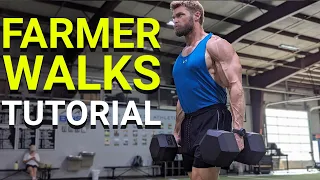
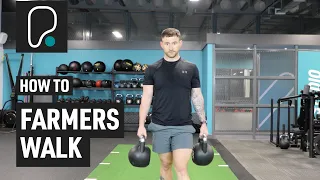
Related programs
See all
Related fitness articles
See all
Body recomposition: lose fat while building muscle
Muscle gain

Fitness formulas: protein, water, creatine and caffeine
Muscle gain

Carb cycling: useful for losing weight and performing better?
Nutrition

Muscle failure in strength training: what the science says
Muscle gain

Peptides in bodybuilding: effectiveness and risks
Nutrition
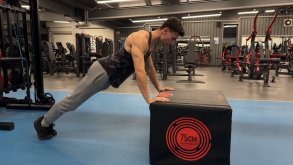
Chest pump push-up workout
Muscle gain
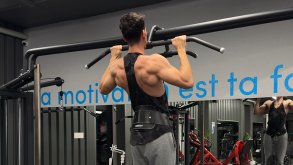
Succeeding at your first pull-up
At the gym

Shoulder pain in weight training: prevention and solutions
Risk of injuries
Recommended by our experts
Receive your personalized program
Stop training at random.
Get my program- Program tailored to your profile
- Guided progression
- Compatible with your equipment
- Structured plan
Our coach prepares your program
Get my program