Dumbbell muscular endurance: progress without burning out
Intro

An 8-week program to build muscular endurance with dumbbells, 60-minute sessions, and simple substitutions using a kettlebell, barbell, or sturdy chair.
Build your ability to repeat high-quality muscular efforts with a simple, progressive structure centered on strength training. Moderate-to-high-repetition sets, controlled rest periods, and two short circuits improve muscular endurance without turning the program into a cardio plan.
Who is this program for?
This program is designed for an intermediate trainee who has about 60 minutes per session and primarily wants to improve muscular endurance—that is, the ability to sustain repeated efforts with consistent technique.
Weekly structure
- Monday: upper body, pushing and pulling in supersets.
- Tuesday: lower body and a short endurance circuit.
- Thursday: upper body, controlled volume, and core.
- Saturday: lower body and a full-body finisher.
How to progress
- Dumbbell exercises: an exposure is successful when all sets reach the top of the range with about 2 repetitions in reserve and consistent technique. After two consecutive successful exposures, use the smallest available increment close to +5%. If the next increment is substantially larger, keep the same load and consolidate the top of the range before increasing it.
- Timed exercises: first increase the duration up to the prescribed maximum. Once you can complete that maximum on every set, keep the duration the same and move to a slightly harder variation; do not automatically add 5% load.
- Circuits: an exposure is successful when all rounds are completed at the top of the repetition range with clean technique and without extending rest periods. Then progress by using a harder variation or improving execution, not by automatically increasing the load.
- Failure: if you cannot reach the bottom of the prescribed range at the intended effort level with proper technique, consider the exposure unsuccessful and apply the reduction rule after two consecutive failures.
Equipment and substitutions
Dumbbells are the primary equipment. A kettlebell or barbell can replace them for compatible movements. A bench is optional: use a very sturdy chair for support or choose a floor-based variation. Resistance bands can complement the program but are not required.
The priority is to maintain clean execution throughout relatively long sets. Progress only counts if technique remains consistent.
Monday : Upper body – dumbbell muscular endurance
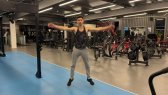
Gradually increase the pace to prepare for the session without tiring yourself out. Keep your footwork light; if the impact is uncomfortable, reduce the range of motion and step side to side. Read more Read less

Start with small controlled circles, then gradually make them larger to prepare the shoulders. Stay pain-free; if either shoulder feels strained, immediately reduce the range of motion. Read more Read less
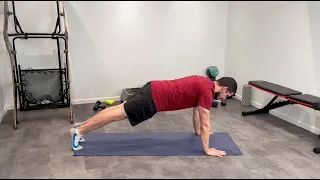
Keep your elbows straight and move only your shoulder blades. To make it easier, place your knees on the floor; if you lose scapular control, stop the set. Read more Read less
Do each exercise back to back without resting between them. Rest after completing the pair.
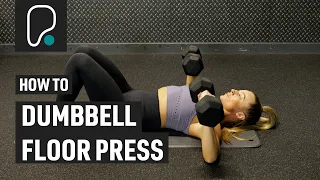
For your endurance goal, keep about 2 repetitions in reserve and maintain a smooth, consistent path. Let your upper arms touch the floor without bouncing; if the shoulder becomes sensitive, bring your elbows slightly closer to your torso. Alternative if you have a bench: Dumbbell Bench Press. If the next dumbbell increment is substantially greater than 5%, keep the same load and consolidate the top of the range before using the smallest available increment. Read more Read less
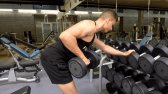
Train each side for the same number of repetitions without rotating your torso. Support yourself on a sturdy chair or your thigh if necessary. If your lower back tires before your back muscles do, reduce the load. Read more Read less
Do each exercise back to back without resting between them. Rest after completing the pair.
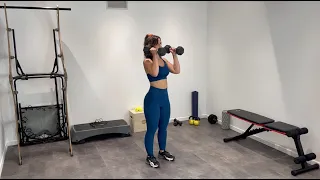
Keep your core braced and avoid excessive back arching to extend the set. Stop if you feel shoulder pain; a neutral grip is the simplest alternative if it feels more comfortable. Read more Read less
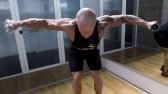
Use a moderate load to keep the upper back active without using momentum. Keep your torso stable; if your lower back limits the exercise, support yourself on a sturdy chair or use a bench if available. If the next dumbbell increment is substantially greater than 5%, keep the same load and consolidate the top of the range before using the smallest available increment. Read more Read less
Do each exercise back to back without resting between them. Rest after completing the pair.
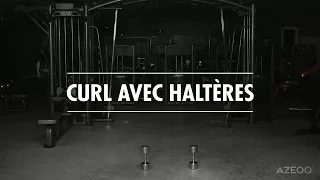
Keep your elbows close to your body and avoid using momentum to build endurance in the elbow flexors. If you need to swing your torso, use a lighter load; a hammer grip is a comfortable alternative. If the next dumbbell increment is substantially greater than 5%, keep the same load and consolidate the top of the range before using the smallest available increment. Read more Read less
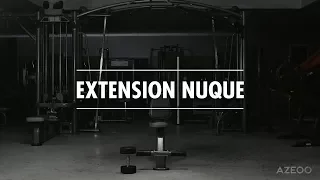
Keep your ribs down and your elbows pointing forward. If your shoulder does not tolerate the overhead position well, replace the exercise with Dumbbell Close-Grip Floor Press. If the next dumbbell increment is substantially greater than 5%, keep the same load and consolidate the top of the range before using the smallest available increment. Read more Read less
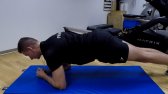
Maintain continuous core tension without letting your hips drop. If your technique breaks down before the minimum time, place your knees on the floor. To progress, increase the duration up to 50 seconds on both sets; once you master that level, use a slightly harder variation without automatically adding 5% load. Read more Read less
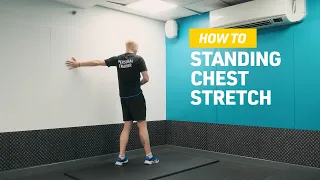
Gently stretch your chest after the pushing work without forcing the shoulder. Reduce the arm angle if you feel any pinching. Read more Read less
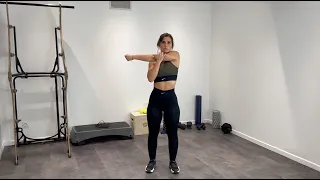
Gently release the back of the shoulder with light, pain-free tension. Keep the shoulder down; reduce the pressure if the joint feels sensitive. Read more Read less
Use a comfortable range of motion and a smooth pace to prepare your knees and hips. If your mobility is limited, slightly reduce the depth. Read more Read less
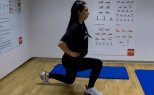
Alternate legs and keep the front foot stable. Start with a moderate range of motion; if balance limits the movement, use light support. Read more Read less
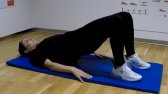
Squeeze your glutes at the top without arching your lower back. If your hamstrings cramp, bring your feet slightly closer to your hips. Read more Read less
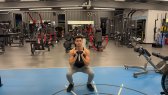
Choose a load that lets you keep about 2 repetitions in reserve during longer sets. Keep your whole foot on the floor; if depth compromises your posture, reduce the range of motion. If the next dumbbell increment is substantially greater than 5%, keep the same load and consolidate the top of the range before using the smallest available increment. Read more Read less
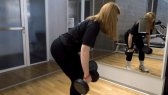
Push your hips back with a neutral spine and keep the dumbbells close to your legs. Stop the descent as soon as your back position starts to break down; a shorter range of motion is better than a forced repetition. If the next dumbbell increment is substantially greater than 5%, keep the same load and consolidate the top of the range before using the smallest available increment. Read more Read less
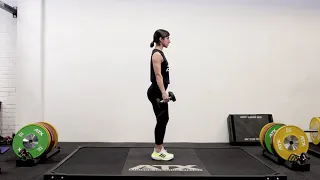
Count the repetition range per leg and use a long enough stride to remain stable. If your knees or balance limit the effort, reduce the load or use one hand for support. If the next dumbbell increment is substantially greater than 5%, keep the same load and consolidate the top of the range before using the smallest available increment. Read more Read less
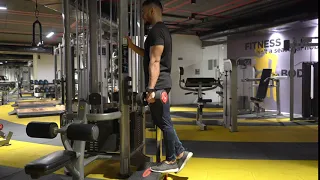
Train each calf separately with a brief pause at the top and a controlled lowering phase. Hold on to a stable support if necessary; if balance becomes the limiting factor, perform Standing Dumbbell Calf Raise. Read more Read less
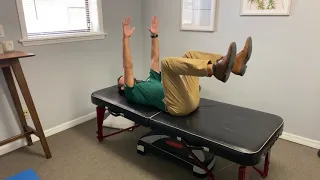
Count repetitions per side and keep your lower back in contact with the floor. Reduce the leg range of motion if your lower back arches; extend your limbs farther only when you can maintain control. Read more Read less
Do each exercise one after another. When you finish the list, rest then start again.
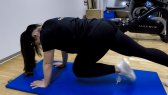
Count each knee drive as one repetition. Keep your shoulders stable and your hips controlled. In the circuit, first aim for 40 clean repetitions on every round; then use a cross-body or more challenging variation rather than automatically increasing the load. Read more Read less
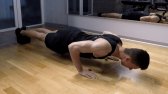
Maintain a repeatable range of motion and keep your body aligned. Use your knees or a very sturdy chair if necessary. Once you reach 15 clean repetitions on every round, choose a slightly harder variation instead of automatically adding 5% load. Read more Read less
Keep your feet stable, your knees aligned, and use a range of motion you can repeat across all three rounds. Once you reach 25 clean repetitions on every round, increase the difficulty through tempo control or a more challenging variation, without automatically adding load. Read more Read less

Gently stretch the front of your thigh without pulling on the knee. Hold on to a support if necessary so balance does not limit the stretch. Read more Read less
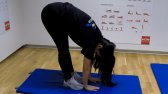
Keep your back long and hinge forward at the hips until you feel mild tension in the back of the thigh. Do not force the range of motion if your lower back starts to round. Read more Read less
Thursday : Upper body – volume, shoulders, and core
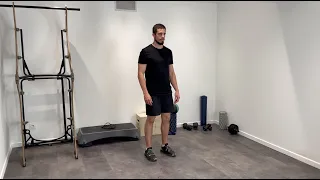
Gradually increase the pace to raise your body temperature without pushing too hard. If the impact is uncomfortable, turn the movement into a dynamic march. Read more Read less
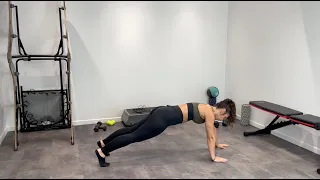
Walk your hands forward with control and keep your core engaged. Shorten the hand-walk distance if your hamstrings or shoulders feel too tight. Read more Read less
Cross and open your arms in a relaxed manner to prepare the shoulders. Stay within a comfortable range of motion and avoid forcing the movement. Read more Read less
Do each exercise back to back without resting between them. Rest after completing the pair.
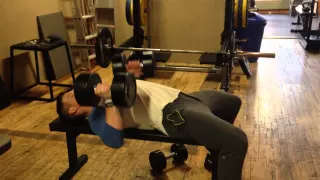
Press the dumbbells together throughout the entire set to maintain continuous tension. Keep about 2 repetitions in reserve; if your wrists feel uncomfortable, reduce the pressure between the dumbbells. If the next dumbbell increment is substantially greater than 5%, keep the same load until you master the top of the range before using the smallest available increment. Read more Read less
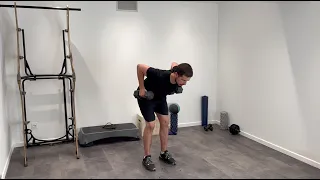
Keep your back neutral and drive your elbows back without using momentum. If your lower back tires before your back muscles do, raise your torso slightly or use stable support. If the next dumbbell increment is substantially greater than 5%, keep the same load until you master the top of the range before using the smallest available increment. Read more Read less
Do each exercise back to back without resting between them. Rest after completing the pair.

On the floor or on a bench if available, keep your ribs controlled and lower only as far as is comfortable for your shoulders. If you mainly feel your lower back working, reduce the range of motion. If the next dumbbell increment is substantially greater than 5%, keep the same load until you master the top of the range before using the smallest available increment. Read more Read less

Choose a load that lets you raise your arms without swinging your torso. Stop before your traps take over the movement; if necessary, perform the repetitions one arm at a time. If the next dumbbell increment is substantially greater than 5%, keep the same load until you master the top of the range before using the smallest available increment. Read more Read less
Do each exercise back to back without resting between them. Rest after completing the pair.

Keep your wrists neutral and your elbows fixed to maintain tension throughout the set. If your forearm or elbow becomes painful, reduce the load and range of motion. If the next dumbbell increment is substantially greater than 5%, keep the same load until you master the top of the range before using the smallest available increment. Read more Read less

Keep the dumbbells close together and your elbows controlled to target the triceps without adding redundant isolation work. If your shoulders are sensitive, reduce the range of motion. If the next dumbbell increment is much greater than 5%, keep the current load and consolidate 18 clean repetitions before increasing it. Read more Read less
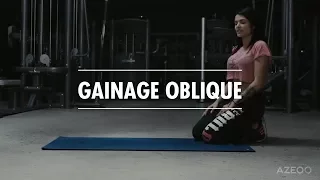
Use the same duration on each side and keep your hips high. Place the lower knee on the floor to make the exercise easier. Progress up to 45 seconds per side on both sets; then use a slightly harder variation without automatically increasing the load. Read more Read less
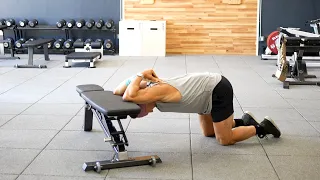
Gently release your lats after rows and pullovers. Breathe normally and reduce the range of motion if your shoulders feel uncomfortable. Read more Read less
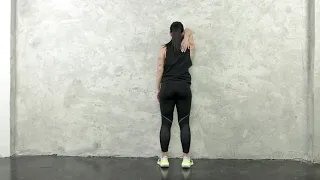
Aim for mild tension at the back of the upper arm without pulling hard on the elbow. If the shoulder feels uncomfortable, use a smaller range of motion. Read more Read less
Start at a moderate pace to prepare your legs without creating fatigue. If the impact is uncomfortable, march in place while alternately bringing your heels toward your glutes. Read more Read less
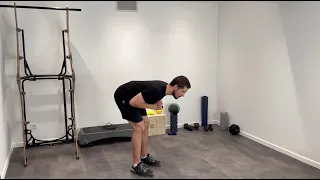
Practice the hip-hinge movement with a neutral spine before adding load. Reduce the range of motion if your hamstrings feel too tight. Read more Read less
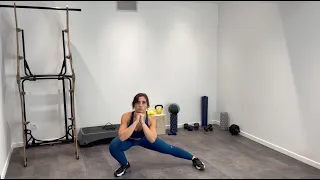
Alternate sides with a progressively larger range of motion to prepare your hips. Keep the entire foot of the bent leg on the floor; reduce the range of motion if necessary. Read more Read less
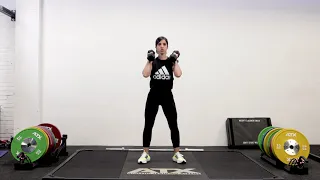
Hold the dumbbells at your shoulders and keep your core braced during the longer sets. If the dumbbell position tires your wrists, use Dumbbell Goblet Squat instead. If the next dumbbell increment is substantially greater than 5%, keep the same load and consolidate the top of the range before using the smallest available increment. Read more Read less
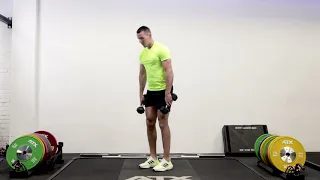
Keep the dumbbells close to your body and drive through the floor with your feet. Stop the set if your back rounds or your speed drops noticeably; reduce the load before extending the effort. If the next dumbbell increment is substantially greater than 5%, keep the same load and consolidate the top of the range before using the smallest available increment. Read more Read less
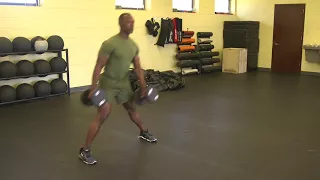
Count repetitions per side and keep your knee aligned with your foot. If hip mobility limits your depth, shorten the range of motion and reduce the load. If the next dumbbell increment is substantially greater than 5%, keep the same load and consolidate the top of the range before using the smallest available increment. Read more Read less
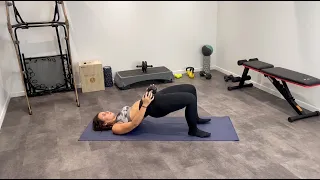
Place the dumbbell securely on your hips and squeeze your glutes without hyperextending your lower back. If the load is uncomfortable on your hips, use a folded towel for padding or perform Glute Bridge. If the next dumbbell increment is substantially greater than 5%, keep the same load and consolidate the top of the range before using the smallest available increment. Read more Read less
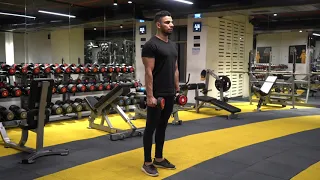
Rise fully onto the balls of your feet and lower without bouncing. Use your free hand on a stable support if necessary; if your calves start burning before the minimum target, reduce the load. Read more Read less
Do each exercise one after another. When you finish the list, rest then start again.