Dumbbell Goblet Split Squat
Demonstration video

Recommended by our experts
Receive your personalized program
Stop training at random.
Get my program- Program tailored to your profile
- Guided progression
- Compatible with your equipment
- Structured plan
Our coach prepares your program
Get my programHow to do Dumbbell Goblet Split Squat
Instructions
- Stand in a split stance with one foot forward and the other foot behind you.
- Hold one dumbbell vertically against your chest with both hands.
- Brace your torso and keep your front foot flat on the floor.
- Lower your body by bending both knees until your rear knee approaches the floor.
- Drive through the front foot to return to the starting position.
- Complete all repetitions, then switch legs.
Technical tips
- Keep most of your working pressure through the front leg.
- Track the front knee in line with the toes.
- Maintain a tall torso without leaning backward.
- Use a stance long enough to lower vertically without losing balance.
- Control the descent and avoid pushing off aggressively with the rear foot.
Breathing tips
- Inhale and brace before lowering.
- Hold steady abdominal pressure during the descent.
- Exhale as you drive back to the starting position.
Medical restrictions
- Acute knee pain or a recent knee injury aggravated by split squats.
- Recent hip, ankle, or lower-limb surgery without medical clearance.
- Severe balance impairment unless stable support is available.
- Acute low-back pain aggravated by front-loaded squatting.
Description
The Dumbbell Goblet Split Squat is a unilateral strength exercise designed to develop balanced lower-body performance while reinforcing control in a staggered stance. Because each side works independently, the movement can help reveal and reduce side-to-side strength differences that may be hidden during bilateral exercises. The front-loaded goblet position also encourages an organized torso position and makes the exercise relatively easy to set up in a small training space.
This split squat variation is useful for building strength, muscular endurance, balance, and movement coordination. It can support better control during running, stair climbing, lunging, and other activities that require one leg to accept force while the body remains stable. The fixed stance allows the lifter to focus on vertical movement and consistent repetition quality without stepping forward or backward between repetitions.
The exercise is also highly scalable. Beginners can practice it with a light dumbbell and a shorter range of motion, while experienced lifters can increase the load, slow the lowering phase, add pauses, or elevate one foot to create a greater challenge. Its simple setup makes it suitable for home workouts, gym sessions, and lower-body strength programs.
When programmed consistently, the Dumbbell Goblet Split Squat can improve unilateral strength capacity, posture under load, and confidence in single-leg-dominant movement patterns. It is especially valuable as a main accessory exercise after squats or deadlifts, or as a primary movement when training with limited equipment.
Frequently asked questions
-
What benefits can I get from the Dumbbell Goblet Split Squat?
It can improve unilateral leg strength, balance, coordination, muscular endurance, and control while helping address side-to-side strength differences. -
How do I avoid common Dumbbell Goblet Split Squat mistakes?
Keep the front foot flat, track the front knee with the toes, lower under control, and avoid using the rear leg to push yourself upward. -
Is the Dumbbell Goblet Split Squat safe for my knees?
It is generally knee-friendly when performed with a controlled range of motion and proper knee tracking. Stop if you feel sharp pain and seek professional assessment if symptoms persist. -
How is the Dumbbell Goblet Split Squat different from a standard Dumbbell Split Squat?
The goblet version holds one dumbbell at the chest, which often promotes a more upright torso and greater trunk involvement. Holding dumbbells at the sides may allow heavier loading but can demand more grip strength. -
How many Dumbbell Goblet Split Squat reps should I do?
A practical starting range is 8 to 12 repetitions per leg for strength and muscle development, using a load that allows consistent form.
Variants and alternatives
See all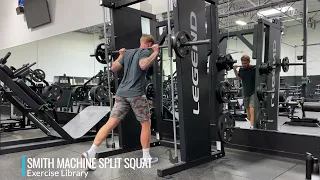
Smith machine split squat
Intermediate
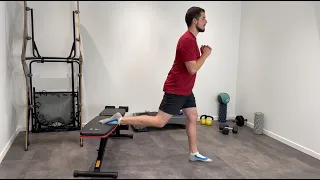
Bulgarian split squat
Intermediate
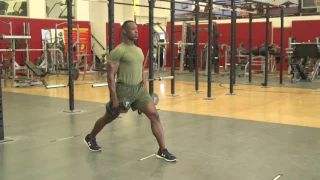
Dumbbell split squat
Intermediate
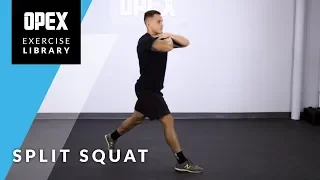
Bodyweight split squat
Intermediate
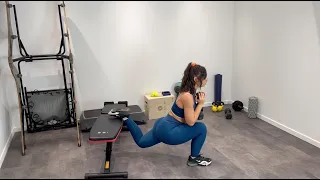
Dumbbell goblet bulgarian split squat
Intermediate
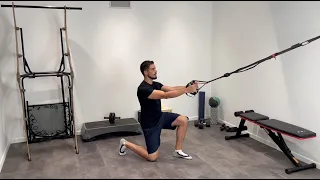
Trx split squat
Intermediate
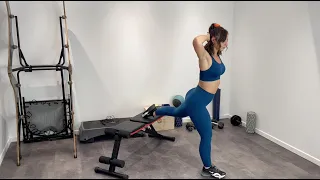
Cobra bulgarian split squat
Intermediate
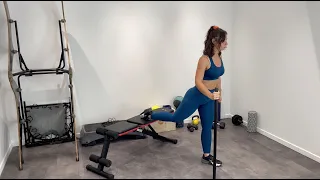
Assisted bulgarian split squat
Beginner
Related fitness articles
See all
Body recomposition: lose fat while building muscle
Muscle gain

Fitness formulas: protein, water, creatine and caffeine
Muscle gain

Carb cycling: useful for losing weight and performing better?
Nutrition
Muscle failure in strength training: what the science says
Muscle gain

Peptides in bodybuilding: effectiveness and risks
Nutrition
Chest pump push-up workout
Muscle gain
Succeeding at your first pull-up
At the gym

Shoulder pain in weight training: prevention and solutions
Risk of injuries
Recommended by our experts
Receive your personalized program
Stop training at random.
Get my program- Program tailored to your profile
- Guided progression
- Compatible with your equipment
- Structured plan
Our coach prepares your program
Get my program