Lower body – endurance and full-body finisher
13 Exercises
Intro
Required equipment
Muscles
Standard
Warm-up
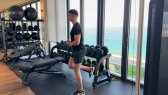
Start at a moderate pace to prepare your legs without creating fatigue. If the impact is uncomfortable, march in place while alternately bringing your heels toward your glutes. Read more Read less
Start at a moderate pace to prepare your legs without creating fatigue. If the impact is uncomfortable, march in place while alternately bringing your heels toward your glutes.
35 seconds - 45 seconds
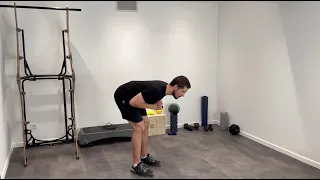
Practice the hip-hinge movement with a neutral spine before adding load. Reduce the range of motion if your hamstrings feel too tight. Read more Read less
Practice the hip-hinge movement with a neutral spine before adding load. Reduce the range of motion if your hamstrings feel too tight.
12 - 15 Repetitions
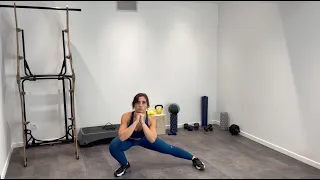
Alternate sides with a progressively larger range of motion to prepare your hips. Keep the entire foot of the bent leg on the floor; reduce the range of motion if necessary. Read more Read less
Alternate sides with a progressively larger range of motion to prepare your hips. Keep the entire foot of the bent leg on the floor; reduce the range of motion if necessary.
8 - 10 Repetitions
Standard
Main
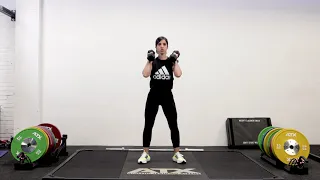
Hold the dumbbells at your shoulders and keep your core braced during the longer sets. If the dumbbell position tires your wrists, use Dumbbell Goblet Squat instead. If the next dumbbell increment is substantially greater than 5%, keep the same load and consolidate the top of the range before using the smallest available increment. Read more Read less
Hold the dumbbells at your shoulders and keep your core braced during the longer sets. If the dumbbell position tires your wrists, use Dumbbell Goblet Squat instead. If the next dumbbell increment is substantially greater than 5%, keep the same load and consolidate the top of the range before using the smallest available increment.
Set
1: 12 - 18 Repetitions
Rest time : 1 minute
Set
2: 12 - 18 Repetitions
Rest time : 1 minute
Set
3: 12 - 18 Repetitions
Rest time : 1 minute
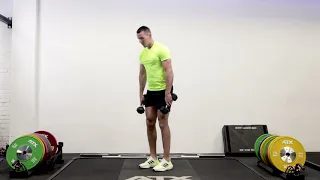
Keep the dumbbells close to your body and drive through the floor with your feet. Stop the set if your back rounds or your speed drops noticeably; reduce the load before extending the effort. If the next dumbbell increment is substantially greater than 5%, keep the same load and consolidate the top of the range before using the smallest available increment. Read more Read less
Keep the dumbbells close to your body and drive through the floor with your feet. Stop the set if your back rounds or your speed drops noticeably; reduce the load before extending the effort. If the next dumbbell increment is substantially greater than 5%, keep the same load and consolidate the top of the range before using the smallest available increment.
Set
1: 12 - 18 Repetitions
Rest time : 1 minute
Set
2: 12 - 18 Repetitions
Rest time : 1 minute
Set
3: 12 - 18 Repetitions
Rest time : 1 minute

Count repetitions per side and keep your knee aligned with your foot. If hip mobility limits your depth, shorten the range of motion and reduce the load. If the next dumbbell increment is substantially greater than 5%, keep the same load and consolidate the top of the range before using the smallest available increment. Read more Read less
Count repetitions per side and keep your knee aligned with your foot. If hip mobility limits your depth, shorten the range of motion and reduce the load. If the next dumbbell increment is substantially greater than 5%, keep the same load and consolidate the top of the range before using the smallest available increment.
Set
1: 10 - 15 Repetitions
Rest time : 50 seconds
Set
2: 10 - 15 Repetitions
Rest time : 50 seconds
Set
3: 10 - 15 Repetitions
Rest time : 1 minute
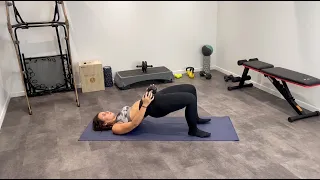
Place the dumbbell securely on your hips and squeeze your glutes without hyperextending your lower back. If the load is uncomfortable on your hips, use a folded towel for padding or perform Glute Bridge. If the next dumbbell increment is substantially greater than 5%, keep the same load and consolidate the top of the range before using the smallest available increment. Read more Read less
Place the dumbbell securely on your hips and squeeze your glutes without hyperextending your lower back. If the load is uncomfortable on your hips, use a folded towel for padding or perform Glute Bridge. If the next dumbbell increment is substantially greater than 5%, keep the same load and consolidate the top of the range before using the smallest available increment.
Set
1: 15 - 20 Repetitions
Rest time : 45 seconds
Set
2: 15 - 20 Repetitions
Rest time : 45 seconds
Set
3: 15 - 20 Repetitions
Rest time : 45 seconds
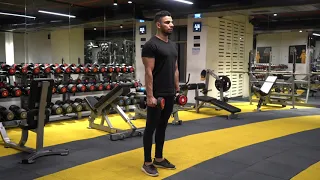
Rise fully onto the balls of your feet and lower without bouncing. Use your free hand on a stable support if necessary; if your calves start burning before the minimum target, reduce the load. Read more Read less
Rise fully onto the balls of your feet and lower without bouncing. Use your free hand on a stable support if necessary; if your calves start burning before the minimum target, reduce the load.
Set
1: 15 - 25 Repetitions
Rest time : 40 seconds
Set
2: 15 - 25 Repetitions
Rest time : 40 seconds
Set
3: 15 - 25 Repetitions
Rest time : 45 seconds
Circuit
3 rounds
Main
Do each exercise one after another. When you finish the list, rest then start again.
Count each knee drive as one repetition and keep your shoulders stable despite leg fatigue. First reach 40 clean repetitions on every round; then progress to a more challenging variation rather than adding 5% load. Read more Read less
Count each knee drive as one repetition and keep your shoulders stable despite leg fatigue. First reach 40 clean repetitions on every round; then progress to a more challenging variation rather than adding 5% load.
Round
1: 24 - 40 Repetitions
Round
2: 24 - 40 Repetitions
Round
3: 24 - 40 Repetitions
Chain without rest
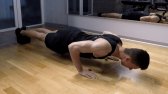
Keep your body aligned and maintain a consistent range of motion. Use your knees or a stable chair if fatigue causes your technique to break down. Once you complete 15 clean repetitions on every round, move to a slightly harder variation instead of automatically adding load. Read more Read less
Keep your body aligned and maintain a consistent range of motion. Use your knees or a stable chair if fatigue causes your technique to break down. Once you complete 15 clean repetitions on every round, move to a slightly harder variation instead of automatically adding load.
Round
1: 8 - 15 Repetitions
Round
2: 8 - 15 Repetitions
Round
3: 8 - 15 Repetitions
Chain without rest

Count one open-close cycle as one repetition and maintain a steady pace without sprinting. When 30 clean repetitions feel easy on every round, slightly increase the pace or range of motion; do not increase the load. Read more Read less
Count one open-close cycle as one repetition and maintain a steady pace without sprinting. When 30 clean repetitions feel easy on every round, slightly increase the pace or range of motion; do not increase the load.
Round
1: 20 - 30 Repetitions
Rest time : 1 minute
Round
2: 20 - 30 Repetitions
Rest time : 1 minute
Round
3: 20 - 30 Repetitions
Rest time : 1 minute
1 minute rest between each round
Repeat 3 times
1 minute rest
Standard
Cool-down
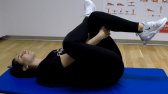
Release your glutes with moderate tension without forcing the knee. Reduce the pull if your hip or knee feels sensitive.
25 seconds - 35 seconds
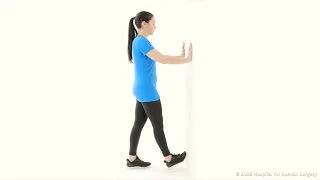
Keep your heel on the floor and aim for mild tension in the calf. Adjust the distance of your foot rather than forcing the ankle. Read more Read less
Keep your heel on the floor and aim for mild tension in the calf. Adjust the distance of your foot rather than forcing the ankle.
25 seconds - 35 seconds
This workout is part of a complete program.
View program