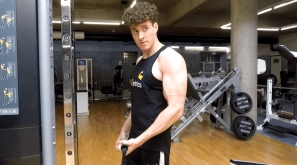
Demonstration video
Receive your personalized program
Stop training at random.
Get my programGet a program adapted to your goals, level, and available equipment. Reach your goals faster with a structured plan designed just for you.
- Program tailored to your profile
- Guided progression
- Compatible with your equipment
- Structured plan
Our coach prepares your program
Get my programHow to do the dumbbell hammer curl
Instructions
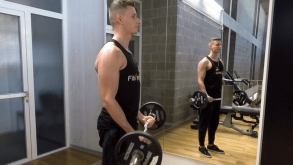
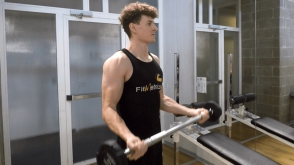
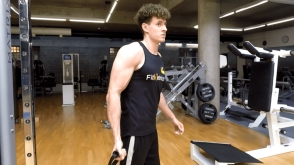
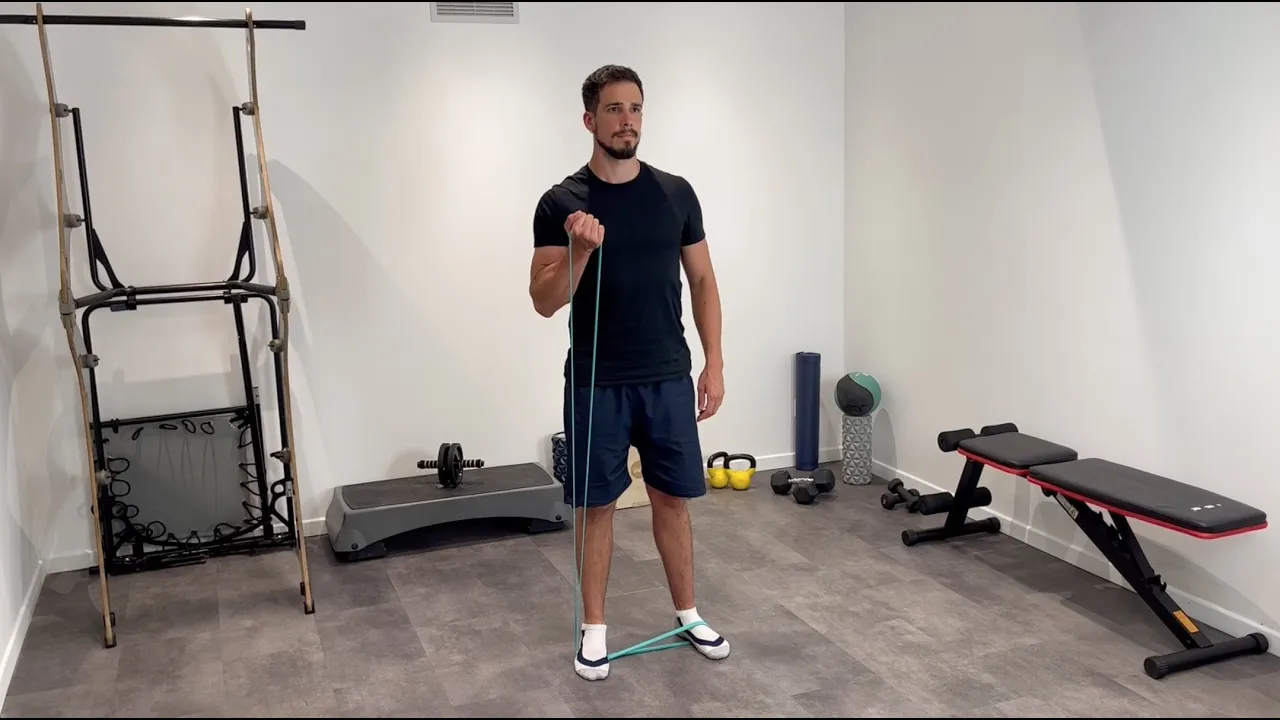
- Stand upright holding a dumbbell in each hand with a neutral grip.
- Keep your elbows close to your torso and palms facing each other.
- Curl the dumbbells upward by bending at the elbows until forearms are vertical.
- Pause briefly at the top, squeezing your biceps and forearms.
- Lower the dumbbells under control back to the starting position.
Technical tips
- Do not swing your arms or use momentum.
- Keep elbows fixed at your sides throughout the movement.
- Maintain a neutral wrist position to avoid strain.
Breathing tips
- Exhale while lifting the dumbbells.
- Inhale while lowering them slowly.
Medical restrictions
- Elbow tendonitis or recent elbow injury
- Wrist pain or carpal tunnel syndrome
- Shoulder impingement issues
Description
The dumbbell hammer curl, also known as the neutral grip biceps curl, is a highly effective isolation exercise designed to build strength and size in the arms. Unlike the traditional biceps curl, the hammer curl is performed with a neutral grip, meaning the palms face each other throughout the movement. This grip variation shifts greater emphasis onto the brachialis and brachioradialis, two muscles that contribute significantly to arm thickness and overall strength. It still targets the biceps brachii but provides a more balanced forearm and upper arm development.
This exercise is widely used in bodybuilding, fitness, and general strength training programs because of its ability to improve arm definition, grip strength, and functional pulling power. The hammer curl is particularly beneficial for athletes and individuals looking to enhance everyday strength tasks such as lifting, carrying, and pulling. It also supports joint stability by engaging the forearm muscles and reducing wrist strain compared to supinated grip curls.
Easy to perform with just a pair of dumbbells, the hammer curl is suitable for beginners while still being valuable for advanced lifters. It can be performed standing or seated and allows for variations like incline hammer curls or cross-body hammer curls to alter muscle emphasis. Regular practice of this movement helps build stronger, thicker arms and supports overall upper body strength.
Read more
Read less
Description
The dumbbell hammer curl, also known as the neutral grip biceps curl, is a highly effective isolation exercise designed to build strength and size in the arms. Unlike the traditional biceps curl, the hammer curl is performed with a neutral grip, meaning the palms face each other throughout the movement. This grip variation shifts greater emphasis onto the brachialis and brachioradialis, two muscles that contribute significantly to arm thickness and overall strength. It still targets the biceps brachii but provides a more balanced forearm and upper arm development. This exercise is widely used in bodybuilding, fitness, and general strength training programs because of its ability to improve arm definition, grip strength, and functional pulling power. The hammer curl is particularly beneficial for athletes and individuals looking to enhance everyday strength tasks such as lifting, carrying, and pulling. It also supports joint stability by engaging the forearm muscles and reducing wrist strain compared to supinated grip curls. Easy to perform with just a pair of dumbbells, the hammer curl is suitable for beginners while still being valuable for advanced lifters. It can be performed standing or seated and allows for variations like incline hammer curls or cross-body hammer curls to alter muscle emphasis. Regular practice of this movement helps build stronger, thicker arms and supports overall upper body strength.
Read more Read lessFAQ