Pendulum Squat
Demonstration video

Recommended by our experts
Receive your personalized program
Stop training at random.
Get my program- Program tailored to your profile
- Guided progression
- Compatible with your equipment
- Structured plan
Our coach prepares your program
Get my programHow to do Pendulum Squat
Instructions
- Load the pendulum squat machine with the desired weight plates.
- Step onto the platform and position your shoulders under the pads.
- Place your feet shoulder-width apart on the foot platform.
- Release the safety handles while maintaining a braced torso.
- Lower your body by bending your knees and hips until you reach a deep squat position.
- Push through your feet to extend your legs and return to the starting position.
- Repeat for the desired number of repetitions before re-engaging the safety handles.
Technical tips
- Keep your lower back pressed against the pad throughout the movement.
- Maintain controlled tempo during the descent to avoid bouncing.
- Keep your knees tracking in line with your toes.
- Push through the mid-foot and heels rather than the toes.
- Avoid locking out the knees aggressively at the top.
Breathing tips
- Inhale deeply before lowering into the squat.
- Brace your core and maintain breath control during the descent.
- Exhale steadily as you push back to the starting position.
Medical restrictions
- Severe knee injuries or ligament instability
- Recent hip surgery or acute hip pain
- Advanced lower back injuries
- Post-surgical lower limb rehabilitation without medical clearance
Description
The Pendulum Squat is a popular machine-based lower-body exercise designed to develop strength and muscle size in the legs while providing a controlled and stable training environment. Unlike free-weight squats, the pendulum squat uses a fixed arc movement created by a lever system that swings like a pendulum. This guided motion helps maintain a consistent squat path and allows lifters to focus on producing force through the legs without worrying about balancing a barbell.
One of the defining characteristics of the pendulum squat is its ability to allow deep squat positions with significant loading. The machine’s design encourages a natural squat pattern while supporting the torso with shoulder pads, which reduces the need for upper-body stabilization. As a result, trainees can concentrate on leg drive and controlled movement throughout the full range of motion.
Because of its stability and predictable resistance path, the pendulum squat is widely used in bodybuilding and strength-focused training programs. It allows athletes to train with high intensity while maintaining consistent technique. The movement is also well suited for hypertrophy-focused workouts where controlled repetitions and deep range of motion are prioritized.
Another advantage is its accessibility for lifters who may struggle with traditional barbell squats due to mobility limitations or difficulty stabilizing heavy loads. The machine setup simplifies the movement pattern, making it easier to perform safely while still allowing progressive overload. For these reasons, the pendulum squat is often included as a primary lower-body movement or as a complementary exercise alongside traditional squat variations in structured training routines.
Frequently asked questions
-
What are the benefits of doing the Pendulum Squat?
The Pendulum Squat helps build strong and muscular legs by providing a stable and guided squat movement. The machine allows for deep range of motion and consistent resistance, making it effective for hypertrophy and strength training while reducing the balance demands of free-weight squats. -
Is the Pendulum Squat better than a barbell squat?
The Pendulum Squat is not necessarily better than a barbell squat, but it offers advantages such as greater stability and a controlled movement path. This makes it ideal for focusing on leg development or training safely with heavy loads when balance or upper-body fatigue is a limiting factor. -
What is the most common mistake when performing the Pendulum Squat?
A common mistake is allowing the knees to collapse inward during the descent. This can place unnecessary stress on the knee joint. Keeping the knees aligned with the toes and controlling the lowering phase helps maintain proper squat mechanics. -
Is the Pendulum Squat safe for my knees?
When performed with proper technique and appropriate weight, the Pendulum Squat is generally safe for the knees. The guided machine path helps control movement, but it is still important to avoid excessive weight and maintain proper knee alignment throughout the exercise. -
How should I program the Pendulum Squat in my leg workout?
The Pendulum Squat can be used as a primary lower-body exercise or as a secondary movement after compound lifts. Many lifters perform 3–5 sets of 6–12 repetitions to build strength and muscle while maintaining controlled form.
Variants and alternatives
See all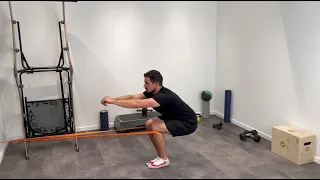
Banded sissy squats
Advanced
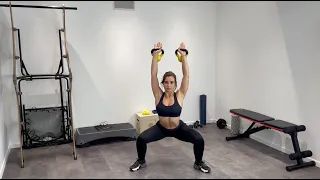
Kettlebell overhead sumo squat
Advanced
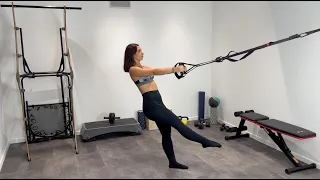
Trx pistol pendulum squat
Advanced
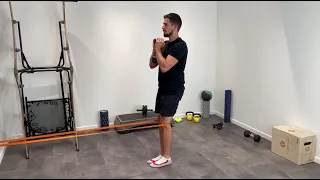
Banded sissy squat with dumbbell
Advanced
Dumbbell jumping squat
Intermediate
Kettlebell goblet sumo squat
Beginner
Band spanish squat
Beginner
Squat with overhead reach
Beginner
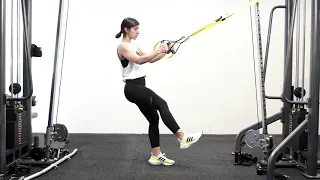
Trx single leg squat
Advanced
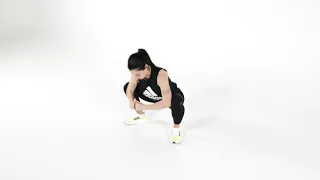
Bottom squat
Beginner
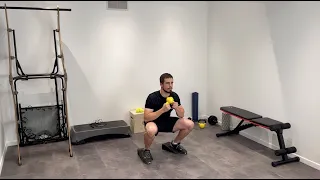
Heels elevated goblet squat
Intermediate
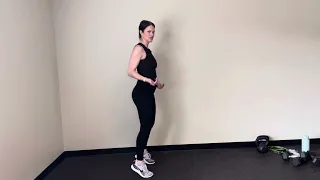
Tip toe squat
Intermediate
Related fitness articles
See all
Body recomposition: lose fat while building muscle
Muscle gain

Fitness formulas: protein, water, creatine and caffeine
Muscle gain

Carb cycling: useful for losing weight and performing better?
Nutrition

Muscle failure in strength training: what the science says
Muscle gain

Peptides in bodybuilding: effectiveness and risks
Nutrition
Chest pump push-up workout
Muscle gain
Succeeding at your first pull-up
At the gym

Shoulder pain in weight training: prevention and solutions
Risk of injuries
Recommended by our experts
Receive your personalized program
Stop training at random.
Get my program- Program tailored to your profile
- Guided progression
- Compatible with your equipment
- Structured plan
Our coach prepares your program
Get my program