Smith Machine Split Squat
Demonstration video

Recommended by our experts
Receive your personalized program
Stop training at random.
Get my program- Program tailored to your profile
- Guided progression
- Compatible with your equipment
- Structured plan
Our coach prepares your program
Get my programHow to do Smith Machine Split Squat
Instructions
- Set the Smith machine bar at upper-back height and stand in a split stance under the bar.
- Place the bar across your upper traps, not on your neck, and unlock it from the hooks.
- Step one foot forward and the other foot back until both knees can bend comfortably.
- Lower your body by bending both knees, keeping your front foot flat on the floor.
- Descend until your front thigh is near parallel to the floor or your back knee approaches the floor.
- Press through the front foot to return to the starting position without locking the knee aggressively.
- Complete all reps on one side, then switch legs.
Technical tips
- Keep your torso tall and your ribs stacked over your hips.
- Track the front knee in line with the toes; do not let it collapse inward.
- Use a stance long enough to control depth without forcing the front heel to lift.
- Keep the Smith bar path smooth and vertical throughout the rep.
- Start with a light load until balance, depth, and knee tracking are consistent.
Breathing tips
- Inhale before lowering into the split squat.
- Keep light core tension as you descend.
- Exhale as you press back up to the starting position.
- Avoid holding your breath for long sets unless using a brief brace under heavier loads.
Medical restrictions
- Avoid this exercise if you have acute knee pain, ligament injury, or uncontrolled knee instability.
- Use caution with hip impingement, recent hip surgery, or painful hip range of motion.
- Avoid heavy loading if you have an active lower-back injury or pain during spinal compression.
- Stop the exercise if you feel sharp pain, numbness, or joint locking.
- Consult a qualified healthcare professional before performing this exercise after lower-limb surgery or serious injury.
Description
The Smith Machine Split Squat is a controlled single-leg strength exercise designed to build balanced force production, improve coordination, and support better symmetry between sides. Because the bar travels on fixed rails, the movement allows lifters to focus on consistent positioning and steady loading without needing to stabilize a free bar. This makes it useful for hypertrophy-focused training, progressive overload, and refining split-stance mechanics in a predictable environment.
This exercise is especially valuable for identifying and correcting side-to-side strength differences. Working one leg at a time encourages more even development, which can improve performance in squatting, lunging, sprinting, jumping, and other athletic movement patterns. The fixed setup also makes it easier to repeat the same stance, depth, and tempo from set to set, helping users track progress accurately.
For physique training, the Smith Machine Split Squat offers a strong stimulus with relatively simple setup and minimal equipment demands. It can be loaded progressively, performed with controlled eccentrics, or used with higher-repetition sets for volume. The movement is also practical for users who want a stable alternative to free-weight split squats while still training each side independently. When performed with proper control, it is an efficient way to develop strength, stability, and muscular balance in a structured gym program.
Frequently asked questions
-
What are the benefits of doing Smith Machine Split Squats?
Smith Machine Split Squats help build single-leg strength, improve side-to-side balance, support better lower-body control, and make progressive overload easier because the bar path is fixed and repeatable. -
What is the most common mistake in the Smith Machine Split Squat?
The most common mistake is using a stance that is too short, which can force the front knee forward excessively and make the heel lift. Set your feet so you can lower under control while keeping the front foot flat. -
Is the Smith Machine Split Squat safe for my knees?
It can be knee-friendly when performed with proper stance, controlled depth, and good knee tracking. Keep the front knee aligned with the toes and avoid bouncing at the bottom of the rep. -
How many reps should I do for Smith Machine Split Squats?
For strength and muscle growth, most users perform 8 to 12 reps per leg. Beginners can start with lighter loads and 10 to 15 controlled reps to learn the movement pattern. -
Should I lean forward during a Smith Machine Split Squat?
A slight forward lean is acceptable if your spine stays neutral and the movement remains controlled. Excessive leaning usually means the load is too heavy or the stance needs adjustment. -
What muscles does the Smith Machine Split Squat target?
The Smith Machine Split Squat mainly targets the thighs and hips while also involving stabilizing muscles through the trunk and lower leg to maintain position and control.
Variants and alternatives
See all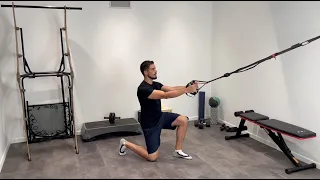
Trx split squat
Intermediate
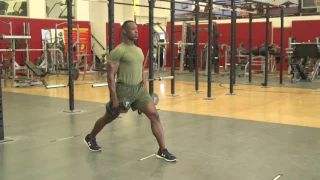
Dumbbell split squat
Intermediate
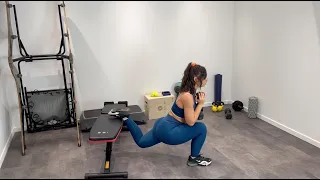
Dumbbell goblet bulgarian split squat
Intermediate
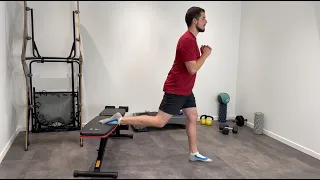
Bulgarian split squat
Intermediate
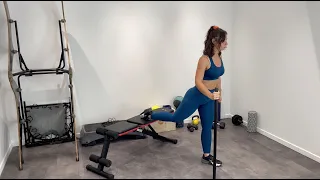
Assisted bulgarian split squat
Beginner
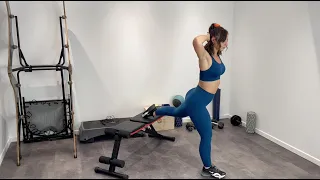
Cobra bulgarian split squat
Intermediate
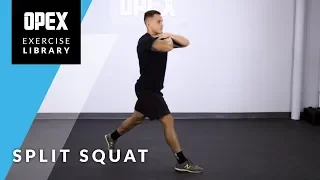
Bodyweight split squat
Intermediate
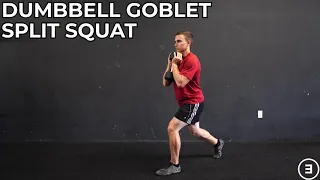
Dumbbell goblet split squat
Intermediate
Related fitness articles
See all
Body recomposition: lose fat while building muscle
Muscle gain

Fitness formulas: protein, water, creatine and caffeine
Muscle gain

Carb cycling: useful for losing weight and performing better?
Nutrition

Muscle failure in strength training: what the science says
Muscle gain

Peptides in bodybuilding: effectiveness and risks
Nutrition
Chest pump push-up workout
Muscle gain
Succeeding at your first pull-up
At the gym

Shoulder pain in weight training: prevention and solutions
Risk of injuries
Recommended by our experts
Receive your personalized program
Stop training at random.
Get my program- Program tailored to your profile
- Guided progression
- Compatible with your equipment
- Structured plan
Our coach prepares your program
Get my program