Arnold press
Demonstration video
Recommended by our experts
Receive your personalized program
Stop training at random.
Get my program- Program tailored to your profile
- Guided progression
- Compatible with your equipment
- Structured plan
Our coach prepares your program
Get my programHow to do Arnold press
Instructions
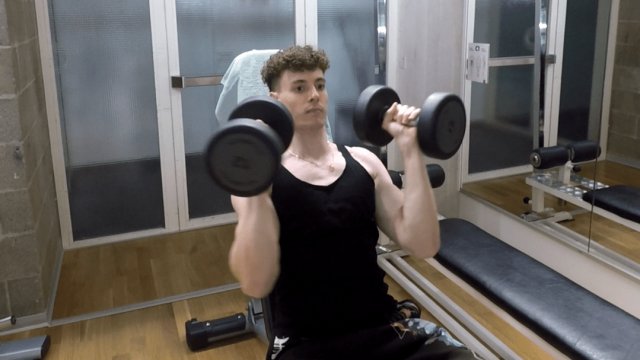
- Sit on a musculation bench with back support, holding a dumbbell in each hand at shoulder height, palms facing your body.
- Press the dumbbells upward while simultaneously rotating your palms to face forward.
- Continue pressing until your arms are fully extended overhead.
- Pause briefly at the top, then reverse the motion, rotating your palms back toward your body as you lower the dumbbells.
- Return to the starting position and repeat.
Technical Tips
- Maintain a controlled motion throughout the lift to avoid shoulder strain.
- Keep your back firmly against the bench to minimize lower back involvement.
- Rotate the wrists smoothly to ensure proper deltoid engagement.
Breathing Tips
- Inhale as you lower the dumbbells back to shoulder height.
- Exhale forcefully as you press the weights overhead.
Medical restrictions
- Shoulder impingement
- Rotator cuff injuries
- Severe lower back pain
Description
The Arnold press is a powerful shoulder exercise designed to target all three heads of the deltoid muscle through a unique rotational pressing motion. Named after Arnold Schwarzenegger, this movement combines the benefits of a traditional shoulder press with the added engagement of front deltoid rotation. It’s performed using dumbbells while seated or standing, typically on a musculation bench for added support. This makes it especially effective for improving shoulder strength, muscular balance, and hypertrophy. The rotational component of the Arnold press increases time under tension, leading to greater muscle activation and development. This exercise is favored by bodybuilders and strength trainers alike for its efficiency in building shoulder mass and enhancing upper body aesthetics. Ideal for intermediate lifters, the Arnold press offers functional carryover to pushing movements and athletic performance. When executed with proper form and progression, it can significantly contribute to shoulder stability, joint health, and muscle symmetry.
Credits

Frequently asked questions
-
What muscles do I work with the Arnold press?
The Arnold press primarily targets the shoulders, engaging all three deltoid heads—front, side, and rear—along with secondary activation of the triceps. -
Is the Arnold press better than a regular shoulder press?
The Arnold press adds a rotational component that increases front deltoid activation, making it more effective for full shoulder development compared to a standard shoulder press. -
Should I do the Arnold press standing or seated?
Both options are effective, but the seated version offers more back support and reduces lower body involvement, allowing better isolation of the shoulder muscles. -
Is the Arnold press safe for my shoulders?
Yes, when performed with proper form and controlled motion, the Arnold press is safe. However, individuals with shoulder injuries should consult a professional before performing it. -
How heavy should I go on the Arnold press?
Use moderate weights that allow you to maintain control and complete the full range of motion without compromising form. Prioritize technique over load.
Variants and alternatives
See all
Smith machine overhead shoulder press
Intermediate
Arnold press
Intermediate
Military machine press (tight grip)
Beginner
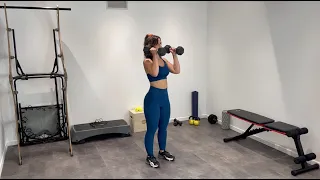
Dumbbell overhead press
Intermediate
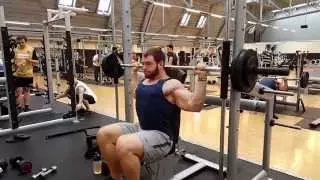
Smith machine behind the neck press
Intermediate
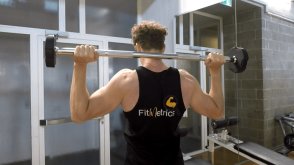
Neck press with bar
Advanced
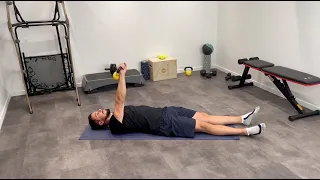
Kettlebell single arm press
Intermediate
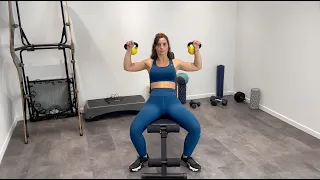
Kettlebell seated military press
Beginner
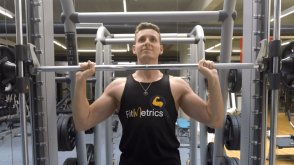
Smith machine military press
Intermediate
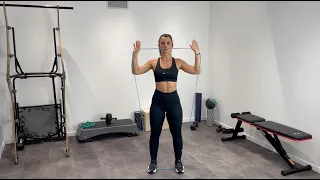
Band military press
Beginner
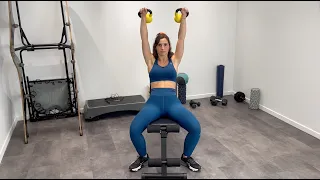
Kettlebell seated arnold press
Intermediate
Kettlebell military press
Intermediate
Related fitness articles
See all
Body recomposition: lose fat while building muscle
Muscle gain

Fitness formulas: protein, water, creatine and caffeine
Muscle gain

Carb cycling: useful for losing weight and performing better?
Nutrition

Muscle failure in strength training: what the science says
Muscle gain

Peptides in bodybuilding: effectiveness and risks
Nutrition
Chest pump push-up workout
Muscle gain
Succeeding at your first pull-up
At the gym

Shoulder pain in weight training: prevention and solutions
Risk of injuries
Recommended by our experts
Receive your personalized program
Stop training at random.
Get my program- Program tailored to your profile
- Guided progression
- Compatible with your equipment
- Structured plan
Our coach prepares your program
Get my program