Demonstration video
Receive your personalized program
Stop training at random.
Get my programGet a program adapted to your goals, level, and available equipment. Reach your goals faster with a structured plan designed just for you.
- Program tailored to your profile
- Guided progression
- Compatible with your equipment
- Structured plan
Our coach prepares your program
Get my programHow to do Supinated Grip Pull-Up
Instructions
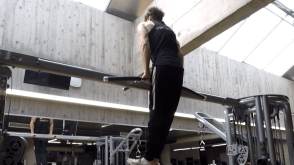
- Grab the pull-up bar with a supinated (underhand) grip, hands shoulder-width apart.
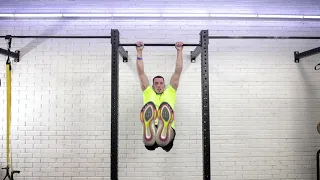
- Hang fully extended with your arms straight and legs off the ground.
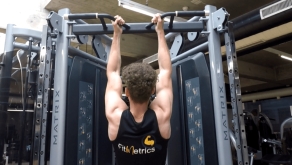
- Pull your chest toward the bar by contracting your back and biceps.
- Pause briefly at the top when your chin clears the bar.
- Lower yourself in a controlled motion back to the starting position.
Technical Tips
- Avoid swinging or using momentum.
- Engage your core throughout the movement.
- Keep elbows close to your body during the ascent.
- Retract shoulder blades at the start of the pull.
Breathing Tips
- Inhale at the bottom while hanging.
- Exhale as you pull yourself up.
- Inhale again while lowering to the starting position.
Medical restrictions
- Shoulder impingement
- Rotator cuff injuries
- Elbow tendinitis
- Wrist joint issues
Description
The supinated pull-up, commonly known as the chin-up, is a foundational bodyweight exercise that builds upper body strength and muscle mass. Using an underhand grip, this movement emphasizes the biceps and latissimus dorsi more than traditional pull-ups. Chin-ups are a staple in strength training, calisthenics, and functional fitness routines due to their effectiveness in developing pulling strength and muscular coordination. Because the grip places the elbows in a more favorable position, many find chin-ups slightly easier than overhand pull-ups, making them suitable for progression. This exercise also contributes to improved posture and upper-body control. Regularly incorporating chin-ups helps develop muscle endurance and pulling capacity, making it beneficial for athletes, fitness enthusiasts, and anyone pursuing a strong upper body.
Read more
Read less
Description
The supinated pull-up, commonly known as the chin-up, is a foundational bodyweight exercise that builds upper body strength and muscle mass. Using an underhand grip, this movement emphasizes the biceps and latissimus dorsi more than traditional pull-ups. Chin-ups are a staple in strength training, calisthenics, and functional fitness routines due to their effectiveness in developing pulling strength and muscular coordination. Because the grip places the elbows in a more favorable position, many find chin-ups slightly easier than overhand pull-ups, making them suitable for progression. This exercise also contributes to improved posture and upper-body control. Regularly incorporating chin-ups helps develop muscle endurance and pulling capacity, making it beneficial for athletes, fitness enthusiasts, and anyone pursuing a strong upper body.
Read more Read lessCredits

FAQ
Frequently asked questions
-
What muscles do chin-ups primarily target?
Chin-ups primarily target the biceps and the back, especially the latissimus dorsi, making them effective for upper body strength development. -
Are chin-ups easier than pull-ups?
Yes, chin-ups are generally easier than pull-ups due to the underhand grip, which places greater emphasis on the biceps and provides a more natural arm position. -
Can beginners do chin-ups?
Beginners may find chin-ups challenging, but using resistance bands or assisted pull-up machines can help build the necessary strength to perform them. -
How should I grip the bar for a chin-up?
For a chin-up, grip the bar with your palms facing you (supinated grip), typically shoulder-width apart to ensure balanced muscle activation. -
Do chin-ups help build bigger arms?
Yes, chin-ups are highly effective for arm hypertrophy as they strongly activate both the biceps brachii and the brachialis.