Incline Dumbbell Curl
Demonstration video
Recommended by our experts
Receive your personalized program
Stop training at random.
Get my program- Program tailored to your profile
- Guided progression
- Compatible with your equipment
- Structured plan
Our coach prepares your program
Get my programHow to do Incline Dumbbell Curl
Instructions
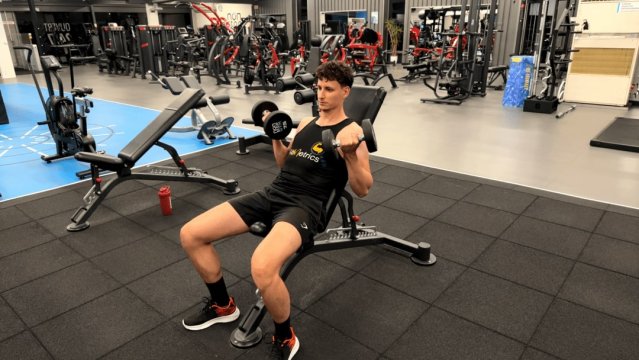
- Set an incline bench to about a 45–60 degree angle and sit with your back fully supported.
- Hold a dumbbell in each hand with a supinated grip and let your arms hang fully extended.
- Curl the weights upward by contracting your biceps without moving your upper arms.
- Pause at the top of the movement with a full squeeze of the biceps.
- Slowly lower the dumbbells back to the starting position in a controlled manner.
Technical Tips
- Keep your shoulders retracted and back flat against the bench.
- Avoid swinging or using momentum to lift the weights.
- Maintain a full range of motion for maximum biceps activation.
Breathing Tips
- Exhale as you lift the dumbbells.
- Inhale as you lower them back to the starting position.
Medical restrictions
- Shoulder impingement
- Elbow tendinitis
- Recent biceps strain
Description
The Incline Dumbbell Curl is a focused isolation exercise designed to enhance biceps development by maximizing muscle stretch and contraction. Performed while seated on an incline bench, this exercise uniquely positions the arms behind the torso, allowing for a greater range of motion compared to standard curls. This extended range enhances the stretch on the long head of the biceps, making it a powerful tool for building peak and size.
Because of the strict posture enforced by the incline setup, the Incline Dumbbell Curl minimizes cheating and momentum, ensuring targeted muscle engagement throughout the movement. It’s particularly effective for those looking to emphasize the long head of the biceps and improve overall arm aesthetics. Suitable for intermediate lifters, this exercise is commonly included in bodybuilding and strength training routines where muscle isolation and hypertrophy are key objectives.
This movement can be performed unilaterally or bilaterally and is often used as a finishing movement in arm workouts to fully fatigue the biceps in a controlled and deliberate manner.
Credits

Frequently asked questions
-
What does the Incline Dumbbell Curl target?
The Incline Dumbbell Curl primarily targets the biceps, with a strong emphasis on the long head for enhanced peak development and muscle stretch. -
Why is the Incline Dumbbell Curl effective?
It's effective because it positions the arms behind the torso, increasing the range of motion and minimizing momentum, which boosts biceps isolation. -
Can I use both arms at once for Incline Dumbbell Curls?
Yes, Incline Dumbbell Curls can be performed with both arms simultaneously or one arm at a time, depending on your training focus. -
How many reps should I do for Incline Dumbbell Curls?
Aim for 8–12 reps per set for hypertrophy, ensuring strict form and a controlled tempo throughout each repetition. -
Is the Incline Dumbbell Curl safe for shoulder issues?
If you have shoulder impingement or limited mobility, consult a professional before performing this movement, as the arm position may increase shoulder stress.
Variants and alternatives
See all
Reverse hammer curl with barbell
Intermediate
Smith machine drag curl
Intermediate
Band reverse curl
Beginner
Kettlebell concentration curl
Beginner
Seated dumbbell hammer curl
Beginner
Standing concentrated hammer curl
Intermediate
Hammer curls
Beginner
High cable curls
Intermediate
Dumbbell spider curl
Intermediate
Lying cable curl
Intermediate
Concentration curls
Beginner
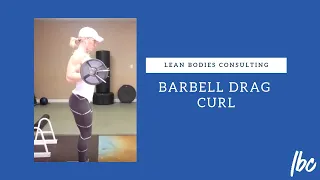
Drag curl
Intermediate
Related fitness articles
See all
Body recomposition: lose fat while building muscle
Muscle gain

Fitness formulas: protein, water, creatine and caffeine
Muscle gain

Carb cycling: useful for losing weight and performing better?
Nutrition

Muscle failure in strength training: what the science says
Muscle gain

Peptides in bodybuilding: effectiveness and risks
Nutrition
Chest pump push-up workout
Muscle gain
Succeeding at your first pull-up
At the gym

Shoulder pain in weight training: prevention and solutions
Risk of injuries
Recommended by our experts
Receive your personalized program
Stop training at random.
Get my program- Program tailored to your profile
- Guided progression
- Compatible with your equipment
- Structured plan
Our coach prepares your program
Get my program