Reverse Barbell Preacher Curl
Demonstration video

Recommended by our experts
Receive your personalized program
Stop training at random.
Get my program- Program tailored to your profile
- Guided progression
- Compatible with your equipment
- Structured plan
Our coach prepares your program
Get my programHow to do Reverse Barbell Preacher Curl
Instructions
- Sit on the preacher bench with your feet flat on the floor and chest against the pad.
- Grip the barbell with a pronated (overhand) grip, hands shoulder-width apart.
- Start with your arms fully extended and the barbell resting just above your wrists.
- Curl the barbell upward by bending your elbows while keeping your upper arms fixed against the pad.
- Lift until your forearms are vertical or just short of full contraction.
- Pause briefly at the top, then lower the bar under control back to the starting position.
Technical Tips
- Keep your wrists straight and avoid letting them bend backward.
- Do not swing or use momentum; isolate the movement to your forearms and brachialis.
- Maintain constant tension on the muscles throughout the movement.
Breathing Tips
- Exhale while curling the bar upward.
- Inhale while lowering the bar back to the start.
Medical restrictions
- Wrist tendonitis or pain
- Elbow joint injuries
- Forearm muscle strains
Description
The Reverse Barbell Preacher Curl is an effective isolation exercise designed to target the forearms and brachialis, with secondary activation of the brachioradialis. Performed using a preacher bench and a barbell with an overhand grip, this variation emphasizes the extensors of the forearm by placing the wrists in a pronated position. It minimizes shoulder involvement and reduces cheating, making it ideal for focused arm development. This exercise is commonly used by bodybuilders and fitness enthusiasts aiming to build forearm thickness and improve grip strength. Because it isolates smaller muscles and uses a controlled range of motion, it is typically executed with moderate to light weights. Ideal for intermediate trainees, the Reverse Barbell Preacher Curl is also a valuable accessory movement for those looking to strengthen their elbow flexors while minimizing biceps dominance. Consistent use in a training program can enhance arm aesthetics and contribute to overall upper limb functionality.
Frequently asked questions
-
What muscles do reverse preacher curls work best?
Reverse preacher curls primarily target the forearm extensors and brachialis, making them ideal for developing forearm thickness and grip strength. -
Is the reverse preacher curl better with a barbell or EZ bar?
Both are effective, but the EZ bar can reduce wrist strain while still targeting the same muscles, making it a preferred option for joint comfort. -
Can beginners do reverse preacher curls safely?
While reverse preacher curls are generally better suited for intermediates, beginners can perform them safely with light weights and strict form. -
How does grip affect muscle activation in preacher curls?
Using a pronated (overhand) grip emphasizes the brachialis and forearm extensors, while a supinated grip focuses more on the biceps. -
Should I include reverse curls in my arm workout?
Yes, reverse curls complement standard biceps exercises by strengthening the brachialis and forearms, promoting balanced arm development.
Variants and alternatives
See all
Smith machine drag curl
Intermediate
Hammer curls
Beginner
Dumbbell spider curl
Intermediate
Band high curl
Beginner
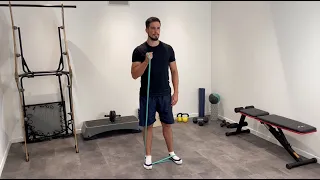
Band single arm hammer curl
Beginner
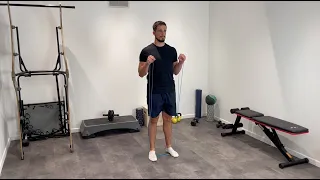
Band reverse curl
Beginner
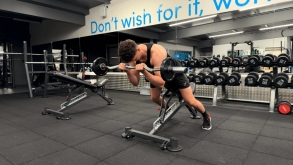
Spider curl
Intermediate
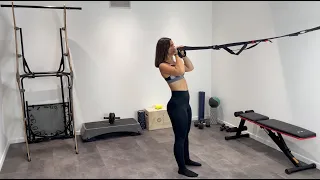
Trx reverse curl
Intermediate
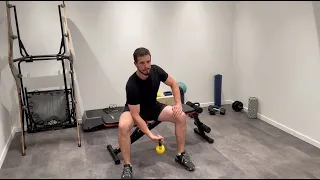
Kettlebell concentration curl
Beginner
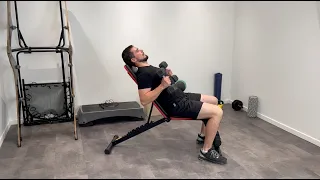
Incline hammer curls
Intermediate
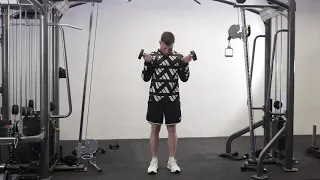
Zottman curl
Intermediate
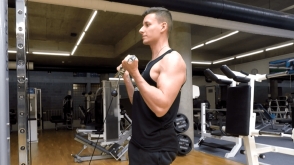
Cable bicep curl
Beginner
Related fitness articles
See all
Carb cycling: useful for losing weight and performing better?
Nutrition

Muscle failure in strength training: what the science says
Muscle gain

Peptides in bodybuilding: effectiveness and risks
Nutrition
Chest pump push-up workout
Muscle gain
Succeeding at your first pull-up
At the gym

Shoulder pain in weight training: prevention and solutions
Risk of injuries
What is the best training structure?
Muscle gain
Lose weight fast: effective and safe methods
Diet
Recommended by our experts
Receive your personalized program
Stop training at random.
Get my program- Program tailored to your profile
- Guided progression
- Compatible with your equipment
- Structured plan
Our coach prepares your program
Get my program