Deep Squat Hold Calf Raise
Demonstration video

Recommended by our experts
Receive your personalized program
Stop training at random.
Get my program- Program tailored to your profile
- Guided progression
- Compatible with your equipment
- Structured plan
Our coach prepares your program
Get my programHow to do Deep Squat Hold Calf Raise
Instructions
- Stand with feet about shoulder-width apart and descend into a deep squat until you reach a comfortable bottom position.
- Keep your heels down, chest up, and torso as tall as you can while staying balanced.
- Hold the deep squat position and shift your weight evenly across both feet.
- Press through the balls of your feet to lift your heels and rise onto your toes while staying in the squat.
- Pause briefly at the top, then lower your heels back down under control.
- Repeat for smooth, controlled repetitions without bouncing.
Technical tips
- Keep your knees tracking in line with your toes and avoid letting them collapse inward.
- Stay centered over the midfoot and forefoot during the heel raise, not tipped forward onto the toes.
- Aim for full heel lift and a controlled lower to get the most out of each rep.
- Maintain a steady squat depth throughout the set instead of standing up between reps.
- Use a wall or door frame for light balance support if you wobble, but do not pull with your arms.
- Stop the set if you feel sharp pain in the ankle, Achilles, knee, or hip.
Breathing tips
- Inhale to brace and stabilize in the deep squat position.
- Exhale as you lift your heels and rise onto your toes.
- Inhale as you lower your heels back down and reset your balance for the next rep.
Medical restrictions
- Acute knee pain, recent knee surgery, or a flare-up of patellofemoral pain.
- Achilles tendon injury, severe plantar fasciitis, or acute ankle sprain.
- Significant hip pain in deep squat positions (including symptomatic hip impingement).
- Acute low back pain that worsens in a deep squat posture.
- Severe balance impairment unless using stable support.
Description
The Deep Squat Hold Calf Raise is a high-value bodyweight drill that combines a steady bottom squat position with repeated heel raises. It is a practical way to build lower-leg strength and endurance while also challenging balance, posture, and whole-body control. Because you stay low throughout the set, the movement teaches you to maintain stability under fatigue and to produce force through a controlled range of motion rather than relying on momentum.
This exercise is especially useful for athletes and everyday movers who want stronger, more resilient lower legs for walking, running, hiking, and jumping. The deep squat position adds a coordination and stability demand that makes each repetition more skill-based than a standard standing calf raise. Over time, consistent practice can improve ankle function, steadiness during direction changes, and overall lower-body durability.
It also works well as a warm-up primer before lower-body training or as a finisher for metabolic conditioning, since it elevates effort quickly without equipment. Whether your goal is better athletic performance, improved movement quality, or stronger lower legs for daily life, the Deep Squat Hold Calf Raise is a simple, scalable option that fits almost anywhere in a program.
Frequently asked questions
-
What are the benefits of doing deep squat hold calf raises?
Deep squat hold calf raises build calf strength and endurance while improving balance, coordination, and lower-body control. The sustained squat position also makes the exercise a strong option for conditioning and movement quality without equipment. -
What is the most common mistake in deep squat hold calf raises?
The most common mistake is bouncing through the reps or letting the heels drop fast. Slow, controlled heel lifts and controlled lowers improve results and reduce unnecessary stress on the feet and Achilles. -
Is the deep squat hold calf raise safe for my knees and ankles?
It is generally safe when performed pain-free with controlled range of motion and stable balance. If deep squat positions or heel raises trigger sharp pain in the knee, ankle, or Achilles, reduce depth, use light support, or choose a simpler calf raise variation. -
How is the deep squat hold calf raise different from a standing calf raise?
Compared to a standing calf raise, the deep squat hold calf raise adds a sustained squat posture that increases balance and stability demands. Standing calf raises are usually easier to control and scale, while the deep squat version emphasizes coordination and whole-body steadiness. -
How many reps and sets should I do for deep squat hold calf raises?
A practical starting point is 2 to 4 sets of 8 to 20 controlled reps. Use lower reps for strength-focused training and higher reps for endurance and conditioning, keeping form consistent across the set. -
What can I do if I cannot hold a deep squat during this exercise?
Use a slightly higher squat depth you can control, or lightly hold a wall or door frame for balance. You can also switch to wall sit calf raises or standing bodyweight calf raises until the deep squat position feels comfortable.
Variants and alternatives
See all
Seated calf raise
Beginner
Walking calf raises
Beginner

Standing calf raises
Beginner
Seated calf raise with kettlebell
Beginner
Single leg calf raise
Intermediate
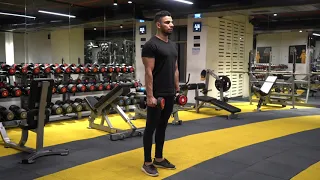
Dumbbell standing calf raise
Beginner
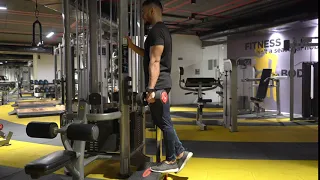
Single-leg dumbbell calf raise
Intermediate
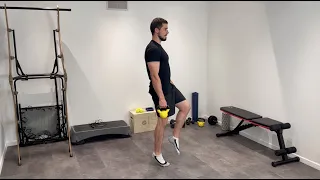
Kettlebell single leg calf raise
Intermediate
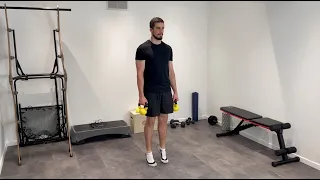
Kettlebell calf raise
Beginner
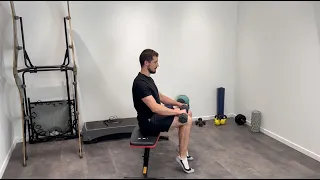
Seated calf raise with dumbbells
Beginner
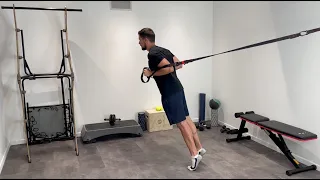
Trx calf raise
Beginner
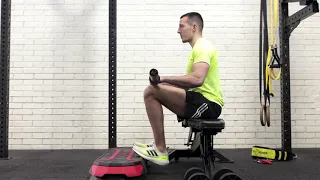
Barbell seated calf raise
Beginner
Related fitness articles
See all
Body recomposition: lose fat while building muscle
Muscle gain

Fitness formulas: protein, water, creatine and caffeine
Muscle gain

Carb cycling: useful for losing weight and performing better?
Nutrition

Muscle failure in strength training: what the science says
Muscle gain

Peptides in bodybuilding: effectiveness and risks
Nutrition
Chest pump push-up workout
Muscle gain
Succeeding at your first pull-up
At the gym

Shoulder pain in weight training: prevention and solutions
Risk of injuries
Recommended by our experts
Receive your personalized program
Stop training at random.
Get my program- Program tailored to your profile
- Guided progression
- Compatible with your equipment
- Structured plan
Our coach prepares your program
Get my program