Towel Rows
Demonstration video

Recommended by our experts
Receive your personalized program
Stop training at random.
Get my program- Program tailored to your profile
- Guided progression
- Compatible with your equipment
- Structured plan
Our coach prepares your program
Get my programHow to do Towel Rows
Instructions
- Use a thick, undamaged towel and a solid door that opens away from you.
- Drape the towel over the top of the door near the hinge side, then fully close and lock the door.
- Hold one end of the towel in each hand and test the anchor with gradual pressure.
- Walk your feet toward the door and lean back with your arms extended.
- Brace your trunk and keep your body aligned from head to heels.
- Pull your torso toward the door by driving your elbows back.
- Pause briefly near the top, then extend your arms slowly to return.
Technical tips
- Keep your shoulders down instead of shrugging toward your ears.
- Lead the pull with your elbows and shoulder blades.
- Keep your wrists straight and maintain an even grip on both towel ends.
- Do not let your hips sag or move ahead of your torso.
- Stand more upright to reduce difficulty or lean farther back to increase it.
Breathing tips
- Inhale as you extend your arms and lower your body away from the door.
- Exhale steadily as you pull your torso toward your hands.
- Avoid holding your breath during the repetition.
Medical restrictions
- Acute shoulder pain, instability, or recent shoulder surgery
- Elbow, wrist, or hand injuries aggravated by pulling or gripping
- Severe or uncontrolled lower-back pain that prevents maintaining a braced trunk
Description
Towel rows are a practical bodyweight horizontal-pulling exercise that turns a sturdy household towel and a secure door into an accessible strength-training station. The movement is especially useful for home workouts because it requires minimal space, allows quick setup, and can be adjusted to suit different ability levels. By changing how far the feet are placed from the door and how much the body leans back, the exercise can range from a gentle introductory pull to a demanding bodyweight challenge.
Regularly performing towel rows can improve general pulling strength, postural control, shoulder-blade coordination, grip endurance, and confidence with other rowing and climbing movements. The exercise also teaches the body to maintain a rigid, connected position while force is transferred through the hands, making it valuable for functional fitness and calisthenics programs. Because the resistance comes from body angle rather than external weight, progression is intuitive and easy to monitor.
Door towel rows are particularly helpful for people who do not have access to a pull-up bar, cable machine, or suspension trainer. They can be used as a main pulling exercise in a minimalist routine, as a preparation movement before harder rows, or as a controlled accessory exercise on upper-body training days. The key advantage is scalability: a more upright posture reduces resistance, while a deeper lean increases the percentage of body weight being moved. When practiced consistently, towel rows provide a simple, efficient way to develop balanced upper-body strength at home.
Frequently asked questions
-
What benefits can I get from towel rows?
Towel rows develop bodyweight pulling strength, grip endurance, postural control, and shoulder-blade coordination while providing an accessible option for home training. -
How can I avoid the most common towel row mistake?
Avoid choosing a body angle that is too difficult. Excessive resistance often causes shortened repetitions, rounded shoulders, and loss of trunk control. -
Are towel rows safe for my shoulders and back?
They are generally safe when the door and towel are secure, the movement remains controlled, and you use a pain-free range. Stop if you feel sharp shoulder, elbow, wrist, or back pain. -
How do towel rows compare with inverted rows?
Towel rows are easier to set up at home and allow simple angle adjustments, but inverted rows usually provide a more stable anchor and more consistent resistance. -
How many towel row repetitions should I do?
Begin with 2 to 4 sets of 8 to 15 controlled repetitions. Adjust your body angle so the final repetitions are challenging without reducing your range or control.
Variants and alternatives
See all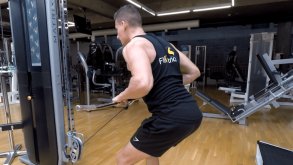
Cable row with straight bar
Intermediate
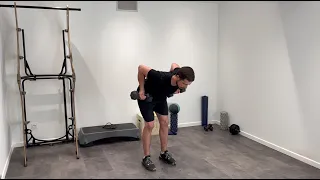
Dumbbell supination row
Intermediate
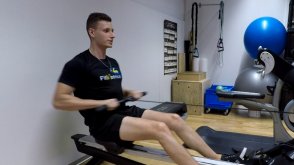
Rowing machine
Beginner
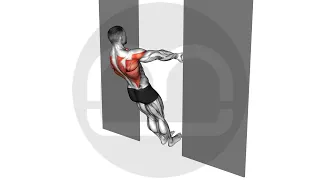
Doorway row
Beginner

Seated row with resistance band
Beginner
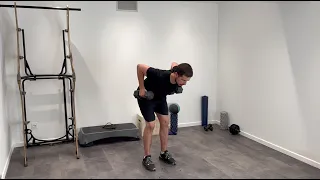
Bent over dumbbell row
Intermediate
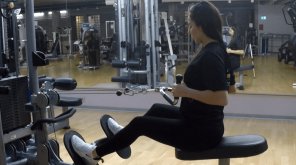
Close-grip seated cable row
Intermediate
Converging seated row machine
Beginner
T-bar row with handle
Intermediate
Single kettlebell supinated row
Intermediate
Prone pillow case row
Beginner
Seated cable row - supinated grip
Intermediate
Related programs
See all
Related fitness articles
See all
Body recomposition: lose fat while building muscle
Muscle gain

Fitness formulas: protein, water, creatine and caffeine
Muscle gain

Carb cycling: useful for losing weight and performing better?
Nutrition

Muscle failure in strength training: what the science says
Muscle gain

Peptides in bodybuilding: effectiveness and risks
Nutrition
Chest pump push-up workout
Muscle gain
Succeeding at your first pull-up
At the gym

Shoulder pain in weight training: prevention and solutions
Risk of injuries
Recommended by our experts
Receive your personalized program
Stop training at random.
Get my program- Program tailored to your profile
- Guided progression
- Compatible with your equipment
- Structured plan
Our coach prepares your program
Get my program